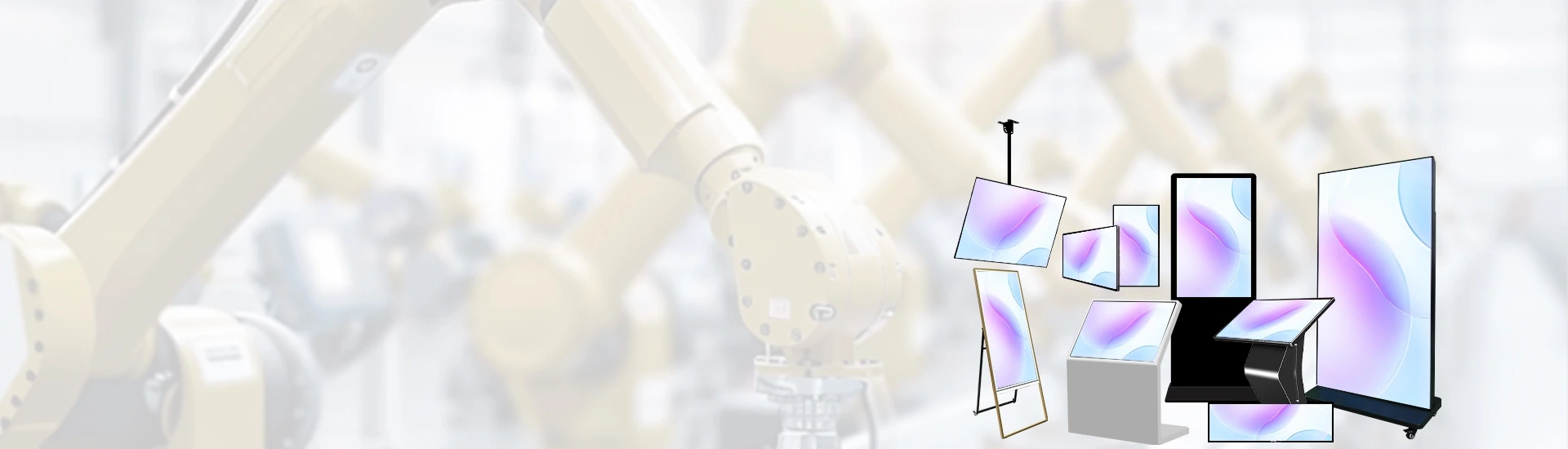
During pre-sales technical surveys and post-installation site visits across Latin America, East Africa and Southeast Asia, we have sorted out common defects widely seen on cheap vertical advertising displays. All practical observations match our internal 1000-hour thermal cycle accelerated ageing tests:
Many purchasers regard internal optical components as universal interchangeable accessories. In reality, the coordination between optical materials, LCD panel spectrum and backlight system directly determines how stably Vertical LCD Advertising Display maintain image quality over years. Qtenboard avoids generic mass-produced optical parts. Our optical engineering team carries out repeated testing and tailors display schemes for different models of floor-standing digital signage to guarantee steady visual output for long-running commercial advertising terminals.
Comparison data recorded from our internal 1000-hour continuous load test simulating typical indoor commercial environments (25°C ~ 48°C cyclic temperature):
A Delta E value below 3 stands for colour differences barely recognizable to human eyes — the key benchmark for high-end brand marketing deployed on Indoor Floor-Standing Digital Signage.
Professionally tuned optical performance forms one core strength of our Indoor Floor-Standing Digital Signage. As a specialist commercial display manufacturer founded in 2014, we integrate multiple industrial-grade features to serve bulk B2B buyers and system integrators:
This well-known local mid-to-high-end fashion retail chain operates 14 offline flagship stores covering core commercial zones of Bogotá and Medellín. The brand focuses on formal wear, denim and casual apparel, requiring consistent premium in-store visual presentation to maintain brand positioning and boost retail turnover. Previously, the brand deployed generic imported vertical advertising screens for product showcase and brand promotion.
The original low-cost displays suffered serious colour deviation. Colour difference (Delta E above 8.2) between screens and physical garments was prominent, especially for dark denim and high-saturation fabric. Long-hour operation also triggered uneven local brightness. Shoppers frequently questioned mismatched product colours, lowering purchase willingness, shortening in-store dwell time and dragging down sales conversion. Meanwhile, the brand’s global visual guidelines demanded uniform colour output across all chain stores — a requirement generic Indoor Floor-Standing Digital Signage could not satisfy.
First, achieve highly accurate colour matching with physical merchandise to comply with international brand CI visual standards; second, guarantee long-term stable playback without colour drift under 7×24 operation; third, support unified remote content management across 14 stores to cut manual maintenance costs; fourth, consistent screen appearance to match high-end interior decoration.
After assessing the brand positioning, in-store lighting environment and long-term operating demands, we delivered 32 units of 65-inch 4K premium Indoor Floor-Standing Digital Signage. Every unit underwent factory pre-calibration, controlling Delta E below 2.1 with 95% DCI-P3 wide gamut coverage. We also provided unified OEM logo customisation and shared cloud management authorisation for all devices, enabling one-stop content release and split-screen playback across all offline locations.
We completed mass production, optical calibration and ageing testing within 18 working days. After sea freight delivery, our overseas engineering team offered remote installation guidance and system debugging for local technicians. Uniform brightness and colour calibration was applied to all 32 Vertical LCD Advertising Display to ensure identical visual performance in every store. The whole project went fully live for commercial use within one month.
After launch, garment colour mismatch issues were completely resolved, and screen visuals fully aligned with official brand standards. Average customer dwell time rose by 32%, while product enquiries and transaction conversion rates improved noticeably. After 12 months of continuous stable operation, none of the displays showed colour fading, yellowing or brightness loss. Highly satisfied with display stability and centralised management features, the client placed repeated bulk orders for new store openings in 2025 and established long-term strategic cooperation.
The client is a leading domestic chain hotel group in Tanzania, covering key tourist cities Dar es Salaam and Arusha, specialising in tourist accommodation, business lodging and supporting catering services. All hotel lobbies require round-the-clock display of welcome information, tourist attraction introductions, catering promotions and service guidelines via Vertical LCD Advertising Display, serving large volumes of international tourists and business guests year-round.
The tropical local climate keeps indoor temperatures high all year, with lobby temperatures regularly hitting 40°C‑48°C. The hotel group previously purchased ordinary vertical advertising machines, which developed yellowing, colour shift and partial dimming after only 6‑8 months of non-stop 24-hour playback. Frequent screen degradation and failures harmed the hotel’s premium service reputation and created heavy maintenance and replacement expenses. In addition, legacy equipment lacked centralised remote management, requiring manual on-site content updates at every property with low efficiency and high labour costs.
First, adapt to high-temperature indoor environments and maintain thermal stability without colour shift or yellowing for Indoor Floor-Standing Digital Signage; second, support uninterrupted 7×24 commercial operation for over 3 years; third, equip intelligent cloud remote management for bulk content updates; fourth, balance consistent performance and long-term power consumption to lower daily hotel expenditure.
Targeting the local high-temperature operating environment and continuous operation needs, we supplied 46 sets of 55-inch standard commercial Indoor Floor-Standing Digital Signage. This model delivers highly stable colour performance, limiting colour drift below 2.5% after 50,000 working hours and adapting to 25°C‑50°C fluctuating temperatures. All devices come with full-featured cloud remote management, supporting scheduled playback, split-screen layouts and bulk content push. The high light transmittance design also cuts long-term power consumption.
We adjusted screen brightness parameters and adapted content templates according to the hotel group’s unified brand style. After bulk delivery, we delivered complete remote training for on-site maintenance staff, covering daily equipment care, cloud system operation and basic fault troubleshooting. All Vertical LCD Advertising Display units were installed and activated across hotel lobbies in batches within 25 days.
Up to now, all displays have run continuously for over 28 months. Multiple on-site inspections confirm zero yellowing, colour shift or uneven brightness, sustaining smooth, delicate visuals consistently. The intelligent remote management function cuts hotel labour costs for content updates by more than 60%. High-transmittance low-power architecture reduces annual power usage for all display equipment by roughly 14%. The stable performance gained full recognition from hotel management, and the client issued repeat orders for new hotel branch projects.
The client operates a large integrated shopping mall in central Ho Chi Minh City combining brand retail, dining, entertainment and leisure. The venue maintains heavy foot traffic all year and needs to deploy Indoor Floor-Standing Digital Signage in public zones for tenant directory guidance, mall activity promotions, festival campaigns and public information release, with requirements for stable medium-term deployment.
The mall hosts frequent temporary seasonal campaigns and brand pop-ups, demanding flexible content updates and adjustable playback settings. The procurement budget was moderate; ultra-high-end professional display performance was unnecessary, yet basic stable visuals without obvious colour distortion were required to sustain reliable operation during shopping peak seasons. Furthermore, public areas receive strong ambient light, and basic low-brightness advertising screens suffer blurry output and surface glare.
First, cost-effective Vertical LCD Advertising Display matching mid-budget commercial deployment; second, clear visibility in bright public spaces without reflective blur; third, stable 2‑3 year service cycle without frequent breakdowns; fourth, support remote scheduled playback and flexible split-screen layouts to accommodate frequent mall campaign adjustments.
Combining the client’s budget, service cycle and public-area usage scenarios, we provided 29 units of 49-inch entry-level Indoor Floor-Standing Digital Signage. On top of reliable basic colour reproduction, we upgraded anti-glare screen surfaces to cope with strong light inside mall public zones. All devices carry basic cloud remote management, supporting one-click content replacement, scheduled tasks and multi-region split-screen playback to match the mall’s flexible promotion needs. Learn more about entry-level floor-standing advertising screens.
We completed mass production and standard ageing testing following the mall’s public-area installation specifications. After delivery, we collaborated with the mall engineering team to finish unified installation, position tuning and system configuration. Simple operation training was arranged for mall administrators to guarantee flexible daily management of all advertising screens.
After project launch, all Indoor Floor-Standing Digital Signage operated reliably through peak shopping periods including weekends, festivals and shopping events, maintaining clear visuals without reflective blur under bright lighting. Mall campaign posters and tenant guidance information show uniform, natural colours, improving public service efficiency and promotion results. Within the planned 3-year service cycle, no equipment failures or colour degradation occurred, fully meeting medium-term commercial usage needs. The balanced cost-performance ratio won high praise from mall management.
Many project buyers choose display equipment solely based on upfront unit pricing, overlooking long-term colour stability and cumulative energy expenses. Drawing on hundreds of global project experiences, we recommend evaluating solutions across these dimensions:
A1: Yes. For bulk buyers, we support custom casing surface finishing, fixed brightness parameters and custom brand logo printing.
A2: All Qtenboard Vertical LCD Advertising Display come with intelligent playback firmware, supporting cloud remote publishing, scheduled tasks and split-screen playback functions.
A3: Selection depends on brand positioning, expected service life and overall budget. Our international technical sales team can provide targeted recommendations once we understand your full project details.
A4: We provide standardized industrial-grade warranty support. Contact our team to receive detailed warranty documentation for each product series.
A5: Absolutely. Once you submit your project requirements, we will share full specification sheets and optical performance reference data for your evaluation of Indoor Floor-Standing Digital Signage.
If you are sourcing reliable Indoor Floor-Standing Digital Signage with proven long-term consistent colour performance, Qtenboard supplies industrial vertical advertising displays for global retail operators, hotel groups, engineering contractors and chain enterprise purchasers.
Our overseas technical team will recommend optimal screen dimensions, optical configuration and functional packages according to your installation environment, marketing goals and procurement budget. We welcome bulk cooperation, supply complete engineering documentation and guarantee stable international delivery schedules.
Share your project requirements with our specialist team. We will reply within 24 working hours and deliver tailored Vertical LCD Advertising Display solutions and formal commercial quotations for your project.
Backed by systematically optimised optical display technology, Qtenboard Indoor Floor-Standing Digital Signage delivers vivid, consistent and energy-efficient visuals for all indoor commercial scenarios. Whether small single-store retail layouts or large multi-branch commercial rollouts, we can supply matching floor-standing advertising display solutions. Explore our full vertical digital signage product range and contact our team to discuss your display project today.
View full product specification: Indoor Vertical Digital Signage
Contact Us For Project Quotation
 EN
EN
 AR
AR  DAN
DAN  IT
IT  ARM
ARM  FIN
FIN  SWE
SWE  NOR
NOR  MAY
MAY  NL
NL  TH
TH  KOR
KOR  PL
PL  JP
JP  RU
RU  PT
PT  SPA
SPA  FRA
FRA  DE
DE  CHT
CHT 