Qtenboard Digital Media Information Release System: The "Fifth Media" Evolution
With the widespread adoption of digital signage and the increasing popularity of flat-panel display devices such as plasma and Qtenboard LCD screens, combined with the rapid development of network streaming media technology, the architecture of digital information release systems has evolved through several generations. Initially, these systems were composed simply of a display screen paired with a DVD player or a PC. As technology advanced, dedicated network media players gradually replaced traditional DVD or PC-based playback, offering richer functionalities and a wider range of applications.
This evolution has led some experts to compare digital signage to traditional media such as newspapers, radio, television, and the Internet, dubbing it the “fifth media” due to its ability to deliver information to a specific audience at a designated time and place.
Core Value of Qtenboard Digital Media Information Release System
The Qtenboard digital media information release system integrates the diversity and vividness of multimedia video content, enabling remote centralized management and real-time updates. This ensures that audiences receive the freshest information the moment it is released.
As an essential component of modern informatization, the system not only delivers timely, high-quality, and comprehensive information services, but also creates a new cultural and interactive environment, significantly enhancing the overall image of any space—making it an inevitable trend in contemporary architecture.
Unique Feature: Distributed Area Management Technology
A key advantage of the system is its distributed area management technology, which allows different terminals within the same network to communicate and differentiate audiences accurately. Using this system, organizations can easily establish a centralized, networked, specialized, intelligent, and differentiated multimedia information publishing system that provides powerful professional services including content editing, transmission, publishing, and management.
System Design Principles & Core Functions
Designed with forward-looking, expandable, advanced, and practical principles in mind, the Qtenboard digital media system utilizes
centralized control and
unified management to integrate various media types:
🖼️ Images, slideshows, animations
🎵 Audio, video
📜 Rolling subtitles
Multimedia programs are transmitted over the network to the digital media controller, which then performs orderly playback and control on corresponding display devices according to preset rules.
Real-time information (news, images, emergency notifications, announcements) can be seamlessly inserted at any moment, ensuring the audience always receives the latest updates—representing a more advanced evolution of traditional multimedia information release platforms.
System Architecture & Key Advantages
The system employs
centralized control management and
automatic broadcasting, with the following core characteristics:
🏗️ Distributed architecture & open interfaces
🖥️ Human-computer interaction & excellent scalability
🧩 User-friendly interface, simple installation & easy maintenance
🌐 Networked architecture integrating editing, transmission, release, and centralized management
Applications include real-time stock information, financial data systems, touch query terminals, queuing systems, office automation, attendance tracking, corporate training platforms, industrial control systems, and real-time databases.
Supported Display Devices
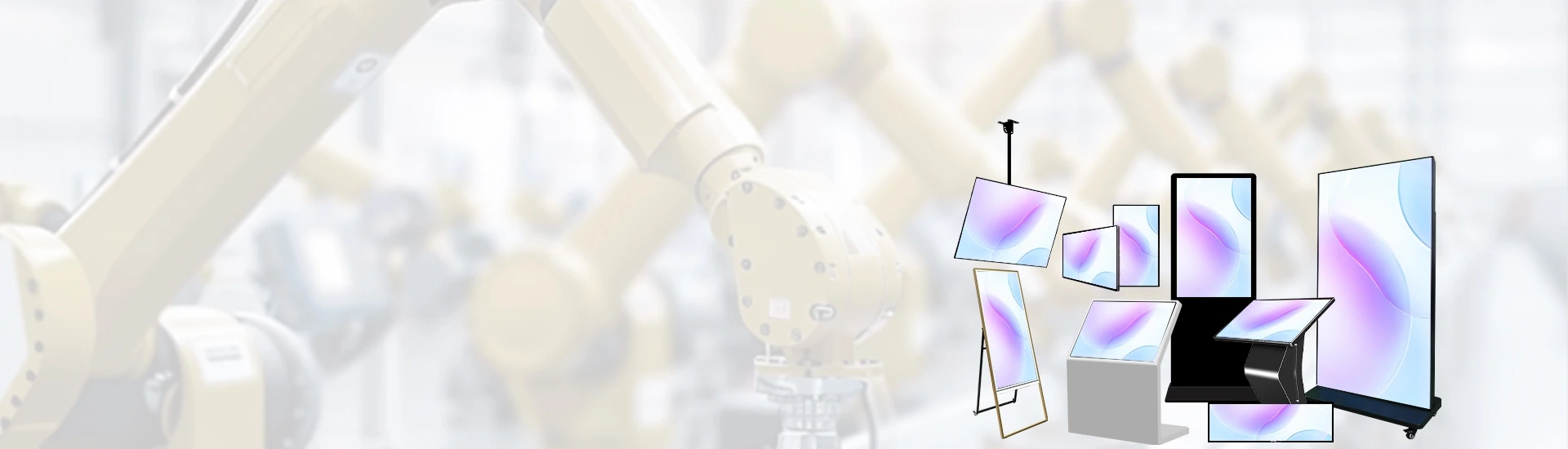
The system is compatible with a wide range of display hardware, including:
📺 Qtenboard LCD screens, TVs, plasma panels
🎨 Dual-color & full-color LCD displays
🔍 Rear projection systems, touch screens
By combining versatility, scalability, and interactivity, the system provides a comprehensive solution for delivering rich, engaging, and targeted information to audiences in a wide range of environments.
Conclusion
The Qtenboard digital media information release system represents the advanced evolution of digital signage technology—dubbed the "fifth media". With its distributed area management, centralized control, real-time update capabilities, and broad device compatibility, it delivers a scalable, interactive, and efficient solution for organizations to deliver targeted, timely information to their audiences, enhancing overall space image and information communication efficiency.
Click to read the article and see the product's features and performance in action.

 EN
EN
 AR
AR  DAN
DAN  IT
IT  ARM
ARM  FIN
FIN  SWE
SWE  NOR
NOR  MAY
MAY  NL
NL  TH
TH  KOR
KOR  PL
PL  RU
RU  PT
PT  SPA
SPA  FRA
FRA  DE
DE  CHT
CHT 