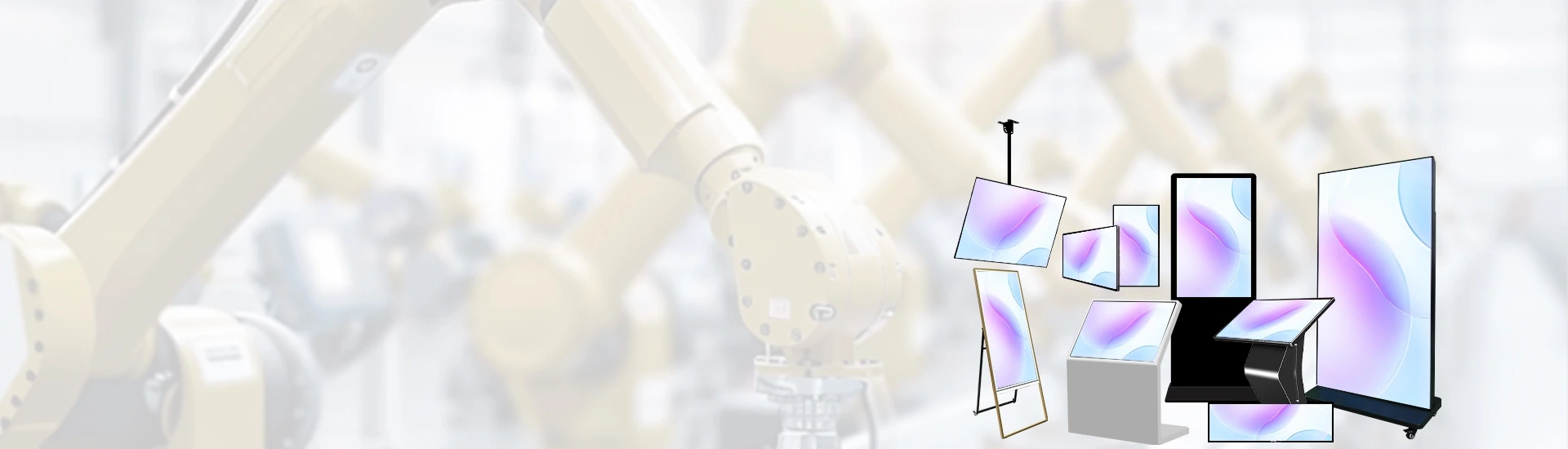
Interactive Tables are reshaping the way brands and educational institutions engage with their audiences—bridging the gap between physical and digital experiences with intuitive, collaborative technology. In retail environments across Europe and North America, these tables have become a cornerstone of modern customer engagement, offering immersive product exploration that goes beyond traditional displays. In classrooms and training centers, they’re redefining collaborative learning, enabling multiple students or participants to interact simultaneously, share ideas, and problem-solve together.
Powered by advanced Touch Technology and seamless Digital Interaction, Qtenboard’s Interactive Tables deliver more than just engagement—they provide measurable results. Retailers see increased Customer Engagement, longer in-store dwell times, and higher conversion rates. Educational institutions report improved knowledge retention, stronger teamwork skills, and greater participation from students of all learning styles. Whether in a flagship store in London or a university classroom in Toronto, these tables adapt to diverse needs while maintaining performance and reliability.
Brands, retailers, and educational institutions prioritize specific features when deploying interactive tables—ones that balance usability, durability, and adaptability to their unique goals:
Supports 10+ simultaneous touch points, enabling groups of customers or students to interact at the same time. In retail, this means friends can browse products together or compare options side-by-side. In education, it fosters collaborative problem-solving, with teams contributing to projects in real time without waiting for turns.
Fully adaptable to brand visuals, curriculum needs, or seasonal campaigns. Retailers can integrate logos, color schemes, and product catalogs to maintain brand consistency. Educational institutions can tailor interfaces to specific subjects—from science simulations to language learning modules—with easy updates for new content.
Compatible with dynamic content types—including 3D product demos, gamified learning activities, video tutorials, and interactive quizzes. Retail customers can virtually "try on" cosmetics or visualize furniture in their homes. Students can manipulate digital models, play educational games, or participate in interactive case studies that reinforce key concepts.
Tracks user interaction data—such as popular content, engagement duration, and touch patterns—to deliver actionable insights. Retailers can optimize product placement or campaign messaging based on customer behavior. Educators can identify student engagement trends and adjust teaching strategies to address knowledge gaps.
Built with scratch-resistant, anti-glare surfaces and robust hardware to withstand heavy daily use. The tables are spill-resistant, easy to clean, and designed for 12+ hours of continuous operation—ideal for busy retail floors, classrooms, or public spaces where reliability is non-negotiable.
Connects with existing retail or educational systems—including POS platforms, inventory management tools, learning management systems (LMS), and CRM software. Retailers can sync product availability in real time. Educators can export student progress data directly to grading platforms, streamlining administrative tasks.
| Challenge | Interactive Table Solution | Benefit |
|---|---|---|
| Low participation in group tasks (Education) | Collaborative touch activities, shared digital workspaces, and peer-to-peer interaction tools | Higher engagement rates, improved teamwork skills, and more inclusive learning environments |
| Difficulty explaining complex products (Retail) | 3D product demos, interactive feature breakdowns, and virtual try-on capabilities | Customers understand product value quickly, leading to more confident purchases |
| Disconnected digital experiences (Retail) | Integration with brand apps, QR code sharing, and cross-device content syncing | Seamless journey from in-store exploration to online purchase or follow-up |
| Limited attention span (Education & Retail) | Immersive visuals, gamified challenges, and reward-based interaction | Longer engagement time, better knowledge retention, and increased brand recall |
| One-size-fits-all teaching/retail approaches | Customizable content paths and adaptive difficulty levels | Personalized experiences that cater to individual learning styles or customer preferences |
Sephora, the global cosmetics and beauty brand, recently integrated Qtenboard Interactive Tables in 12 flagship stores across Europe—including Paris, Berlin, Madrid, and London. The brand sought to enhance its in-store customer experience by offering a digital complement to its physical product displays, addressing common pain points like limited shade testing options and complex product ingredient explanations.
Deployed in high-traffic areas near skincare and makeup sections, the Qtenboard tables allowed customers to engage with Sephora’s product range in three key ways: virtual try-on (using AR technology to visualize lipstick shades, eyeshadows, and foundation on their own photos), interactive ingredient breakdowns (explaining benefits of key components like hyaluronic acid or vitamin C), and personalized routine builders (based on skin type, concerns, and preferences). The tables also integrated with Sephora’s loyalty program, enabling customers to save favorite products to their accounts or redeem rewards directly through the interface.
According to Sephora’s store performance reports, the Qtenboard Interactive Tables delivered measurable results within the first three months: customer engagement with skincare and makeup categories increased by 42%, average in-store dwell time rose by 18 minutes, and conversion rates for higher-priced products (e.g., premium serums and foundation) improved by 27%. Store managers noted that the tables reduced staff inquiries about product details by 35%, allowing team members to focus on personalized consultations rather than repetitive explanations.
Sephora’s regional technology team praised the tables’ stability—operating 14 hours daily without downtime—and intuitive Touch Technology, which required minimal customer guidance. The seamless integration with Sephora’s existing digital ecosystem (loyalty program, product database, and AR tools) made deployment efficient, with each store installation completed in under 48 hours. Impressed by the results, Sephora expanded the rollout to an additional 18 stores across France and Germany in the following quarter, with plans to include the tables in new store openings across Europe.
Our Interactive Tables are designed specifically for both retail and educational use cases, with features tailored to each environment—from durable retail-grade surfaces to collaborative learning tools. We understand the unique needs of each sector and deliver solutions that drive measurable outcomes.
We use 10-point multi-touch, anti-glare, scratch-resistant displays with ≤8ms response time—ensuring smooth, accurate interaction even in high-traffic environments. The technology works with bare hands, gloves, or styluses, adapting to diverse usage scenarios.
We offer end-to-end customization—including hardware finishes (wood, metal, or branded colors), software interfaces, and content integration. Our team works with you to align the table’s design and functionality with your brand identity or educational goals.
Built with fanless cooling systems, spill-resistant surfaces, and high-quality components for 10,000+ hours of continuous operation. Our tables are rigorously tested to withstand the demands of busy retail floors and classrooms, minimizing downtime and maintenance costs.
Our open-API architecture ensures compatibility with existing systems—POS, CRM, LMS, and AR tools. We provide 24/7 technical support, remote monitoring, and on-site training to ensure a smooth deployment and ongoing performance.
Click to read the product details and learn about its functional features and actual performance.
📖 Read Product
 EN
EN
 AR
AR  DAN
DAN  IT
IT  ARM
ARM  FIN
FIN  SWE
SWE  NOR
NOR  MAY
MAY  NL
NL  TH
TH  KOR
KOR  PL
PL  RU
RU  PT
PT  SPA
SPA  FRA
FRA  DE
DE  CHT
CHT 