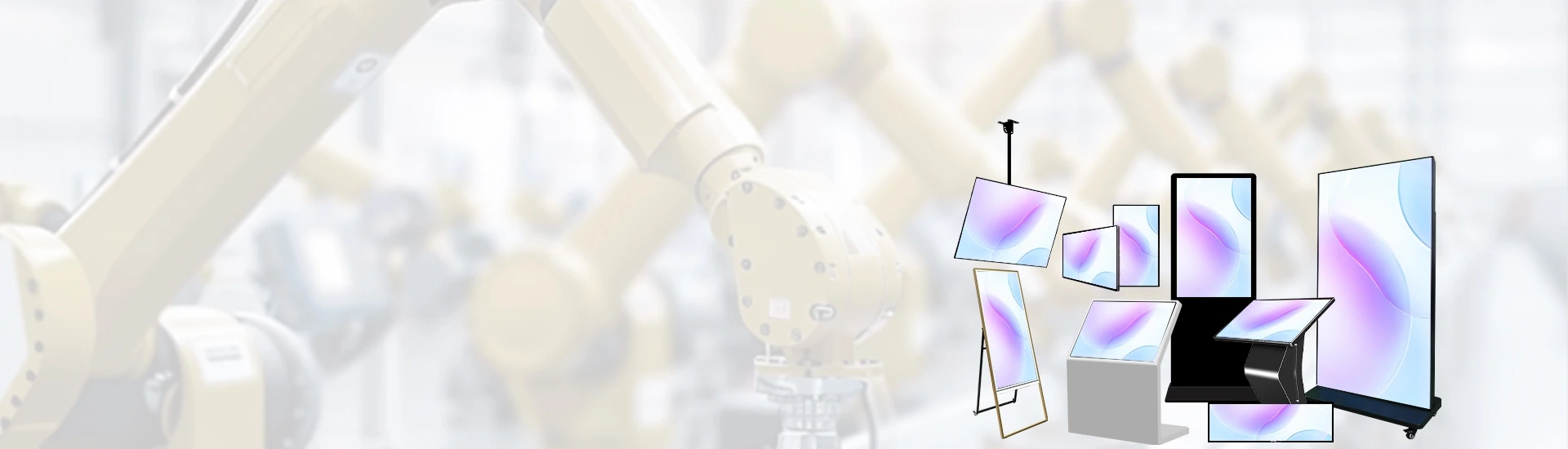
For decades, businesses relied on printed posters, flyers, and small digital displays to communicate with customers. But as consumer behavior shifts—with people spending more time in public spaces and expecting dynamic, personalized content—traditional signage just doesn’t cut it anymore. So why has 86 inch digital signage become the preferred choice for brands across industries? The numbers tell a clear story.
According to the Digital Signage Federation (DSF), large-format digital displays (80 inches and above) increase customer engagement by up to 47% compared to static signage. A separate study by Nielsen found that 86 inch digital signage captures 63% more visual attention than mid-size commercial displays (55–65 inches) and 89% more than small displays (32–43 inches). For retailers, this translates to real results: a 2024 report by Retail TouchPoints found that stores using 86 inch digital signage saw a 28% increase in impulse purchases and a 19% boost in customer satisfaction.
But it’s not just about attention—86 inch digital signage strikes the perfect balance between impact and practicality. Unlike modular LED walls, which require complex installation, calibration, and maintenance, an 86 inch digital signage display is a single unit that can be mounted on a wall, placed on a freestanding kiosk, or integrated into existing fixtures. It offers a nearly 2-meter visual canvas—large enough to deliver cinematic advertising experiences, but compact enough to fit in most commercial spaces without overwhelming the environment. This balance is why the global 86 inch digital signage market has grown by 32% over the past five years, according to Grand View Research, and is projected to reach $18.7 billion by 2030.
Another key reason for its popularity is flexibility. Unlike printed signage, which requires manual replacement and can take days to update, 86 inch digital signage allows businesses to change content in real time—whether it’s updating a promotion, showcasing a new product, or sharing real-time information like weather or event schedules. This agility is critical in today’s fast-paced retail landscape, where brands need to adapt quickly to changing consumer trends and market conditions.
When considering large-format displays, businesses often wonder: why choose 86 inch digital signage over smaller digital displays, consumer TVs, or LED walls? To help you make the right choice, we’ve broken down the key differences between 86 inch digital signage and its most common alternatives, along with their pros and cons.
| Display Type | Key Advantages | Key Disadvantages | Best For | Cost Range (per unit) |
|---|---|---|---|---|
| 86 Inch Digital Signage | 24/7 operation, high brightness (500–700 nits), anti-glare technology, easy installation, real-time content updates, balanced size/impact | Higher upfront cost than small displays, heavier than consumer TVs (requires sturdy mounting) | Retail stores, shopping malls, airports, corporate lobbies, exhibition halls | $1,800–$5,500 |
| Consumer 86 Inch TV | Lower upfront cost, familiar technology, good picture quality for home use | Not designed for 24/7 use (overheats easily), low brightness (250–300 nits), no anti-glare coating, plastic chassis (not durable for public use) | Home theaters, small offices (non-commercial use) | $1,200–$3,000 |
| Modular LED Wall (86 Inch Equivalent) | Customizable size, ultra-bright (1,000+ nits), seamless display | High installation cost, complex maintenance, requires professional calibration, bulky | Stadiums, large event venues, outdoor advertising | $8,000–$20,000+ |
| 55–65 Inch Digital Signage | Lower cost, lighter weight, easier to mount in small spaces | Less visual impact, smaller viewing distance (only visible from 5–15 meters), less immersive | Small retail stores, waiting rooms, small offices | $800–$2,500 |
As the table shows, 86 inch digital signage offers the best balance of performance, practicality, and value for most commercial applications. While consumer TVs may seem like a cheaper alternative, their lack of durability and 24/7 operation capability means they’ll need to be replaced more frequently—costing businesses more in the long run. LED walls, on the other hand, are overkill for most retail or corporate spaces, with their high cost and complex maintenance making them impractical for small to mid-sized businesses.
When shopping for 86 inch digital signage, it’s easy to get caught up in numbers—but understanding the actual size of the display is critical to ensuring it fits your space. Let’s break down the dimensions of a typical 86 inch digital signage display and put it into perspective.
An 86 inch digital signage screen has a diagonal measurement of 86 inches (218.44 cm). In terms of width and height, most models measure approximately 190 cm wide (74.8 inches) and 110 cm tall (43.3 inches)—that’s roughly the size of a large office desk or a standard standing whiteboard used in conference rooms. When mounted on a wall, it will take up about 2.09 square meters of space, which is manageable in most retail stores, lobbies, or corridors.
The real advantage of this size is its viewing distance. An 86 inch digital signage display can be easily seen from 10 to 30 meters away, making it perfect for high-traffic areas like shopping mall corridors, airport terminals, or convention centers. For example, in a busy mall, a single 86 inch digital signage screen near the entrance can capture the attention of hundreds of passersby every hour—something that would require dozens of smaller displays to achieve.
Another benefit of the 86 inch size is its ability to display life-size product visuals. A fashion brand can showcase clothing collections at near real-world scale, allowing customers to see details like fabric texture and fit more clearly than they would on a smaller screen or printed poster. A electronics retailer can display smartphones, laptops, or TVs at their actual size, helping customers visualize the product before making a purchase. This level of immersion is a key reason why 86 inch digital signage is so effective at driving engagement and sales.
Not all 86 inch digital signage displays are created equal. When shopping for a solution, it’s important to focus on features that align with your business needs—whether you’re using the display for advertising, information sharing, or interactive experiences. Below are the most critical features to consider, along with why they matter.
Resolution is one of the most important factors in 86 inch digital signage, as a large screen can quickly reveal blurry or pixelated content. Most modern 86 inch digital signage displays offer 4K UHD resolution (3840 × 2160 pixels), which is four times the resolution of Full HD (1080p). This ensures that even complex graphics, text, and videos remain sharp and clear—even when viewed up close.
According to a study by DisplayMate, 4K resolution on 86 inch digital signage improves content readability by 35% compared to Full HD, and increases customer engagement by 22%. For luxury brands or retailers that rely on high-detail product visuals, 4K resolution is non-negotiable—it ensures that every detail of your product is showcased in the best possible light.
Brightness is measured in nits, and it determines how visible your 86 inch digital signage will be in different lighting conditions. Most commercial spaces—like retail stores, malls, or airports—have bright ambient lighting from overhead lights, windows, or natural sunlight. A display with low brightness will appear dim and hard to see, defeating the purpose of using large-format signage.
A high-quality 86 inch digital signage display should have a brightness level of 500–700 nits. For outdoor or extremely bright environments (like sunlit lobbies), look for models with 1000+ nits. Consumer TVs, by comparison, typically only offer 250–300 nits—far too dim for commercial use. A 2023 study by the Society for Information Display (SID) found that displays with 500+ nits have a 40% higher visibility rate in bright environments than those with lower brightness.
Unlike consumer TVs, which are designed for short daily use (4–8 hours), 86 inch digital signage is built to run continuously—24 hours a day, 7 days a week. This requires specialized components, including industrial-grade power boards, cooling systems, and durable panels that can withstand long-term use without overheating or failing.
When evaluating 86 inch digital signage, look for models with a rated operating life of 50,000 hours or more (that’s over 5 years of continuous use). This ensures that your display will last for years without needing to be replaced, making it a cost-effective investment. A study by the Digital Signage Association found that displays with 24/7 operation capability have a 60% lower total cost of ownership (TCO) over 5 years compared to consumer TVs used for commercial purposes.
Public spaces are full of reflective surfaces—glass walls, mirrors, ceiling lights—that can cause glare on digital displays. This glare can make content hard to see, even if the display is bright. High-quality 86 inch digital signage displays include anti-glare coatings that minimize reflections and ensure content is visible from multiple angles.
Wide viewing angles are also critical—especially in large spaces where customers may be viewing the display from the side. Look for displays with a viewing angle of 178° (horizontal and vertical), which means content remains clear and vibrant from almost any position. A 2024 consumer survey by Retail Dive found that 78% of customers said they were more likely to engage with digital signage that was easy to see from any angle.
To run content on your 86 inch digital signage, you’ll need a media player. Many modern 86 inch digital signage displays include built-in media players (usually Android or Windows-based), which eliminate the need for an external computer. This simplifies installation and reduces maintenance, as you won’t have to worry about connecting and managing separate devices.
Look for displays that integrate with popular CMS platforms (like ScreenCloud, Yodeck, or Signagelive), which allow you to manage content remotely. With a CMS, you can update content across multiple 86 inch digital signage displays in real time—whether you’re running a promotion, sharing news, or updating product information. This level of control is essential for businesses with multiple locations or large display networks.
To understand the real impact of 86 inch digital signage, let’s look at a case study of a major European retail chain—Zara Home—that upgraded its in-store signage to 86 inch digital displays in 2023. The chain operates 120 stores across Europe and was looking to improve customer engagement, reduce operational costs, and create a more modern in-store experience.
Before the upgrade, Zara Home relied on printed posters and small 55-inch digital displays. The printed posters required manual replacement every 2–3 weeks, which was time-consuming and costly—each store spent an average of €1,200 per month on printing and installation. The small digital displays lacked visual impact and were often hard to see in bright store environments.
Zara Home installed 86 inch digital signage displays at the entrance of each store, showcasing seasonal collections, promotional offers, and product demonstrations. They also integrated the displays with their CMS platform, allowing them to update content across all stores in real time. Here’s what they found after 6 months:
“The 86 inch digital signage has been a game-changer for our brand,” said Maria Lopez, Zara Home’s European Marketing Director. “It allows us to tell our brand story in a more immersive way, while also reducing costs and improving operational efficiency. We’re now planning to expand the use of 86 inch digital signage to other areas of our stores, including product aisles and fitting rooms.”
Below are answers to the most common questions businesses have about 86 inch digital signage. These answers are based on expert insights, industry data, and real-world experience.
In a world where consumer attention is the most valuable commodity, 86 inch digital signage stands out as a powerful tool for businesses to connect with customers. It offers the perfect balance of size, performance, and flexibility—large enough to capture attention, practical enough for easy installation, and dynamic enough to adapt to changing business needs. Whether you’re a small business looking to boost foot traffic or a large enterprise managing a global network of displays, 86 inch digital signage can help you create more engaging, immersive, and effective visual communication.
The data speaks for itself: 86 inch digital signage increases customer engagement by up to 47%, boosts impulse purchases by 28%, and reduces operational costs by 35%. Its ability to display high-quality, real-time content makes it a core component of modern retail and corporate strategies. And with advancements in technology—like 4K resolution, anti-glare coatings, and built-in media players—86 inch digital signage is only becoming more powerful and accessible.
When choosing 86 inch digital signage, remember to focus on features that align with your business needs: 4K resolution for sharp content, high brightness for visibility, 24/7 operation capability for long-term use, and CMS integration for easy content management. And don’t forget to work with a reputable manufacturer that offers reliable support and long-term spare parts availability—this will ensure your display runs smoothly for years to come.
In the end, 86 inch digital signage is more than just a screen—it’s a strategic investment in your brand’s ability to connect with customers and stand out in a crowded market. As businesses continue to prioritize digital transformation, 86 inch digital signage will only become more essential—and those who adopt it early will have a competitive edge.

 EN
EN
 AR
AR  DAN
DAN  IT
IT  ARM
ARM  FIN
FIN  SWE
SWE  NOR
NOR  MAY
MAY  NL
NL  TH
TH  KOR
KOR  PL
PL  JP
JP  RU
RU  PT
PT  SPA
SPA  FRA
FRA  DE
DE  CHT
CHT 