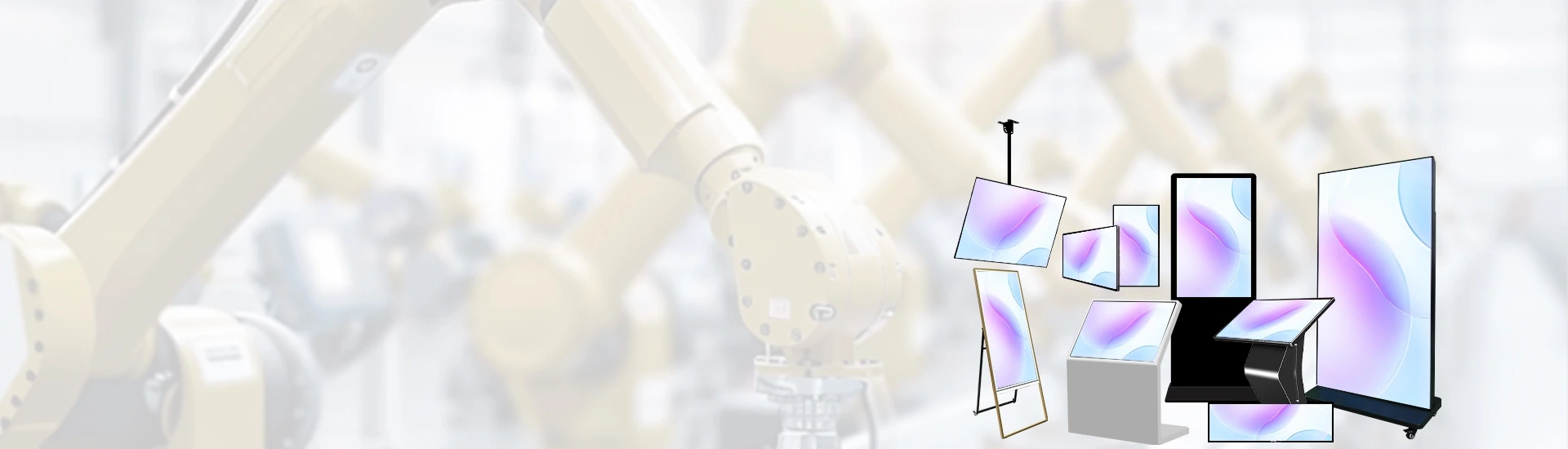
Walk into most quick-service restaurants today and you will see it: a self-order kiosk showing one price, a counter screen showing another, and a drive-thru display still advertising last week's promotion. When kiosks and digital signage are bought as separate hardware, keeping every screen aligned becomes a daily chore.
As a hardware manufacturer, our kiosks and digital signage are built with native EPOS connectors, so EPOS menu sync works out of the box across mainstream platforms. You keep your existing EPOS subscription, and we handle the hardware-side sync. No additional middleware license is required for supported systems.
This guide walks through the sync workflow, real-world sync speed, recommended update cadence, troubleshooting steps, and which EPOS platforms our hardware supports today. Along the way, we share how operators in the United States, the United Kingdom, Australia, and Germany have put this setup to work.
The The menu update workflow is designed so that your EPOS remains the single source of truth. Our hardware acts as the rendering endpoint, not as a replacement for your EPOS software. In practice, the process looks like this.
Yes, and the difference matters for deployment planning. Kiosks handle transactional data such as stock levels and payment-linked pricing, so sync menu to kiosk includes availability logic. Digital signage is display-only and mainly handles scheduled or batch content pushes. They share the same connector, but the data scope is different.
Our kiosks and ป้ายดิจิตอลในร่ม run a local rendering engine on the firmware layer. The device caches the last synced menu locally, and when the network drops, the screen keeps showing the last valid state until the connection resumes. Firmware updates are delivered over the air (OTA) so the hardware can adapt to new EPOS versions without a site visit.
A regional burger chain running Toast across 12 locations previously updated kiosk and menu board pricing one store at a time. Each price change took roughly two hours of staff time per location. After switching to our kiosks with native Toast connectors, the operations team updates prices once in Toast, and all 12 stores reflect the change within the same sync cycle. The chain now runs limited-time offers on a weekly cadence without adding labor hours.
Sync speed depends on your EPOS architecture and local network conditions. Rather than promising a fixed number of seconds, here is how the two main setups behave in practice.
For reliable digital signage menu sync, we recommend a stable wired connection where possible. Our units support RJ45 Ethernet, Wi-Fi, and PoE on selected models. For multi-screen deployments, each device pulls its own update independently, so a single unit failure does not block the rest of the fleet.
A London-based coffee chain with 40 stores uses Square for its EPOS and runs a mix of kiosks and counter signage. During a summer cold brew promotion, the marketing team marked a limited-edition item as sold out from head office. The update reached all 40 stores in under a minute, and the kiosks automatically stopped offering the item. No store had to touch a screen manually, and no customer ordered an unavailable item during the promotion window.
Update frequency should match the pace of your menu changes, not the capability of the hardware. Our devices support all four modes below, but the right choice depends on your business type.
In every case, the EPOS menu sync runs from your existing system, so there is no separate content management tool to learn.
A Melbourne bakery franchise operates 25 outlets with seasonal menus that change every six weeks. Rather than pushing updates during trading hours, the head office schedules a background sync at 4:00 AM local time. Each outlet's kiosks and menu boards pick up the new menu before staff arrive. The franchise reports that the scheduled approach has eliminated the morning rush of price corrections that used to happen on changeover days.
When a screen does not update, the cause is usually one of five issues. Work through them in order before escalating.
Each unit has status indicators for power, network, and sync state. If the network light is off, check the cable or Wi-Fi credentials first. If the sync light is amber, the device is connected but has not received a new payload, which usually points back to the EPOS connector or token. Detailed logs are available in the management dashboard for each device.
A Berlin fast-casual chain with 18 locations noticed that two kiosks in one store were not picking up a lunch menu change. The store manager ran the hardware self-check: the network light was green, but the sync light was amber. The integration team checked the EPOS connector and found an expired token. After re-authorization, the two kiosks synced within minutes. Because the issue was isolated to a single token, the other 17 stores were unaffected.
We only list platforms that we have tested with our hardware. The table below shows the connector type and sync method for each supported system.
| EPOS Platform | Connector Type | Sync Method | Hardware Models |
|---|---|---|---|
| Toast | Native API | Real-time push | Kiosk series, indoor signage |
| Square | Native API | Real-time push | Kiosk series, indoor signage |
| Lightspeed | Native API | Real-time push | Kiosk series |
| Oracle MICROS | Native API | Scheduled pull | Kiosk series, indoor signage |
| Clover | Native API | Real-time push | Kiosk series |
Custom and legacy EPOS systems can often be supported through a compatibility check. If your platform is not listed, contact our integration team with your EPOS version and deployment size.
For background reading on how display hardware fits into broader retail and hospitality deployments, see our notes on digital signage deployment และก็พร้อม kiosk integration. For menu-specific display considerations, our digital signage menu guide covers screen sizing and layout.
Yes. Our hardware supports both cloud and local-server EPOS setups. Local-server sync is near-instant but slightly slower depending on your network conditions. It is still fast enough for daily price and menu adjustments.
No. For supported EPOS platforms, our hardware includes native connectors, so no additional middleware license is required. You keep your existing EPOS subscription and we handle the hardware-side sync.
The hardware caches the last synced menu locally. If the connection drops, the screen keeps showing the last valid state and resumes syncing automatically once the connection is restored.
It depends on your business. Quick-service restaurants often use on-demand sync plus a pre-opening scheduled sync. Full-service restaurants may only need weekly scheduled sync. Chain retail often uses bulk multi-location sync, while convenience stores prefer off-hours background sync.
Yes. Kiosks and signage share the same connector but handle different data scopes. Kiosks include availability and payment-linked pricing logic, while signage handles display-only or scheduled content. You can assign different menu sets to each device type.
We have tested our hardware with Toast, Square, Lightspeed, Oracle MICROS, and Clover. If your EPOS is not on this list, contact our integration team for a compatibility check.
Tell us your EPOS platform and deployment size, and we will confirm compatibility and show you a live sync demo.

 TH
TH
 EN
EN  AR
AR  DAN
DAN  IT
IT  ARM
ARM  FIN
FIN  SWE
SWE  NOR
NOR  MAY
MAY  NL
NL  KOR
KOR  PL
PL  JP
JP  RU
RU  PT
PT  SPA
SPA  FRA
FRA  DE
DE  CHT
CHT 