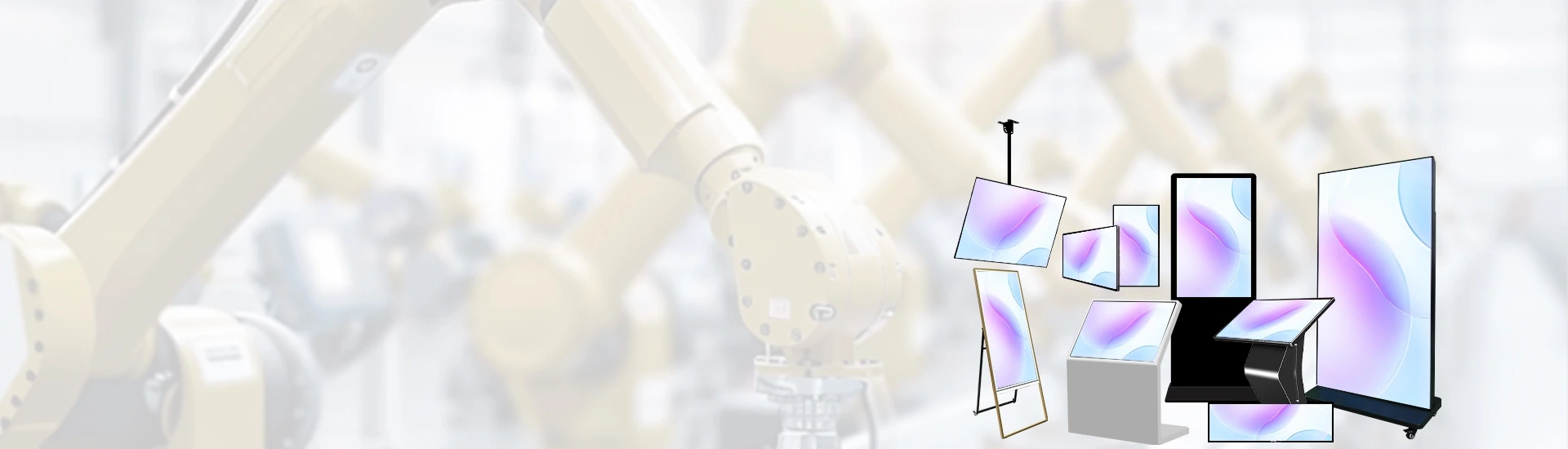
Offline food service operators across North America, Europe, and the Gulf are moving through a rapid digital transformation, and the digital menu boards integration layer has become the operational backbone of multi-location chains. Traditional paper and acrylic menus carry obvious limitations: every price change requires a reprint, brand presentation drifts between locations, promotional material rolls out slowly, and peak-hour flexibility is almost impossible.[reference:0] For chains operating dozens or hundreds of stores, these problems multiply quickly.
What makes digital menu boards integration different from simply installing screens is the software and API layer that connects menu displays to POS systems, inventory databases, marketing platforms, and business intelligence tools. In 2025, a 120-location QSR chain deploying AI-enabled drive-thru signage reported a 12% increase in average order value and an 18% throughput improvement over 12 months, with payback reached in seven months.[reference:1] The results came not from the hardware alone but from the integration architecture that pushed real-time data to every screen.
This guide covers the full menu board integration software and API landscape: platform types, CMS capabilities, API specifications, third-party ecosystem connections, deployment workflows, and the common challenges that derail projects. It is written for B2B procurement teams, IT integrators, and operations directors evaluating digital signage integration for multi-location restaurant chains, convenience stores, and food courts.
Digital menu boards integration is the process of connecting menu display hardware to business systems through a CMS, API, or middleware layer so that content and data flow in both directions. Instead of an operator manually editing each screen, the menu board pulls pricing, availability, and promotional data directly from source systems and renders it according to brand rules.
The core integration objects in a typical deployment include:
A single price change on a manual menu board can take 10–20 minutes per screen set, and a promotional day often carries fifteen or more changes at once.[reference:2] Without integration, delayed product launches, stock mismatches, and costly human error are routine. Operators in the United States, United Kingdom, Australia, and Gulf markets have moved digital menu boards integration from a convenience to a baseline requirement, driven primarily by consistency — a guest at a drive-thru in Texas should see the same price as the brand's mobile app.[reference:3]
When assessing an integration solution, B2B buyers should evaluate:
The The digital signage integration market spans purpose-built menu board CMS platforms, general digital signage platforms with menu modules, headless CMS architectures, and middleware layers. Understanding the platform landscape is the first step in selecting an integration architecture that matches your operational scale and IT capabilities.
| Platform Type | ดีที่สุดสำหรับ | Key Characteristics |
|---|---|---|
| Purpose-built menu board CMS | QSR, fast casual, coffee chains | Menu-specific data models, dayparting, POS connectors built in |
| General digital signage platform | Retail, corporate, mixed-use environments | Broad content support, menu board via templates, custom integration required |
| Headless CMS | Brands with in-house development teams | API-first content delivery, front-end rendering flexibility, higher setup effort |
| Middleware / integration platform | Complex multi-system environments | Connects POS, ERP, CMS, and BI; reduces point-to-point integration debt |
| POS-native menu management | Single-brand, standardized operations | Menu managed inside POS, limited display flexibility and multi-store control |
The most common digital menu boards integration scenarios involve connecting the menu board to three categories of source systems:
For operators exploring how digital menu boards integration connects POS data to screen content in practice, the digital menu board POS integration guide provides a detailed breakdown of data flows, deployment models, and operational benefits.
| Deployment Model | Advantages | Considerations |
|---|---|---|
| Cloud-hosted CMS | Rapid deployment, automatic updates, low upfront infrastructure cost | Requires reliable internet; data residency may be a compliance concern |
| On-premises CMS | Full data sovereignty, works in air-gapped environments | Higher IT overhead, manual updates, limited remote management |
| Hybrid | Local content caching with cloud management | Balances resilience and control; moderate complexity |
Selecting the right menu board integration software depends on four variables:
Hardware compatibility is a parallel consideration: the CMS or platform must be able to push content reliably to commercial-grade displays and media players that support the required rendering performance and remote management protocols.
The The menu board integration software layer is where menu structure, pricing rules, scheduling logic, and multi-store governance come together. A purpose-built menu board CMS differs from general digital signage software in its data model: it understands meal periods, combo structures, modifier groups, tax categories, and store-level overrides.
Multi-location chains need a CMS that enforces role-based access. Headquarters typically controls brand standards and national pricing; regional managers may adjust for local promotions; store managers may have limited override rights for item availability. The CMS must log every change with user, timestamp, and affected stores.
| CMS Type | ดีที่สุดสำหรับ | Integration Effort |
|---|---|---|
| Self-hosted CMS | Brands with strict data residency requirements or legacy systems | High — requires server infrastructure, updates, security management |
| Third-party SaaS CMS | Chains of 5–200 stores wanting rapid deployment | Moderate — pre-built connectors, but integration scope may be constrained |
| Headless CMS | Brands with in-house development capacity and custom front-ends | High — full API flexibility but significant development resources required |
CMS synchronization with POS and ERP systems can follow several patterns. API-first synchronization uses REST endpoints or Webhooks for real-time updates. Middleware-based integration decouples systems through an integration platform. File-based imports (CSV, SFTP) remain common in legacy environments but introduce latency and error risk. Direct database connections are generally discouraged for production menu boards due to security and stability concerns.
For chains operating across borders, the CMS must handle language variants, currency formatting, tax display rules, and timezone-aware scheduling. A menu board in a Dubai mall and a screen in a London high street may show the same core menu with different language, currency, and VAT presentation — all managed from a single CMS instance.
The CMS ultimately renders content to a hardware terminal. Commercial displays and media players vary in their support for HTML5, video codecs, and remote management APIs. A CMS that supports open standards — HTML5 rendering, standard media formats, and device management APIs — will work across a wider range of indoor digital signage hardware, reducing lock-in and simplifying procurement.
The The menu board API layer is what transforms a standalone display into an integrated business system. APIs enable the menu board to act as both a consumer of data (pricing, inventory, promotions) and a producer of data (screen status, engagement metrics, operational logs). For B2B buyers, API capability is the single most important technical differentiator between a basic digital signage product and an enterprise-grade digital menu boards integration platform.
APIs break down system silos. A brand with a proprietary POS system, a custom loyalty platform, and an in-house BI toolchain cannot rely on pre-built connectors alone. A well-documented menu board API allows the integration team to connect these systems without vendor dependency, supporting both initial deployment and future expansion.
Device management APIs allow remote control of screen terminals: restart, status query, batch operations across screen groups, screenshot capture for verification, and firmware update scheduling. These APIs are essential for managing large estates without site visits.
Content sync APIs handle menu, price, and promotional content updates. They typically accept structured payloads defining menu items, prices, availability flags, and scheduling rules. Modern implementations use REST endpoints with JSON payloads and support idempotent operations for retry safety.
Analytics APIs export operational logs, screen uptime data, content impression counts, and integration event histories. These feeds connect to BI platforms such as Power BI, Tableau, or Looker Studio for operational dashboards and anomaly detection.
For chains with complex organizational structures, user and permission APIs manage role-based access across headquarters, regions, franchise groups, and individual stores, with audit logging for compliance.
| ข้อมูลจำเพาะ | Purpose | Typical Implementation |
|---|---|---|
| REST API (JSON) | CRUD operations on menus, devices, users | HTTP methods (GET, POST, PUT, DELETE), JSON payloads, pagination, rate limiting |
| OAuth 2.0 | Secure authentication and authorization | Client credentials flow for server-to-server; authorization code flow for user-facing apps |
| Webhooks | Event-driven notifications | HTTP POST callbacks on menu changes, device status transitions, stock events; HMAC signature verification |
| Rate Limiting | Protect API availability | Per-client request quotas, burst allowances, 429 response with retry-after headers |
| Sandbox Environment | Pre-production testing | Isolated test instance with synthetic data, no impact on production stores |
ออกแบบมาอย่างดี menu board API follows REST conventions with consistent resource naming, versioned endpoints, and comprehensive error responses. OAuth 2.0 client credentials flow is standard for POS-to-menu-board server-to-server synchronization, while Webhooks enable real-time event propagation without polling.[reference:4]
For chains operating in the European Union, GDPR compliance is mandatory. The CMS and API layer must support data residency options, encryption in transit and at rest, audit logging, and data subject access request handling. For United States deployments, CCPA and PCI DSS may apply depending on the data flowing through the integration.
Enterprise-grade platforms increasingly offer BSI C5 attestation, ISO 27001 certification, and flexible data residency options — allowing customers to choose where their data is stored while maintaining compliance with regional regulations.[reference:5][reference:6]
Device management APIs extend to the hardware layer. Screen terminals that support remote management protocols allow the integration team to query device health, trigger restarts, push firmware updates, and monitor uptime — all through the same API gateway used for content synchronization. This capability reduces the operational burden of managing hundreds of screens across multiple countries.
A A digital menu boards integration project rarely operates in isolation. The CMS and API layer typically connect to a broader ecosystem of design tools, automation platforms, analytics services, POS providers, and localization utilities.
Menu content originates in design tools. Integration with platforms such as Canva, Figma, Adobe Creative Cloud, Google Drive, and Dropbox allows approved brand assets to flow into the CMS without manual file transfers. Asset management integrations ensure that the correct visual appears on every channel — menu board, kiosk, and mobile app — from a single source of truth.[reference:7]
Automation platforms such as Zapier, Make, and n8n connect menu board systems to a wide range of business applications without custom code. Common use cases include: triggering a menu update when a POS price changes, notifying operations when a screen goes offline, and syncing promotional calendars between marketing tools and the CMS.
Menu board data becomes actionable when it flows into business intelligence platforms. Power BI, Tableau, and Looker Studio can visualize screen uptime, content engagement, integration error rates, and operational cost trends. This feedback loop supports continuous improvement and helps justify integration investment to stakeholders.
POS integration is the most critical third-party connection for menu boards. Platforms such as Square, Clover, Toast, and Lightspeed offer varying degrees of API openness. Some provide pre-built menu management APIs; others require middleware or custom development. The integration must handle menu structure changes, price updates, item availability, and in some cases, order data flow back to the board for dynamic upsell displays.[reference:8]
For chains operating in multiple countries, localization tooling handles language variants, currency conversion, tax display rules, date formats, and timezone-aware scheduling. These tools integrate with the CMS to ensure that a single menu definition renders correctly across all locales without manual per-country content duplication.
Hardware compatibility remains a consideration at the ecosystem layer: third-party tools ultimately deliver content to commercial displays, and the integration architecture must account for the rendering capabilities and remote management support of the terminal hardware.
A A digital menu boards integration deployment follows a structured process that moves from requirements definition through pilot testing to full rollout. The following workflow reflects common enterprise deployment patterns.
Legacy POS systems or proprietary formats may not expose standard APIs. The solution is to prioritize platforms with open REST APIs and standard protocols, or to introduce a middleware layer that translates between legacy formats and modern API contracts.
Menu boards in markets with unreliable internet require offline caching and store-and-forward synchronization. The CMS should support local content caching on the media player, with automatic retry and reconciliation when connectivity is restored. This is a software-layer solution that reduces dependence on network quality.
When a price change must propagate to hundreds of screens, synchronization architecture matters. Cloud-based CMS platforms with Webhook-driven push updates typically achieve sub-minute propagation. Polling-based architectures introduce latency and load. The integration design should specify target propagation SLAs and architect accordingly.
Custom point-to-point integrations are expensive to build and maintain. Standardized APIs, pre-built connectors, and middleware platforms reduce both initial development cost and ongoing maintenance burden. A total cost of ownership analysis should account for integration development, testing, and annual maintenance.
Even a well-integrated software stack depends on reliable hardware. Commercial-grade displays and media players with remote management support, extended uptime ratings, and global warranty coverage reduce the risk of screen outages that disrupt customer-facing operations.
Software integration and API capability deliver value only when the hardware layer executes reliably. A menu board that fails to render content or loses network connectivity undermines the entire integration investment.
Commercial-grade displays and media players designed for continuous operation — with adequate processing power, thermal management, and network interfaces — provide the stability that software integration requires. Consumer-grade screens pressed into menu board service often fail under the demands of all-day operation in high-heat kitchen environments.
Hardware that supports open standards — HTML5 rendering, standard media formats, and documented device management APIs — allows the integration architecture to evolve without hardware replacement. This openness protects the investment and reduces long-term vendor lock-in.
Procuring hardware and integration software from separate vendors introduces coordination overhead. A single provider that delivers compatible displays, media players, CMS, and API endpoints reduces the number of integration surfaces and simplifies support escalation.
For chains deploying across multiple countries, hardware certification (CE, FCC, RoHS, and regional equivalents) and software compliance (GDPR, data residency options) are prerequisites. A provider with established certification coverage and local support presence reduces deployment risk in unfamiliar markets.
Pre-sales solution design, integration testing support, and post-launch technical assistance are as important as the product itself. A provider that can assist with CMS configuration, API integration testing, and troubleshooting across the software and hardware layers adds measurable value to the deployment.
Get a tailored integration assessment covering platform selection, API architecture, hardware compatibility, and deployment roadmap for your chain.
ติดต่อเราได้เลย Digital Menu BoardSuccessful digital menu boards integration is not a hardware purchase — it is a software and API architecture decision. The platforms you select, the APIs you expose and consume, the CMS governance you implement, and the deployment process you follow determine whether a menu board system becomes an operational asset or a maintenance burden.
The formula for 2026 and beyond is straightforward: open, well-documented software and API capability, paired with stable, commercially rated hardware that can execute that capability reliably across every location. Chains that get this combination right reduce manual work, eliminate pricing errors, accelerate promotions, and gain operational visibility that manual processes cannot provide.
Not always. Many menu board integration software platforms provide pre-built connectors for major POS systems. Custom development is typically required when connecting to proprietary POS platforms, legacy ERP systems, or in-house loyalty and BI tools. The scope of custom work depends on the API openness of the source systems.
A A menu board API is a set of programmatic interfaces that allow external systems to read and write menu data, device status, and content configurations. It enables real-time synchronization between POS, inventory, marketing platforms, and the menu display, replacing manual content updates with automated data flows.
Yes. POS integration is one of the most common digital menu boards integration scenarios. The menu board pulls pricing, item availability, and promotional data from the POS, ensuring that screen content always matches transactional data. Integration methods include REST APIs, Webhooks, middleware platforms, and in some cases file-based synchronization.
Deployment timelines vary by chain size, integration complexity, and geographic distribution. A pilot deployment for 5–10 stores can be completed in 4–8 weeks. Full rollouts for 100+ stores typically span 3–9 months, including platform configuration, integration testing, pilot operation, and phased site installation.
Compatibility depends on the hardware's rendering engine, supported media formats, and device management API. Commercial displays and media players that support HTML5 rendering and standard remote management protocols are generally compatible with major CMS platforms. Buyers should verify compatibility before purchase and request a sandbox test environment where possible.
For EU deployments, the CMS and API layer must support data residency options, encryption in transit and at rest, audit logging, and data subject access request handling. Enterprise-grade platforms increasingly offer flexible data residency — allowing customers to choose EU, US, or other regional data storage — along with certifications such as ISO 27001 and BSI C5.

 TH
TH
 EN
EN  AR
AR  DAN
DAN  IT
IT  ARM
ARM  FIN
FIN  SWE
SWE  NOR
NOR  MAY
MAY  NL
NL  KOR
KOR  PL
PL  JP
JP  RU
RU  PT
PT  SPA
SPA  FRA
FRA  DE
DE  CHT
CHT 