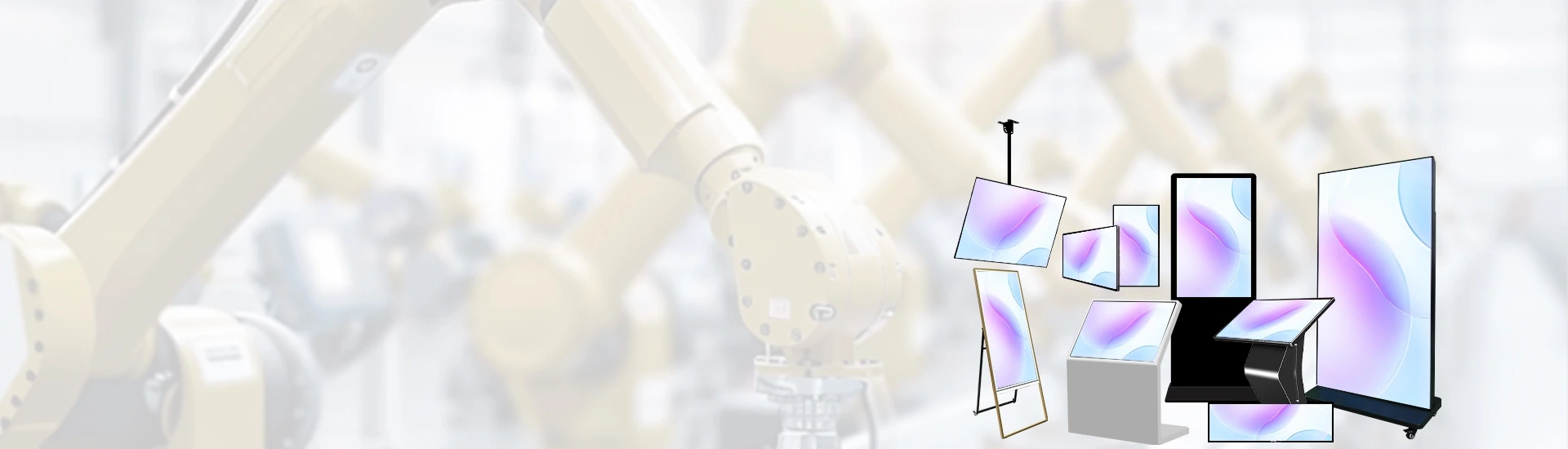
Den drive thru digital menu board has moved from early-adopter experiment to operational necessity for QSR brands competing on speed, accuracy, and margin. Post-pandemic drive-thru volumes remain elevated, and operators across North America, Europe, and Asia-Pacific are discovering that static menu boards cannot keep pace with dynamic pricing, limited-time offers, or real-time inventory. This guide covers the complete B2B evaluation path: definitions, traditional-versus-digital comparison, outdoor hardware requirements, dual-screen linkage, queue optimization, purchasing checklists, and documented deployments across five countries.
Adrive thru digital menu board is an outdoor-rated digital display system purpose-built for drive-thru lanes. Unlike indoor digital signage, these displays must withstand rain, dust, extreme temperatures, and direct sunlight while maintaining readability for drivers wearing polarized sunglasses. Typical deployments include QSR burger chains, coffee drive-thrus, convenience stores, and multi-lane fast-food operations.
The terms drive thru Og drive through are used interchangeably in industry literature. Both refer to the same service model. For SEO and procurement purposes, drive thru menu board Og drive through menu board are treated as equivalent search phrases, and buyers should not assume a product difference based on spelling alone.
Procurement teams evaluating a QSR drive-thru signage upgrade need a clear side-by-side view. The table below summarizes the operational differences that matter most to multi-unit operators.
| Criteria | Traditional Static Menu Board | Digital Drive-Thru Menu Board |
|---|---|---|
| Menu updates | Manual printing and installation; hours to days | Remote real-time updates via CMS; seconds |
| Outdoor adaptability | Fades, warps, and becomes illegible in harsh weather | IP65/IP66 rated, wide temperature range, auto-brightness |
| Order accuracy | No confirmation screen; errors caught at window | Dual-screen linkage with order confirmation |
| Driftskostnader | Recurring printing, labor, and replacement costs | Higher upfront; lower long-term maintenance and labor |
| Data capability | Inga | POS integration, sales analytics, dynamic pricing |
| Customer experience | Static, slow, limited upsell | Dynamic, faster, suggestive selling enabled |
Operators can change pricing, promote limited-time offers, or mark items as sold out across every location from a central dashboard. This is especially valuable for franchise groups managing regional pricing or seasonal menus.
Dynamic menu boards reduce customer hesitation by highlighting best-sellers and simplifying the decision process. Industry data consistently shows faster order times and higher throughput per lane.
Eliminating printed menu panels removes recurring production costs. Labor associated with manual updates and order correction also declines. For a broader view of how Digital skilt reduces operational overhead, the industry news archive documents similar patterns across QSR and retail.
Integration with POS and inventory systems allows the menu board to react to real-time demand. High-margin items can be promoted during slow periods; low-stock items can be hidden automatically. The Digital skilt pillar page provides a deeper technology overview.
Specifying an Utendørs digital skilt solution for a drive-thru lane requires attention to environmental ratings that indoor displays do not need.
Direct-sun installations typically require 3,500–5,000 nits. Shaded or north-facing positions may operate at 2,500 nits. Auto-brightness sensors adjust output based on ambient light, reducing power consumption and glare.
IP65 Eller IP66 is the minimum for exposed outdoor drive-thru enclosures. Coastal or desert sites may require additional salt-fog or dust protection.
Wide-temperature displays rated for -30°C to 55°C use self-cooling systems and PWM-controlled fans to maintain 24/7 operation without external air conditioning.
IK08 or IK10 impact ratings protect against accidental vehicle contact. Wide viewing angles and anti-glare coatings ensure readability from moving vehicles and for customers wearing polarized sunglasses.
The dual-screen architecture is a defining feature of modern outdoor drive thru display systems. The order screen faces the customer and presents the menu, promotions, and interactive options. The confirmation screen sits near the pickup window and displays the order as entered, the total amount, and pickup instructions.
For operators evaluating kiosk and self-service integration, the confirmation screen is the critical link between digital ordering and kitchen production. The kiosk deployment strategies resource covers multi-lane configurations.
Queue optimization is not only about hardware; it is about what the screen displays and when.
During rush periods, the menu can automatically switch to a reduced layout featuring top-selling items and combos, reducing decision time per vehicle.
When an item runs out or a station experiences a delay, the menu board can display an alert and suggest an alternative, preventing customers from ordering unavailable items.
Screens can guide vehicles toward the correct pickup window or lane, especially in multi-lane deployments. For a broader view of QSR digital signage queue strategies, the news archive covers additional case data.
For a broader selection framework covering digital signage procurement, pair this checklist with a vendor audit covering warranty terms and remote monitoring. The digital signage deployment resources cover multi-site rollout planning.
The following case studies are drawn from publicly documented installations. Each includes the specific country, configuration, and operational outcome where available.
Juici Patties, a Jamaican QSR chain with over 65 locations, deployed its first outdoor digital drive-thru menu board at the Drax Hall branch. The installation used a three-display configuration: one central 55-inch LG outdoor display flanked by two static panels with provisions for future digital upgrades. The enclosure was IP54-rated and designed for 24/7 reliability in a tropical climate.
Grill'd launched Australia's first fully integrated drive-thru digital experience at Mount Ommaney in Brisbane. The system combines Samsung Outdoor OH Series high-brightness displays with real-time POS integration through Redcat and cloud-based content management via Fusion Signage. The deployment was engineered for extreme UV, high summer temperatures, and sudden rain.
KFC's flagship concept near Johannesburg airport combines large-format outdoor LED, table service, and transparent OLED self-order kiosks. The drive-thru lane features a wall-sized LED installation with integrated Samsung OH high-brightness menu boards. The self-order kiosk concept uses transparent OLED technology developed in South Africa by PDT.
McDonald's Korea partnered with Samsung to create its first 100% fully digital drive-thru location at Goyang Samsong. The project replaced all paper menu boards with Samsung OHF series outdoor displays and OMN-D dual-sided window displays, managed through Samsung MagicINFO. The deployment addressed Korea's urban density and expanding suburban footprint.
Finnish street food chain Pretty Boy partnered with Zetadisplay to modernize in-store communications through digital menu boards at its Helsinki locations. The digital menu boards mimic the aesthetics of a street food truck while enabling real-time updates and streamlined promotional campaigns. The deployment demonstrates how Innendørs digital skilt and drive-thru-adjacent menu systems can maintain brand character in Nordic conditions.
According to a Forrester Total Economic Impact study commissioned for Samsung's outdoor digital menu boards, pilot locations recorded a 5.75% decrease in average drive-thru wait times, a 9.1% increase in drive-thru traffic volume, and a 2.5% increase in average order value. A separate 120-location QSR chain reported a 12% increase in average order value and an 18% throughput improvement over 12 months, with deployment payback in seven months.
Drive-thru digital menu boards are shifting from static menu replacement to data-driven revenue systems. AI-powered suggestive selling, weather-responsive promotions, and inventory-aware menu management are becoming standard requirements. For operators in emerging drive-thru markets, the digital signage case studies collection provides a global reference library for deployment planning.
The key takeaway from the five deployments above is that country-specific climate, regulatory, and POS integration requirements must drive the hardware specification, not the other way around. The digital signage case studies archive documents additional deployments across North America, Europe, and Asia-Pacific.
A drive-thru digital menu board is an outdoor-rated digital display system designed for drive-thru lanes. It replaces static menu panels with dynamic, remotely managed screens that can integrate with POS and CMS platforms.
Direct-sun installations typically require 3,500–5,000 nits. Shaded or north-facing positions may operate reliably at 2,500 nits. Auto-brightness sensors help maintain readability and reduce power consumption.
IP65 or IP66 is the minimum for exposed outdoor drive-thru enclosures. IP54 may suffice only for fully sheltered installations. Coastal or desert sites may require additional salt-fog or dust protection.
The order screen faces the customer and presents the menu and ordering options. The confirmation screen sits near the pickup window and displays the order as entered, the total amount, and pickup instructions. The two screens sync via POS and CMS data.
Dual-screen deployments allow customers to verify order accuracy before reaching the window. Industry data shows a 5.75% decrease in average wait times and a 9.1% increase in traffic volume in pilot locations.
UL and FCC for North America; CE, RoHS, and REACH for the EU. IP65/IP66 and IK08/IK10 for environmental and impact protection. Local wireless and energy certifications may also apply depending on the deployment country.
Den drive thru digital menu board is a strategic investment in speed, accuracy, and revenue. From Jamaica to Finland, documented deployments show that the right hardware specification — brightness, IP rating, temperature range, and POS integration — determines whether the system performs reliably in the field. The dual-screen linkage and queue optimization strategies covered in this guide provide a practical framework for QSR operators evaluating their first or next deployment.
Whether you are specifying your first outdoor drive-thru display or rolling out a multi-country standard, our team can help you define the right brightness, IP rating, and POS integration architecture for your target markets.
Request a Site Assessment
 NOR
NOR
 EN
EN  AR
AR  DAN
DAN  IT
IT  ARM
ARM  FIN
FIN  SWE
SWE  MAY
MAY  NL
NL  TH
TH  KOR
KOR  PL
PL  JP
JP  RU
RU  PT
PT  SPA
SPA  FRA
FRA  DE
DE  CHT
CHT 