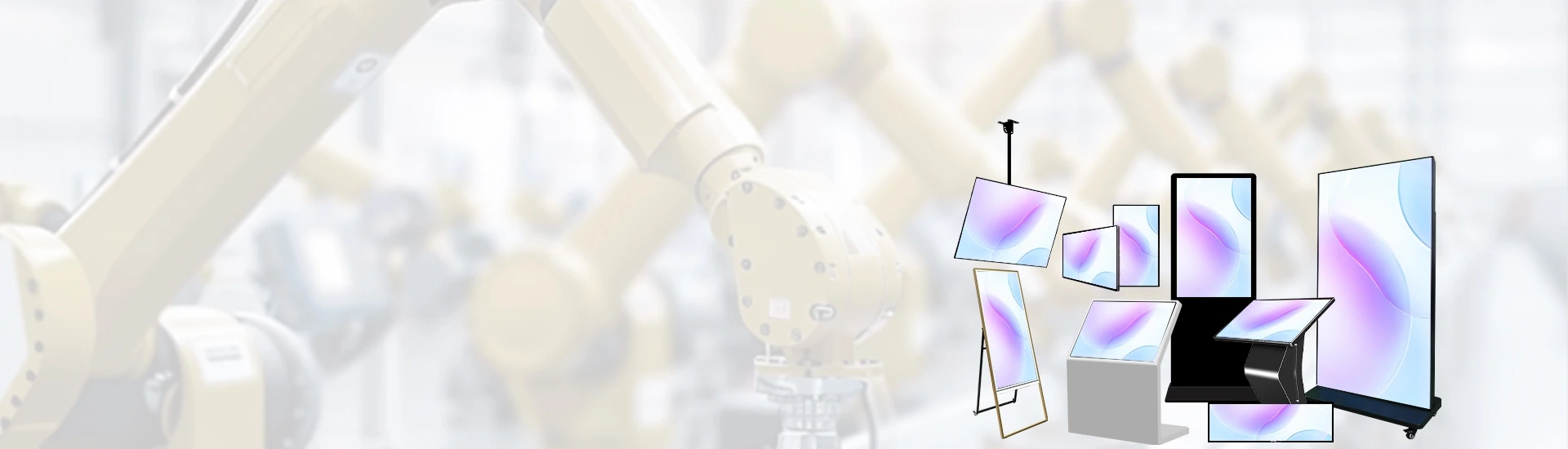
Offline food service, retail, and convenience store operators are moving through a rapid digital transformation, and the Digitalt menybräd has become standard intelligent display infrastructure across quick-service chains, coffee brands, bakeries, convenience stores, and food courts.
Traditional paper, vinyl, and acrylic menus carry obvious limitations. Every price change requires a reprint, brand presentation drifts between locations, promotional material rolls out slowly, and peak-hour flexibility is almost impossible. For chains operating dozens or hundreds of stores, these problems multiply quickly.
This guide explains what a Digitalt menybräd is, how it works, the hardware and software components behind it, the main deployment types, real industry applications, and how B2B buyers should evaluate a solution before purchase.
ADigitalt menybräd is a commercial display system used to present menus, pricing, promotions, and dynamic content, managed remotely through software and updated in real time.
Unlike a static printed menu, a digital menu board can be edited, scheduled, and synchronized across multiple locations from a single dashboard. It is designed for continuous commercial operation, high brightness environments, and long daily uptime.
General digital signage covers a very broad category, including airport wayfinding, hospital information boards, and corporate lobby displays. A Digitalt menybräd is a specialized segment built around food and retail menu logic: meal-period scheduling, price management, combo structuring, and item-level exposure tracking.
A POS screen or self-checkout display is a transaction interface. Some electronic menu board systems integrate ordering functions, but the primary role of a menu board is to present information at the point of decision, not to process payment.
The operating logic of a Digitalt menybräd system follows a simple four-stage flow, from content creation to on-screen rendering.
For multi-location operators, this architecture means a price change approved at headquarters can appear across every store within seconds, without a single site visit.
Understanding the component stack helps procurement and IT teams specify the right configuration and avoid mismatched hardware.
Different store formats call for different display configurations. The five types below cover the majority of B2B deployment scenarios.
A single-function, fixed-position menu board built for small restaurants, bakeries, and cafés. It offers low cost and stable operation, and works well for operators who need a reliable upgrade from printed menus without added complexity. Most fixed indoor installations pair a commercial panel with a compact media player, similar in principle to standard indoor digital signage deployments.
A video and image carousel format with high visual impact. This type suits chain restaurants, bubble tea shops, and fast food outlets where motion content drives attention and upsell.
An interactive electronic menu board that supports self-service browsing and ordering. It fits self-service concepts, dessert shops, and casual dining environments where customers want to explore options independently.
A high-brightness, weatherproof configuration designed for drive-thru lanes, roadside kiosks, and outdoor retail. These units require sealed housings, wide-temperature components, and anti-glare treatment.
A large-format video wall or multi-panel display used in large food courts and flagship chain stores. It allows menu content, promotional content, and brand content to run simultaneously.
Before investing, most B2B buyers compare a Digitalt menybräd against the display options they already know. The table below summarizes the practical differences.
| Criteria | Digital Menu Board | Traditional Paper or Print Menu | Static LED Sign | Self-Order Kiosk or App |
|---|---|---|---|---|
| Uppdateringshastighet | Real-time, remote | Manual reprint | Manual or limited | Real-time |
| Ongoing cost | Low after setup | Recurring print cost | Lågt | Moderate to high |
| Visual and brand impact | High, video and dynamic | Lågt | Måttligt | Hög |
| Customer interaction | Optional on touch models | Inga | Inga | Fullt |
| Best fit | Menu display plus promotion | Very small, low-budget operations | Simple pricing display | Self-service ordering flow |
ADigitalt menybräd is the right choice when the priority is menu presentation combined with promotion, frequent content changes, and consistent multi-store branding. A self-order kiosk fits better when the main goal is transaction throughput and order accuracy. Traditional print remains viable only for very small operations with stable menus and minimal change frequency.
Digital menu boards deliver measurable value across several B2B verticals. Each scenario below reflects a representative deployment pattern.
Fast food, coffee and bubble tea, bakery, casual dining, and drive-thru operations represent the core Digitalt menybräd scenario. These businesses deal with frequent menu changes, seasonal rotation, and peak-hour throughput pressure. In the United States, multi-unit quick-service chains commonly deploy digital menu boards at the drive-thru to shorten perceived wait time and rotate limited-time offers without reprinting.
Pricing, promotions, and new product display benefit from real-time updates. In Japan, convenience store chains use digital menu boards and counter displays to synchronize promotional pricing across thousands of locations during the same campaign window.
Breakfast restaurants, lobby bars, and resort dining venues use menu boards to present real-time service information, allergen details, and daily specials. In the United Arab Emirates, hotel groups with multiple F&B outlets use centralized menu systems to keep pricing consistent across properties.
Cinema concessions, gym cafés, and bars rely on dynamic bundle and promo updates. In the United Kingdom, cinema operators use digital menu boards to push combo pricing changes across all screens in a single evening update cycle.
Operational and IT questions often stall B2B purchase decisions. These are the points to clarify before committing to a supplier.
Check whether the menu board software can pull pricing and availability directly from your POS or inventory system. API availability, data refresh frequency, and error handling should all be documented.
A typical rollout moves through planning, site survey, hardware installation, content setup, and go-live. Single-store deployments can complete quickly, while multi-location rollouts require staged scheduling.
Clarify whether the system is fully self-service or requires dedicated IT support. Most modern digital menu platforms are designed for store managers to operate without technical staff.
For franchise and chain operators, centralized content control with local override permissions is essential. Headquarters should control brand assets and pricing, while individual stores may adjust limited local items.
Confirm network requirements, content security, SLA terms, warranty coverage, and after-sales response time before signing.
The business case for a Digitalt menybräd rests on four advantages that compound over time.
ROI typically combines three streams: savings from eliminated printing, savings from reduced manual staff time, and incremental revenue from better promotion visibility. Exact payback periods vary by store volume, menu change frequency, and hardware configuration, so buyers should model their own figures rather than rely on generic claims.
Selection should follow the operating environment and the commercial goal, not the specification sheet alone.
Determine indoor versus outdoor placement and the brightness level required. Direct sunlight environments demand significantly higher nits and anti-glare treatment.
Decide between basic display, touch interaction, and multi-screen video wall configurations based on how customers will use the display.
Evaluate CMS reliability, update frequency, API openness, and the vendor's after-sales SLA. Software quality usually matters more than panel specifications over a multi-year deployment.
A single store has different requirements than a multi-region chain. Multi-location operators need centralized control, role-based permissions, and reliable cloud synchronization.
Budget should account for the display panel, media player, mounting hardware, software licensing, installation, and ongoing support. Buyers should request a full total-cost-of-ownership breakdown rather than a hardware-only quote.
ADigitalt menybräd is no longer a premium add-on for large chains. It has become core store infrastructure that supports pricing accuracy, brand consistency, promotional agility, and data-driven operations. As menu systems move further toward cloud management and personalized display logic, the gap between digital and printed menu operations will continue to widen.
For B2B buyers, the decision comes down to matching deployment type, software capability, and support model to the realities of the store environment. Evaluating those three dimensions carefully is what separates a successful rollout from an expensive experiment.
Talk to our solutions team to discuss hardware configuration, software capability, and deployment planning for your store format.
Talk to Our Solutions Team Digital Menu BoardA traditional menu is a static printed or fixed material that requires manual replacement. A digital menu board is a software-managed display system that supports real-time remote updates, scheduled content, video playback, and multi-store synchronization.
Yes. Small restaurants, cafés, and bakeries can deploy a single fixed digital menu board with a compact media player. The investment is modest, and the system removes recurring printing costs.
In most cases, no. Modern content management systems are built for store managers and marketing staff. Daily operations such as price changes, item updates, and schedule adjustments are handled through a browser-based dashboard.
Cost depends on screen size, brightness rating, indoor or outdoor enclosure, media player, and software licensing. Buyers should request a total-cost-of-ownership breakdown that includes installation and ongoing support, not just the hardware price.
Many platforms support POS integration through APIs, allowing pricing and availability data to sync automatically. Integration scope and refresh frequency should be confirmed with the vendor before purchase.
Payback depends on store volume, menu change frequency, and hardware configuration. Operators with frequent price and promotion changes typically recover the investment faster because printing and manual labor costs are eliminated early.
Most systems cache content locally on the media player, so the display continues running if the network drops. Content updates resume automatically once connectivity is restored.
Outdoor models use sealed enclosures with IP65 or higher ratings, wide-temperature components, and high-brightness panels. They are designed for drive-thru lanes, roadside kiosks, and exposed retail environments.

 SWE
SWE
 EN
EN  AR
AR  DAN
DAN  IT
IT  ARM
ARM  FIN
FIN  NOR
NOR  MAY
MAY  NL
NL  TH
TH  KOR
KOR  PL
PL  RU
RU  PT
PT  SPA
SPA  FRA
FRA  DE
DE  CHT
CHT 