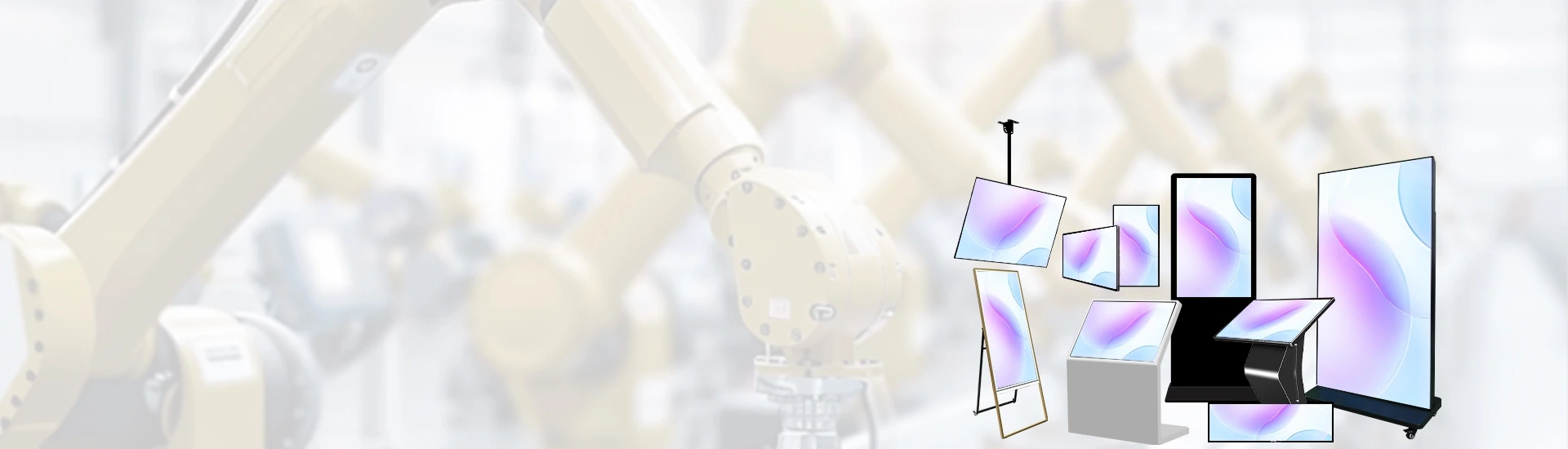
Modern commercial real estate is undergoing a massive digital transformation. Elevators are no longer just practical tools for vertical transportation; they have evolved into high-traffic, captive-audience communication hubs. For property managers, facility engineers, and Digital Out-of-Home (DOOH) advertising operators, installing a smart elevator lcd screen is no longer a luxury—it is a critical asset for building automation and revenue generation.
However, navigating the commercial display market can be challenging. With a barrage of technical choices regarding screen dimensions, operating systems, processing chipsets, and network stability, how do you make an investment that will remain future-proof for the next 5 to 10 years?
As a premier global manufacturer of industrial-grade commercial displays, Qtenboard has engineered this comprehensive procurement guide to help you choose the perfect elevator screen display tailored precisely to your building's operational goals.
More solutions for elevator screens
The first decision in your procurement pipeline revolves around screen configuration. Your choice directly influences passenger engagement and your property's underlying business model.
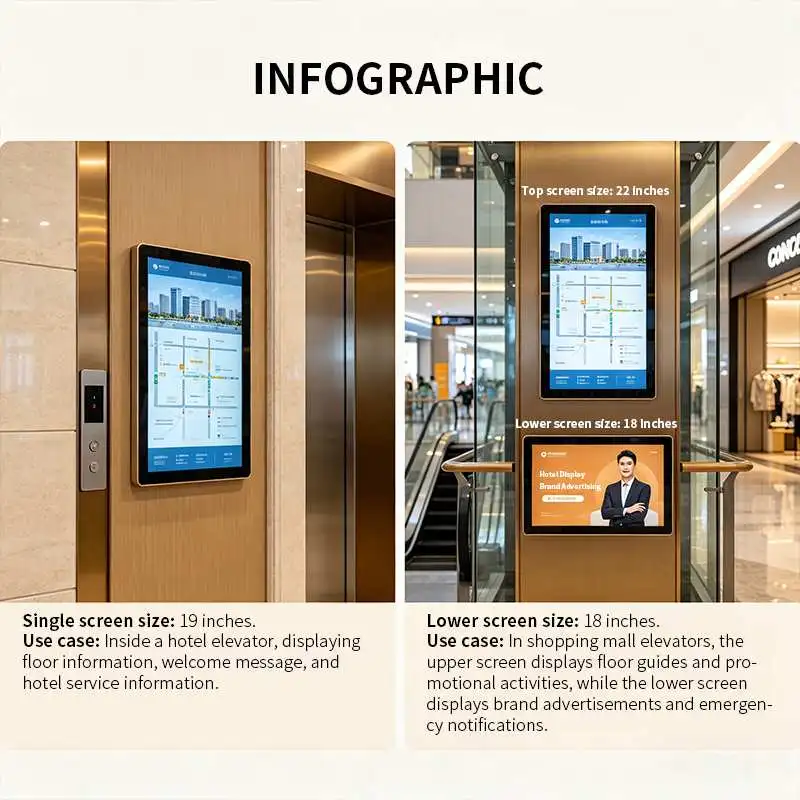
Best Suited For: Corporate headquarters, premium residential complexes, luxury hotels, and government institutions.
The Purpose: Single screens offer a clean, seamless look that excels at internal communications. They are primarily used to stream corporate branding videos, display real-time property management notices, broadcast emergency safety alerts, and serve as dynamic building directories.
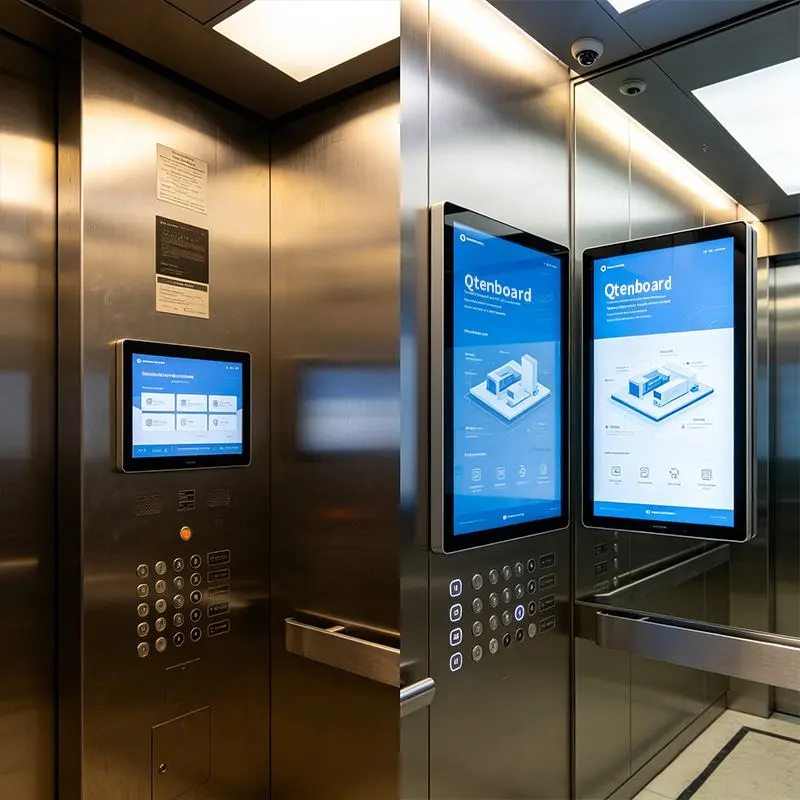
Best Suited For: Commercial shopping malls, high-density tech parks, and professional elevator media agencies (the "Focus Media" model).
The Purpose (The Golden Combination): Dual-screen hardware splits your digital real estate to maximize utility and profitability.
The Qtenboard Edge: Even if your budget or space constrains you to a single-screen setup, Qtenboard's integrated Content Management System (CMS) fully supports Split-Screen Display. You can divide a single panel into multiple custom zones to stream videos, scrolling text, and weather widgets simultaneously.
The longevity and daily stability of your elevator video screen depend entirely on what is under the hood. Frequent system crashes, lagging transitions, or software incompatibility will alienate advertisers and frustrate tenants.
Android OS (From Android 9.0 up to Android 16): Android is the industry gold standard for dedicated digital signage. It offers rock-solid operational stability, specialized application ecosystems, and incredibly low power consumption (Qtenboard devices feature a standby consumption of ≤ 1W).
Windows OS (Windows 10/11 Pro): Windows is recommended if your project requires deep, direct integration with complex, legacy building automation systems, enterprise-grade network security protocols, or interactive touchscreen databases.
When comparing technical spec sheets, pay close attention to the System-on-Chip (SoC). Qtenboard offers advanced Rockchip configurations tailored to specific operational demands:
Developer-Friendly Policy: Qtenboard grants allow root permission options for project engineers, enabling seamless installation of proprietary third-party APKs and custom system-level software development.
Elevator shafts and cabins present a uniquely challenging environment for electronic hardware. Elevators experience constant vibration, sudden temperature shifts, erratic wireless signals, and high physical exposure to public crowds.
Elevators are high-traffic public zones susceptible to accidental impacts and vandalism. Qtenboard structures its screens with a 3mm physical tempered glass layer laid over a heavy-duty cold-rolled steel backplate and aluminum profile frame. Furthermore, an Anti-Glare (AG) coating is applied to eliminate the harsh reflections caused by intense elevator ceiling spotlights, keeping content perfectly visible from any angle.
In a cramped elevator car, passengers stand scattered in close quarters. Standard desktop monitors shift colors or turn black when viewed from sharp side angles. Qtenboard uses commercial-grade IPS panels that ensure a 178° wide viewing angle, guaranteeing that colors remain deep, saturated, and legible whether a passenger is standing directly underneath or to the far side of the screen.
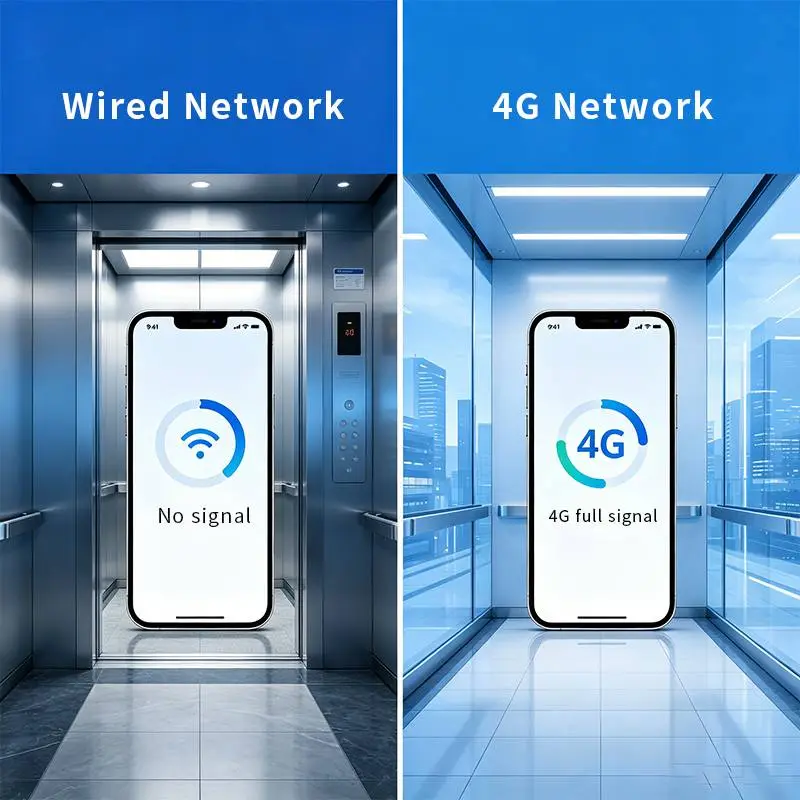
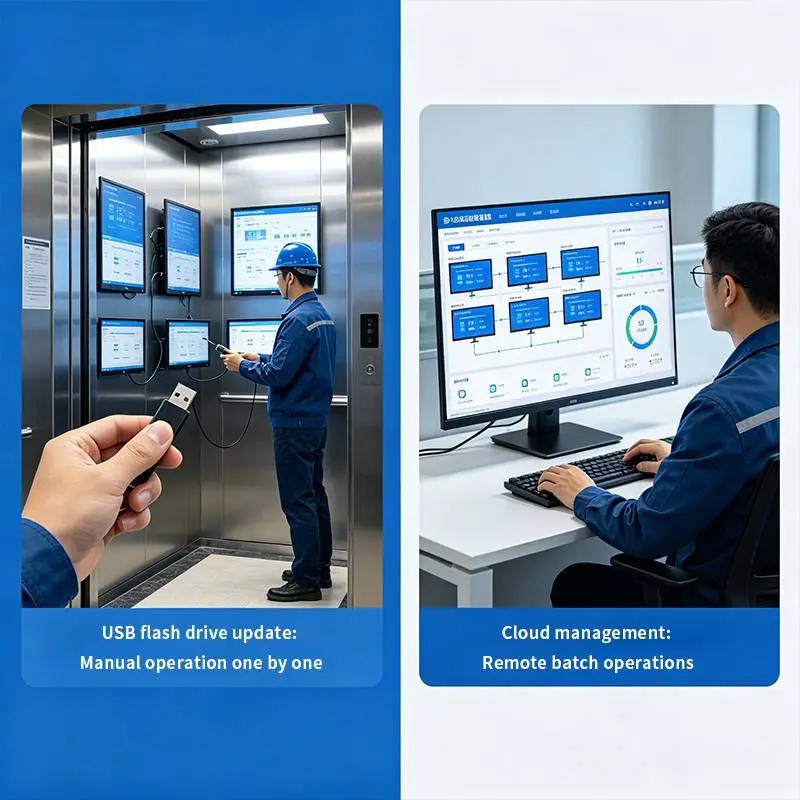
A moving steel elevator cabin behaves exactly like a Faraday cage, heavily blocking wireless frequencies. If your media network relies on manual USB updates, labor costs will skyrocket.
Qtenboard solves this infrastructure hurdle by engineering a flexible network array: Gigabit Ethernet (LAN), high-speed Wi-Fi 5/6, Bluetooth 5.4, and optional integrated 3G/4G LTE cellular modules. By routing content via a direct cellular network, your screens can update instantly in real-time, even deep inside concrete shafts.
An efficient hardware deployment is incomplete without intuitive software control. Modern commercial properties require automated workflows to keep operating expenses low.
Centralized Remote CMS: Qtenboard’s optional Content Management System lets your team manage a single screen or a network of ten thousand displays via a web browser or mobile app. You can deploy emergency building notices globally or alter ad loops instantly over the WAN without touching a single device.
Scheduled Playback Function: Maximize target audience relevance and energy efficiency. You can program Qtenboard screens to automatically power on/off based on building occupancy patterns and schedule smart playlists. For example, show local coffee and breakfast ads during the 8:00 AM morning rush, corporate profiles at midday, and restaurant or ride-sharing promotions during the evening commute.
For project consultants, system integrators, and procurement officers compiling tender documentation, here is a detailed reference parameters breakdown based on our flagship 32-inch commercial elevator model:
| Parameterkategori | Specification Details (Model: QM-3221FZ) |
|---|---|
| Brand & Origin | QtenboardName |
| Screen Dimensions | Single Configurations: 18.5", 21.5", 23.6", 27", 32" Dual Configurations: 18.5"+10.1", 21.5"+19", 23.6"+12.3" |
| Native Resolution | 1920×1080 (Standard 2K) / 3840×2160 (4K Optional Upgrade) |
| Viewing Angle & Contrast | 178° Full IPS Wide Viewing Angle | 3000:1 / 4500:1 Contrast Ratio |
| Backlight & Brightness | LED Backlight | ≥300 / 400 / 500 cd/m² (Customizable per project) |
| Operativsystem | Android 9.0 / 11.0 / 13.0 / 14.0 / 16.0 | Windows 10/11 Pro Optional |
| Hardware Core (SoC) | Quad/Octa-core ARM Processors (RK352, RK3566, RK3576, RK3588 Options) |
| Minne och lagring | RAM: 1GB / 2GB / 4GB / 8GB | Storage: 8GB / 16GB / 32GB / 64GB / 128GB |
| Connectivity Ports | HDMI Input *1 (2.1 4K@60Hz), USB *2, 3.5mm Audio Jack, MicroSD/TF Slot |
| Network Framework | 10M/100M/1000M Adaptive RJ45, Wi-Fi (2.4G/5G), Bluetooth | Optional 4G Sim Slot |
| Chassis & Protection | Aluminum Profile Frame + Cold-Rolled Steel Shell + 3mm Tempered AG Glass |
| Installation Layouts | Wall-Mount Bracket, Flush Cabin Embedding, Floating Hang Mount |
Note: Qtenboard specializes in full B2B OEM/ODM customization. We support bespoke chassis coloring, laser-etched corporate logos, custom system boot animations, and tailored I/O port layouts to fit your exact engineering specifications.
A multinational property asset management firm operating a premium, high-density commercial technology park with over 45,000 daily white-collar commuters.
The tech park's existing elevator displays were outdated, offline legacy screens. Property staff had to manually copy files onto USB drives and physically walk to every single elevator bank across 12 towers to execute content updates. This process caused high maintenance labor costs, mismatched scheduling, and significant glare issues from lighting, resulting in low ad renewals and tenant dissatisfaction.
The firm retrofitted their properties with a fleet of Qtenboard 21.5"+19" Android Dual-Screen Elevator Displays. The hardware was configured with high-performance Rockchip RK3566 processors, integrated 4G LTE wireless modules, and connected directly to their centralized cloud-based CMS platform.
Q1: How do elevator screens maintain a stable network connection while moving inside a concrete shaft?
A: While standard network cables can be ran inside a lift's traveling cable bundle, signal attenuation and cable wear are persistent problems. Qtenboard strongly recommends opting for our integrated 4G cellular network modules. This allows the display to pull data straight from local cellular towers, offering stable, wireless, and completely independent remote content management.
Q2: Can we deploy our own proprietary building management or advertising software?
A: Yes. Qtenboard commercial hardware is intentionally built with an open ecosystem. We grant system root permissions and full software application compatibility. Your technical team can install custom Android APKs or Windows-based enterprise software seamlessly.
Q3: Elevator car space is strictly regulated. How safe are these displays to install?
A: Qtenboard elevator displays feature an ultra-slim, low-profile design engineered precisely for tight public configurations. They support multiple secure installation methods, including ultra-thin wall brackets and seamless flush-embedding (making the screen sit perfectly level with the elevator cabin paneling). All materials are fire-resistant and structurally certified to comply with international safety standards.
Q4: Do you offer corporate branding or custom color configurations for large projects?
A: Absolutely. As an established OEM/ODM partner, Qtenboard can customize the physical chassis color (Black, White, or custom RAL palettes), screen glass treatments, print your corporate logo directly onto the bezel, and hardcode custom boot animations into the system firmware.
Selecting the perfect elevator video screen requires balancing digital flexibility, processing power, and long-term physical resilience. Investing in high-quality industrial displays ensures lower maintenance overhead, higher structural security, and premium presentation performance that preserves your building's elite profile.
Are you preparing a project tender or upgrading your property portfolio's digital infrastructure? Contact the Qtenboard engineering team today to request comprehensive CAD technical layouts, exact project pricing matrices, and tailored hardware configurations.
Klicka för att läsa produktuppgifterna och lära dig om dess funktionella funktioner och faktiska prestanda.
📖Läs produkt
 SWE
SWE
 EN
EN  AR
AR  DAN
DAN  IT
IT  ARM
ARM  FIN
FIN  NOR
NOR  MAY
MAY  NL
NL  TH
TH  KOR
KOR  PL
PL  JP
JP  RU
RU  PT
PT  SPA
SPA  FRA
FRA  DE
DE  CHT
CHT 