
This guide is written for AV system integrators, video wall distributors, project buyers, and OEM/ODM brand clients evaluating LCD video wall display systems for control rooms, enterprise operations centers, retail, hospitality, and exhibition projects. It covers panel selection, controller and signal planning, mounting and service access, factory verification, total cost of ownership, and acceptance checklists. The focus is not on explaining what an LCD video wall is, but on how to specify, integrate, and deliver a complete project.
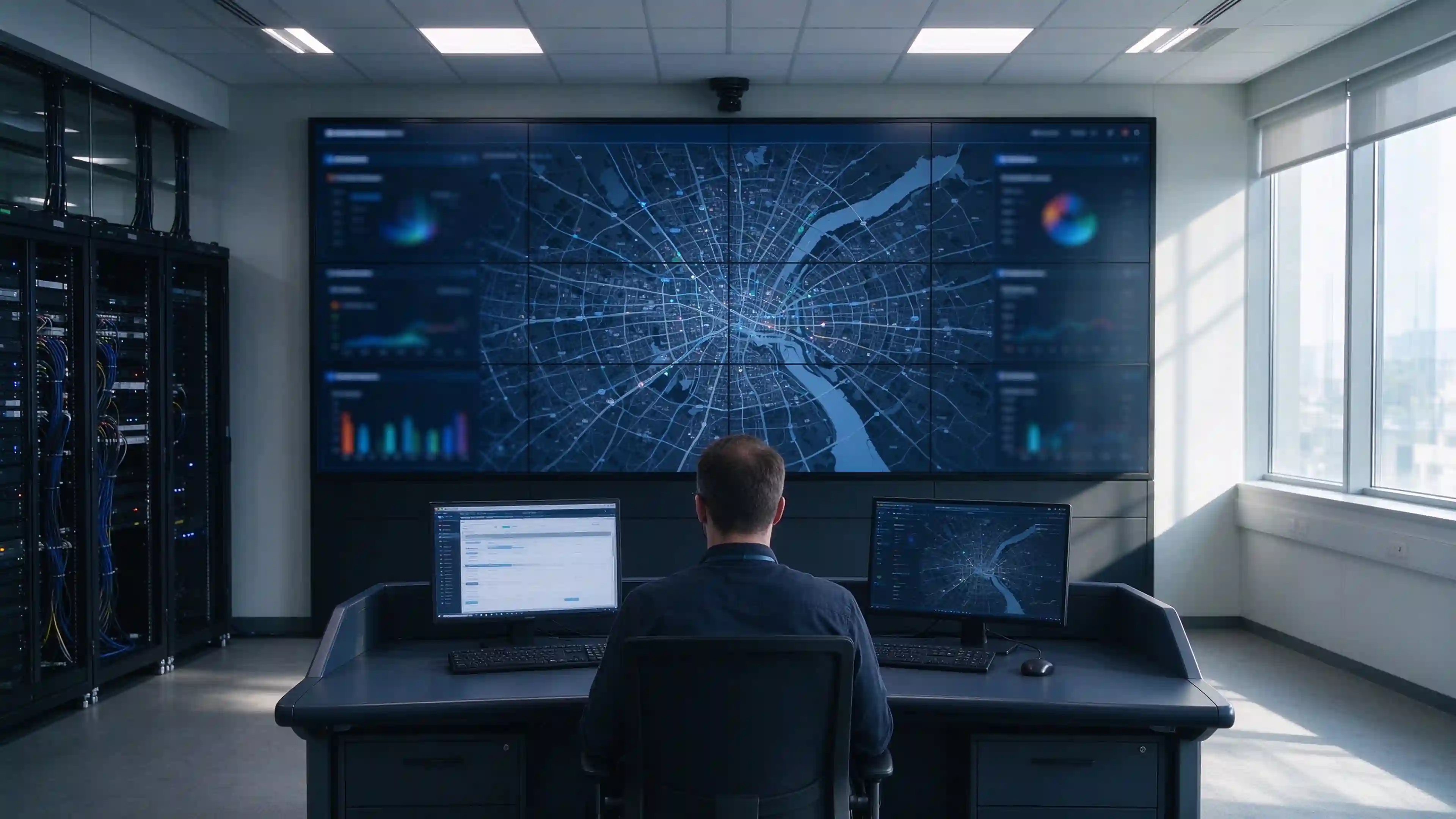
An LCD video wall is not simply multiple screens placed side by side. It is a project-level display system composed of LCD panels, a video wall controller, signal sources, mounting structure, and management software. Each component must be specified to match the project's content type, viewing distance, and operating conditions.
Project suitability depends on content type, room conditions, and viewing distance — not on industry category alone.
| Evaluation Item | Parede do vídeo do LCD | Direct-View LED | Reference Values |
|---|---|---|---|
| Seam surface | Multi-panel, visible bezel lines between panels | Module splicing, no LCD panel bezel lines | LCD bezel 0.88–3.5mm |
| Image layout | Suited for fixed panel matrix | Flexible module-based dimensions and shapes | — |
| Brilho | 500–700 nits (indoor baseline) | 800–1,500 nits (indoor) | Ambient light drives selection |
| Panel lifespan | ~70,000 hours (backlight) | ~100,000 hours | LED offers longer lifespan |
| Consumo energético | Continuous, proportional to panel count | Depends on displayed content and pixel density | Control room needs comparison |
| 5-year TCO | Baseline | ~22% lower in control room scenarios | Calculate per project |
| Selection guidance | Suitable for indoor fixed rectangular projects that accept visible seams | Compare when seamless, large-area, or high-brightness requirements dominate | — |
Do not write "LCD is always cheaper than LED" or "LED is always better." Compare quotations based on final configuration, installation, and maintenance costs.
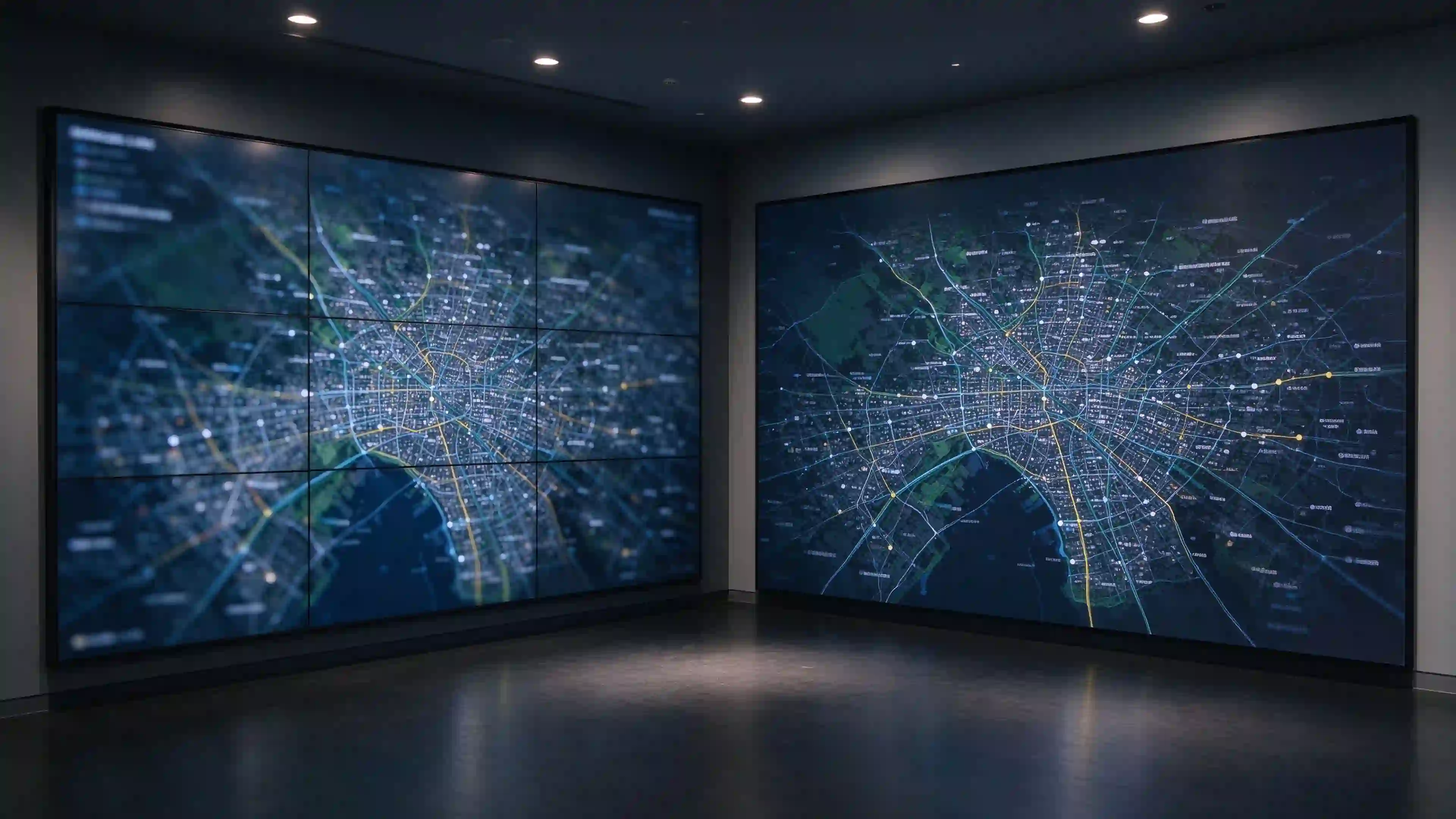
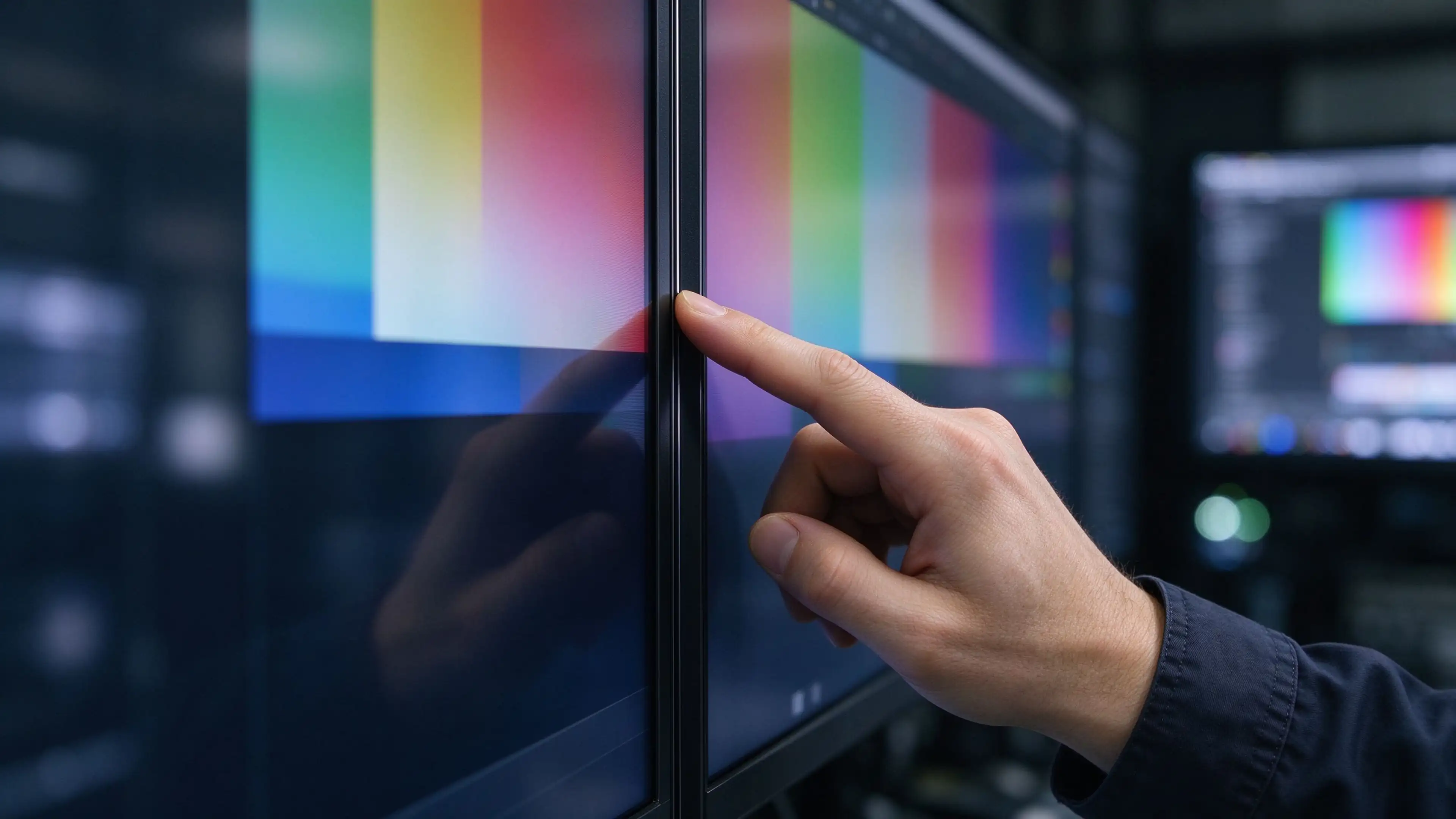
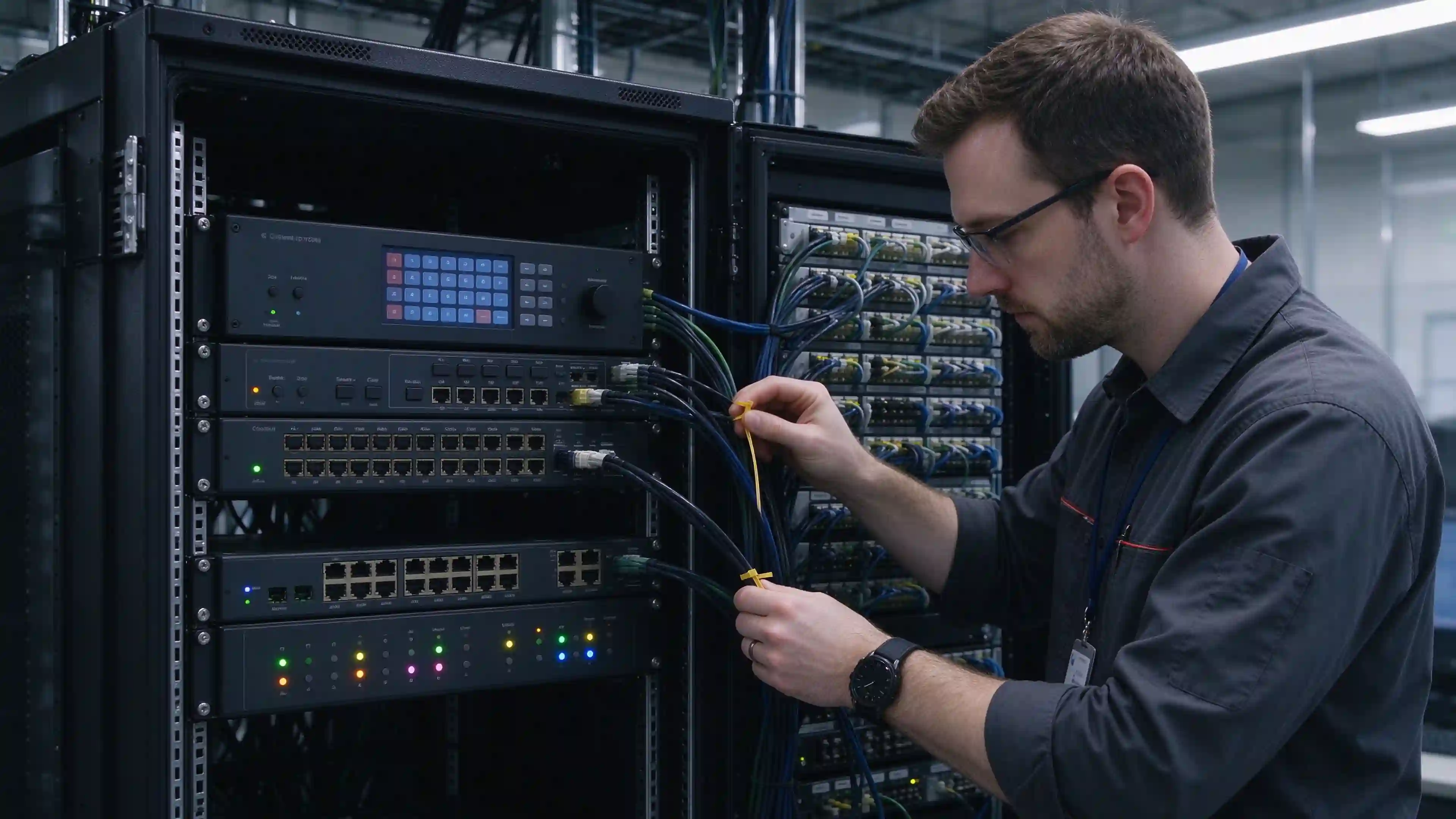
| Project Requirement | Corresponding Equipment | Parameters to Confirm |
|---|---|---|
| Single-image cross-screen | Video wall controller (splicing processor) | Output count, resolution, cross-screen method |
| Multi-signal multi-window | Multi-window controller + matrix switcher | Input count, window layout, switching speed |
| Long-distance signal transmission | Signal extender / fiber optic transmission | Distance, resolution, latency |
| Content playback | Media player / PC / network media player | Format support, output interface, management method |
| Centralized control | Control panel / central control system | Protocol compatibility, network access, permission management |
| Aplicação | Content Characteristics | Key Evaluation Points |
|---|---|---|
| Control room | Multi-channel monitoring, maps, dashboards | Long-duration operation, signal management, maintenance response |
| Enterprise meeting and operations | Presentations, data, and video | Input switching, resolution, viewing positions |
| Retail and hospitality | Brand content, event information | Ambient light, playback management, installation conditions |
| Exhibition and experience centers | Brand visuals, dynamic content | Image aspect ratio, content resolution, on-site lighting |
Each application should be evaluated with its actual configuration priorities and verification conditions — not repeated industry marketing language.
Quotation depends on more than panel count:
| Cost Item | 5-Year TCO Calculation Variables |
|---|---|
| Panel hardware | Unit price × panel count |
| Controller and signal equipment | Controller + player + cabling |
| Mounting structure | Bracket + custom frame + labor |
| Commissioning and calibration | Labor × panel count |
| Consumo energético | Wattage × operating hours × electricity rate |
| Maintenance and spares | Annual maintenance + spare parts inventory |
| Panel replacement | Failure rate × replacement cost × years |
| Downtime cost | Failure count × average downtime × business loss |
Regional adaptation requirements: Middle East high-temperature performance, Southeast Asia humidity resistance, North America anti-glare and brightness calibration.
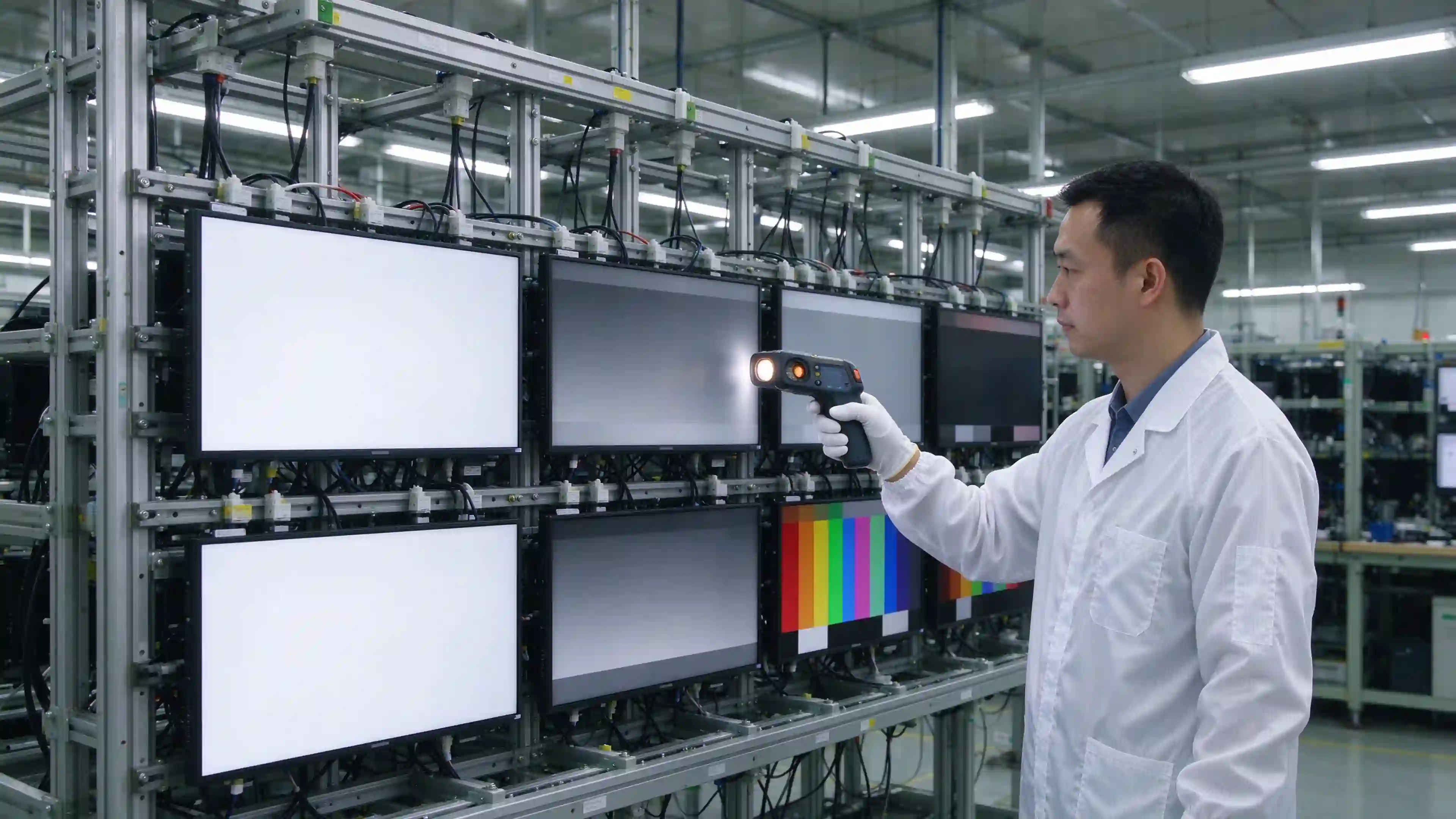
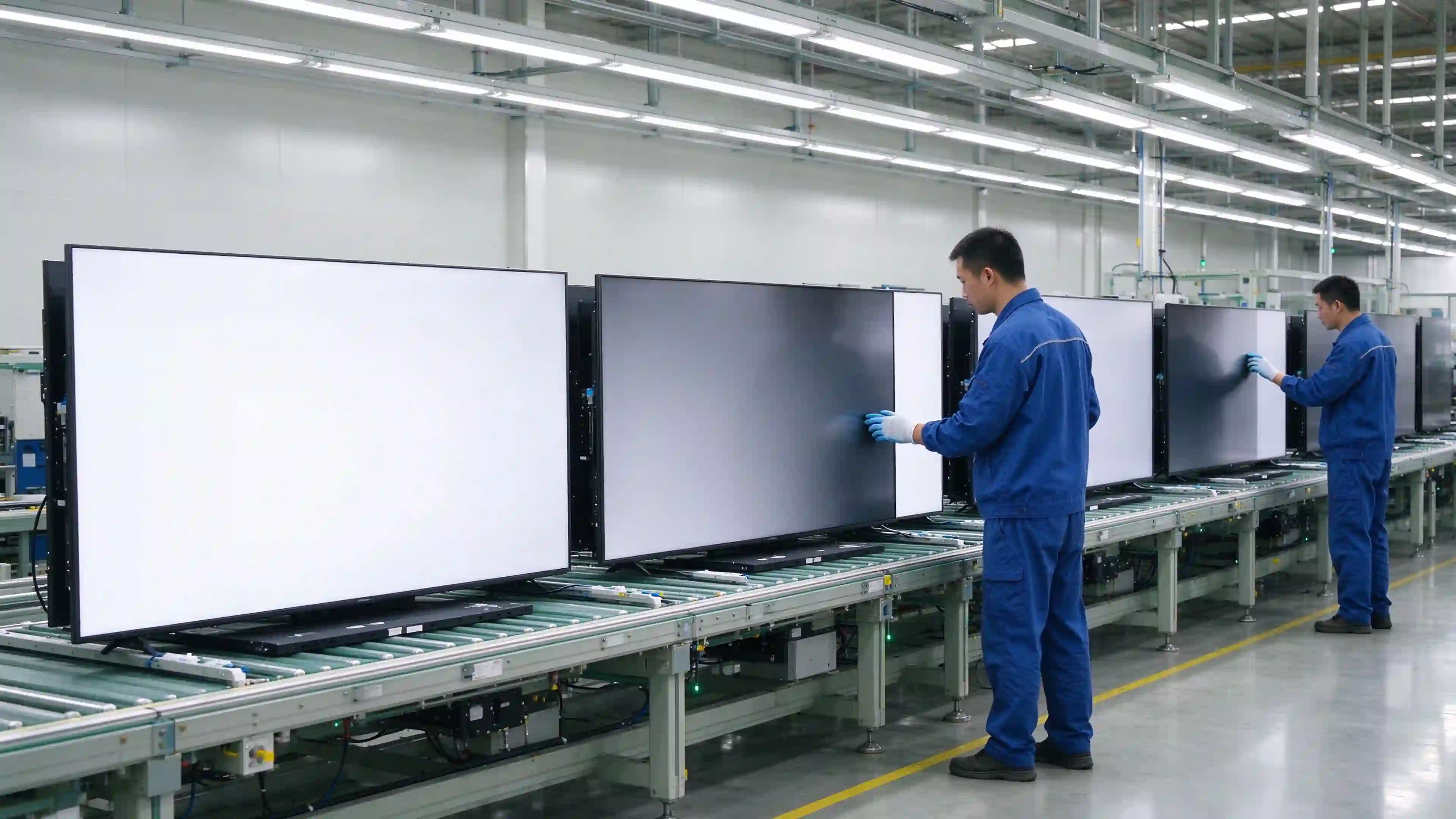
Qtenboard provides OEM/ODM services for video wall distributors and brand owners, with 20+ years of manufacturing experience and exports to 50+ countries.
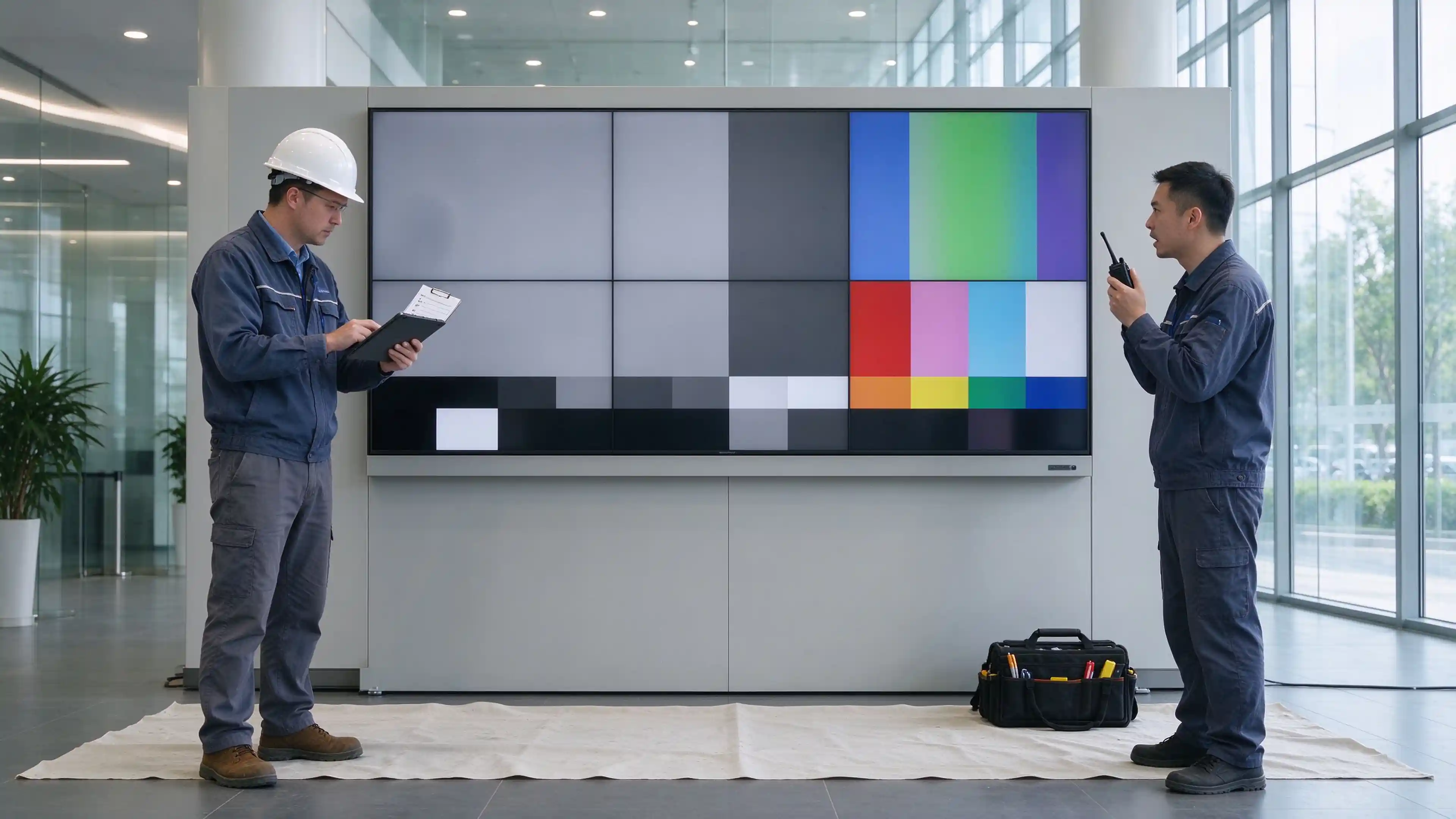
| Acceptance Item | Inspection Content |
|---|---|
| Model and quantity | Consistent with order configuration |
| Installation position and layout | Consistent with design drawing |
| Single panel display and input | Test each panel individually |
| Full-wall splicing image | Signal source, controller, cross-screen function |
| Brightness and color consistency | Full-wall visual consistency check |
| Documentation and spares | Manual, configuration backup, spare parts list |
| Training and warranty | Operation training completed, warranty information handed over |
An LCD video wall is a project-level display system composed of multiple commercial LCD panels arranged in a rectangular matrix, integrated with a video wall controller, signal sources, and mounting structure. It is used for indoor applications that require a large-format display with fixed layout.
The system includes LCD panels, a video wall controller or splicing processor, signal sources (players, PCs, cameras), signal distribution equipment, mounting structure, and control software. Each component must be specified to match content type, viewing distance, and operating conditions.
A single large-format display uses one panel with no internal seams. An LCD video wall uses multiple panels and has visible bezel lines between them. Choose a video wall when the required display area exceeds available single-panel sizes or when the layout must be configured in a specific matrix.
Seam visibility depends on bezel width, viewing distance, and content type. Narrow-bezel models range from 0.88mm to 3.5mm. Text-heavy, cross-screen, and map-based content is more sensitive to seams than full-screen video. Verify with the specific model and actual viewing distance.
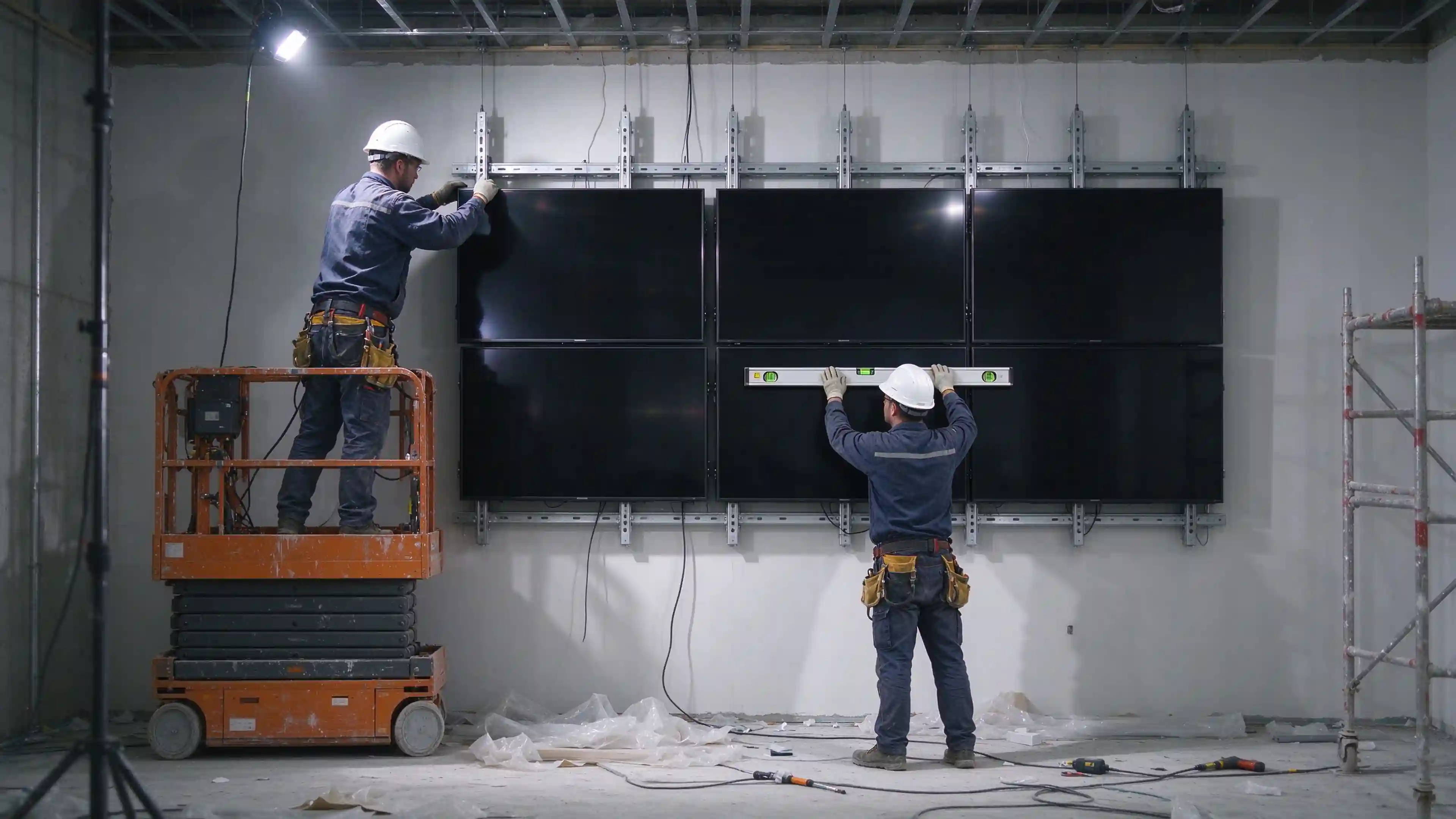
Confirm available wall dimensions and viewing distance first, then calculate row and column combinations based on panel size. Validate the final aspect ratio against content requirements. Layout should also account for maintenance access and cable routing.
A controller is required when the project needs single-image cross-screen display, multi-window layout, or signal switching. For simple content playback where each panel shows the same or independent content, a controller may not be necessary. Confirm the exact function required and whether the controller is included in the quotation.
Yes, when the system includes a video wall controller or splicing processor that supports cross-screen display. The controller divides a single input signal across multiple panels to form a continuous image. This requires specific output resolution and layout configuration.
Provide target video wall size and layout, site photos and floor plan, viewing distance, content type, signal source count, input requirements, planned operating hours, installation location, and maintenance conditions.
Qtenboard provides OEM/ODM services including logo printing, custom packaging, branded boot animation, hardware configuration, and CKD/SKD export models. MOQ and lead time depend on the specific customization scope.
Acceptance inspection covers model and quantity, installation position and layout, individual panel display and input, full-wall splicing image, brightness and color consistency, documentation and spares, and training and warranty handover.
To receive a project-specific configuration and quotation, provide the following information:

 PT
 EN
 AR
 DAN
 IT
 ARM
 FIN
 SWE
 NOR
 MAY
 NL
 TH
 KOR
 PL
 RU
 SPA
 FRA
 DE
 CHT
