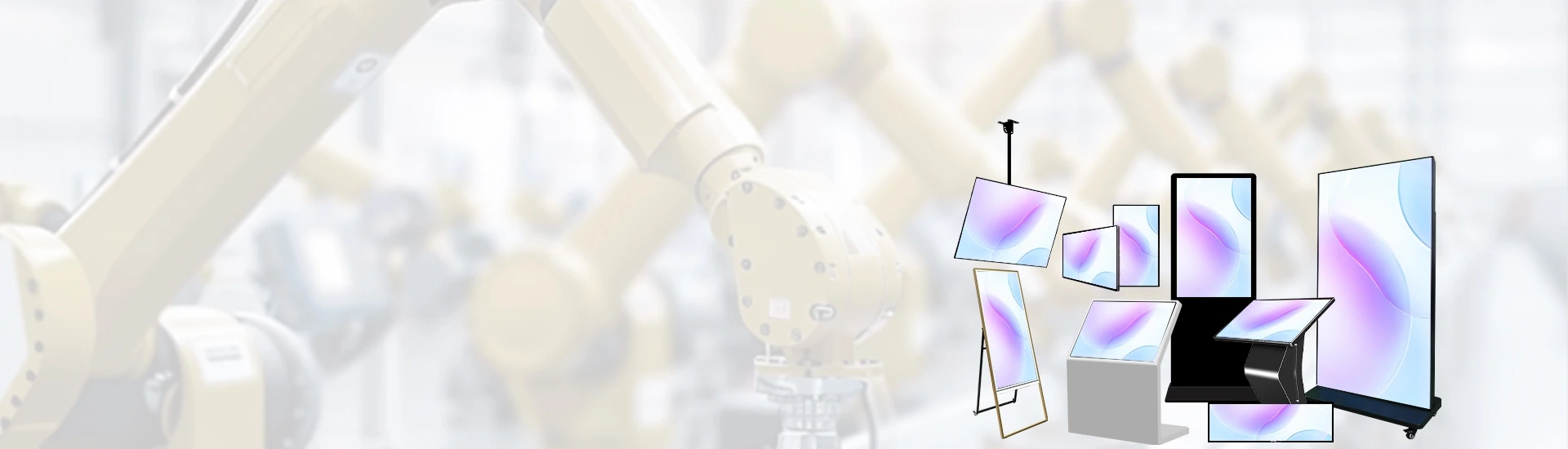
If you are a shopping mall operator, an AV system integrator, or a commercial project contractor planning a full or partial digital upgrade for a retail center, this guide is written specifically for you. You are likely facing tight project deadlines, strict budget controls, pressure to improve customer experience, and demands to increase advertising revenue at the same time. You need clear, practical, and decision-driven information about wall mounted digital signage for mall environments, wayfinding information displays, and windows display signage—not just generic product specs, but a full framework to help you choose the right solution, avoid costly mistakes, and deliver a reliable, scalable system for your mall project.
Every year, thousands of shopping centers worldwide replace outdated static signage with modern digital signage for mall solutions. Yet many buyers still make the same errors: choosing the wrong screen sizes, mismatched operating systems, insufficient brightness for window areas, or unreliable suppliers that lead to delays, maintenance headaches, and failed ROI. This guide eliminates guesswork. It walks you through every critical step of selecting, evaluating, and procuring digital signage for mall projects, from core functional needs to technical specifications, supplier vetting, and real project implementation.
Tegen het einde van dit artikel zult u begrijpen:
This is not a sales pitch. It is a professional procurement blueprint used by international mall developers, system integrators, and digital signage for mall distributors. Let's begin with the real problems you are solving.
Before looking at any specific product, you must recognize the operational challenges that make digital signage for mall no longer optional—but essential. These pain points directly affect revenue, customer satisfaction, and daily management efficiency.
De meeste middelgrote en grote winkelcentra vertrouwen nog steeds op gedrukte posters, lichtbakken en met de hand bijgewerkte banners. Hoewel deze methoden vooraf goedkoop lijken, creëren ze enorme uitgaven op de lange termijn. Afdrukken, transport, installatie en arbeidskosten lopen snel op. Inhoud kan niet worden aangepast voor evenementen, vakanties, flitsverkopen of noodaankondigingen. Adverteerders eisen real-time flexibiliteit en statische bewegwijzering kan eenvoudigweg niet worden geleverd.
As a result, advertising partners lose interest, rental prices stay low, and the mall fails to maximize its internal media value. This is why wall mounted digital signage for mall has become the standard replacement for traditional billboards and poster frames. With digital screens, content updates take minutes, not days. Campaigns can be scheduled, segmented, and revised remotely. Mall operators gain full control over their internal media network and unlock higher advertising income.
Moderne winkelcentra variëren vaak van 50.000 tot meer dan 200.000 vierkante meter. Met tientallen verdiepingen, honderden winkels, meerdere ingangen, parkeergarages, foodcourts en uitgaansgebieden raken bezoekers gemakkelijk gedesoriënteerd. Veel voorkomende klachten zijn:
This frustration reduces foot traffic to lower-floor or corner stores and increases workload for frontline staff. Wayfinding information digital signage for mall solves this by providing interactive, real-time navigation. Touchscreen wayfinding displays let visitors search for stores, view 3D mall maps, get the shortest walking routes, and check ongoing promotions. Top malls report dramatic reductions in customer service inquiries after deploying professional wayfinding systems.
Retailmerken in winkelcentra hebben moeite om op te vallen. Traditionele raamposters vervagen snel, vereisen frequente herdrukken en kunnen de aandacht niet trekken in gebieden met veel verkeer. Voorbijgangers scrollen langs statische beelden zonder te stoppen. Voor luxe-, mode-, elektronica-en cosmeticamerken betekent dit gemiste conversiemogelijkheden.
Windows display digital signage for mall changes this completely. High-brightness commercial screens deliver dynamic video content, product launches, seasonal campaigns, and interactive visuals that attract attention even in strong ambient light. Storefronts become living advertising spaces that drive curiosity and increase foot traffic into individual shops.
For any modern shopping mall project, choosing the right digital signage for mall solution is no longer a minor purchasing decision. It directly shapes revenue structure, operational efficiency, brand image, and long-term asset value. The next section explains why a complete, integrated system performs far better than individual screens.
Many buyers make the mistake of buying a few random screens and calling them a "digital upgrade." This approach almost always underperforms. A successful digital signage for mall strategy requires three interconnected subsystems working together:
Elk onderdeel dient een uniek doel, maar samen creëren ze een verenigd smart mall-ecosysteem.
Wall mounted digital signage for mall forms the backbone of the mall's internal media network. These screens are strategically placed in high-traffic zones to maximize visibility and advertiser value.
Typische inzetgebieden zijn onder meer:
The benefits of a structured wall mounted digital signage for mall network include:
Mall operators can generate stable, recurring advertising revenue while offering brands measurable exposure. Wall mounted digital signage for mall transforms empty wall space into high-yield media assets.
Large malls cannot deliver excellent customer experience without reliable navigation. Wayfinding information digital signage for mall serves as the mall's digital guidepost.
Core functions include:
Modern wayfinding information digital signage for mall often uses touchscreens, allowing visitors to self-serve information. This reduces pressure on customer service desks and creates a smoother, more modern shopping environment. Well-designed wayfinding systems directly improve customer satisfaction scores and encourage longer stays.
Windows display digital signage for mall is designed specifically for storefronts, shop windows, and high-ambient-light environments. Unlike regular indoor screens, these displays are engineered for visibility in daylight conditions.
Belangrijkste voordelen:
Luxury brands, fashion retailers, electronics stores, and cosmetics counters benefit most from windows display digital signage for mall. The screens turn passive windows into active sales tools that capture attention and drive impulse visits.
Together, these three systems create a fully connected digital signage for mall solution that boosts revenue, improves operations, and elevates the entire shopping experience.
Below is a table of the most important features commercial buyers evaluate for wall mounted digital signage for mall, wayfinding information displays, and windows display signage. These features directly impact performance, usability, and total cost of ownership.
| Feature | Beschrijving | Value for Mall Projects |
|---|---|---|
| 4K Ultra HD-scherm | High-resolution 3840×2160 panel for sharp, detailed advertising content | Delivers premium visual quality for brands and enhances mall professionalism |
| Hoge helderheid | Windows display digital signage for mall supports 1000+ nits; indoor screens typically 300–500 nits | Ensures clear visibility even in bright environments; critical for storefront windows |
| Remote CMS Platform | Cloud-based or local content management system for centralized control | Allows multi-screen management from one dashboard; reduces on-site labor |
| Interactive Touch Function | Capacitive or infrared touch for wayfinding and self-service | Essential for wayfinding information digital signage for mall; improves user experience |
| Split-Screen Display | Ability to play multiple content zones on one screen | Increases advertising inventory and allows mixed content (ads + news + time) |
| Content Scheduling | Automated playback by time, date, or event | Supports holiday campaigns, peak-hour ads, and daily content rotation |
| 24/7 Commercial Grade | Industrial-grade components for continuous operation | Ensures stability in high-use mall environments; lowers failure rates |
| Brede kijkhoek | Consistent image quality from side angles | Improves visibility for visitors walking from multiple directions |
| Low Power Consumption | Energy-efficient design for large-scale deployment | Reduces long-term electricity costs for full-network operations |
| Rugged Enclosure | Anti-theft, dust-resistant, and vandal-proof design | Suitable for public areas; increases durability and lowers maintenance |
This table reflects real procurement priorities from international mall projects. When evaluating suppliers, use these features to compare wall mounted digital signage for mall, wayfinding information displays, and windows display signage objectively.
This section contains the most technical and decision-critical details for buyers. Getting these right will prevent expensive mistakes in screen size, operating system, and customization.
Shopping center digital signage for mall uses several standard sizes. Choosing correctly depends on viewing distance, location, and content purpose.
General guidelines:
Mall projects typically choose between two operating systems. The decision depends on software, integration, and budget.
Best for:
Advantages:
Best for:
Advantages:
Many large malls use a hybrid approach: Android for wall mounted digital signage for mall and Windows for wayfinding information displays.
Professional suppliers support full customization to match mall branding and project needs.
Common customizations include:
Customization is especially important for premium shopping centers that require unified brand design across wall mounted digital signage for mall, wayfinding information displays, and windows display signage.
More than 80% of commercial digital signage for mall deployed in international shopping centers now comes from China. Leading buyers specifically select Chinese manufacturers for large-scale projects involving wall mounted displays, wayfinding information systems, and windows display signage.
Chinese-made digital signage for mall typically costs 30–50% less than comparable European or American brands. Lower production costs, efficient supply chains, and scale manufacturing allow suppliers to offer competitive pricing without sacrificing quality. For large mall projects, this difference can drastically reduce total investment.
China has the world's most integrated digital signage for mall industry chain, including:
This vertical integration ensures stable lead times, consistent quality, and flexible order volumes—critical for mall projects with strict deadlines.
Qtenboard specializes in three core product lines for shopping centers:
The company supports full project-based solutions for international clients, including:
Qtenboard has become a trusted partner for system integrators and mall developers because it focuses purely on commercial-grade digital signage for mall, not consumer electronics.
Mall digital signage for mall projects involve large investments and long lifecycles. Choosing an unreliable supplier leads to delays, breakdowns, and unsupported systems. Use this framework to evaluate professionalism and credibility.
Legitimate commercial-grade manufacturers must hold international safety and quality certifications:
Certifications prove that wall mounted digital signage for mall, wayfinding information displays, and windows display signage meet global safety and performance standards.
Reliable suppliers typically have:
Avoid trading companies with no real factory background.
Strong after-sales is critical for long-term operation:
A trustworthy supplier will support your project for years, not just until delivery.
Actual implementations demonstrate how wall mounted digital signage for mall, wayfinding information displays, and windows display signage deliver ROI.
These cases represent typical results for professionally designed digital signage for mall Oplossingen.
Digital signage for mall pricing is project-based and depends on multiple factors:
For example, 55-inch wall mounted digital signage for mall pricing varies based on configuration, brightness, software, and volume. Transparent suppliers will provide detailed quotations based on your actual needs.
A smooth digital signage for mall project follows this proven workflow:
This structure reduces risk and ensures on-time deployment.
For mall operators looking to deploy interactive self-service terminals alongside their digital signage for mall network, Qtenboard's K-Type Information Kiosk offers a versatile floor-standing solution with touch-screen navigation, optional QR scanning, and printer modules—ideal for wayfinding and directory services in high-traffic areas.[reference:0]
These are the most common SEO and procurement questions from mall operators, integrators, and distributors.
To understand how interactive touch kiosks complement your digital signage for mall strategy, read our detailed overview: Qtenboard Touch Kiosken voor moderne klantervaringen—covering time efficiency, accuracy, personalization, and data-driven insights that directly benefit mall operations.[reference:1]
For a deeper dive into floor-standing digital signage for mall applications—including brand exposure, wayfinding, and real-time promotion—explore our dedicated article: Shopping Mall Digital Signage Solutions & Screens.

 NL
NL
 EN
EN  AR
AR  DAN
DAN  IT
IT  ARM
ARM  FIN
FIN  SWE
SWE  NOR
NOR  MAY
MAY  TH
TH  KOR
KOR  PL
PL  JP
JP  RU
RU  PT
PT  SPA
SPA  FRA
FRA  DE
DE  CHT
CHT 