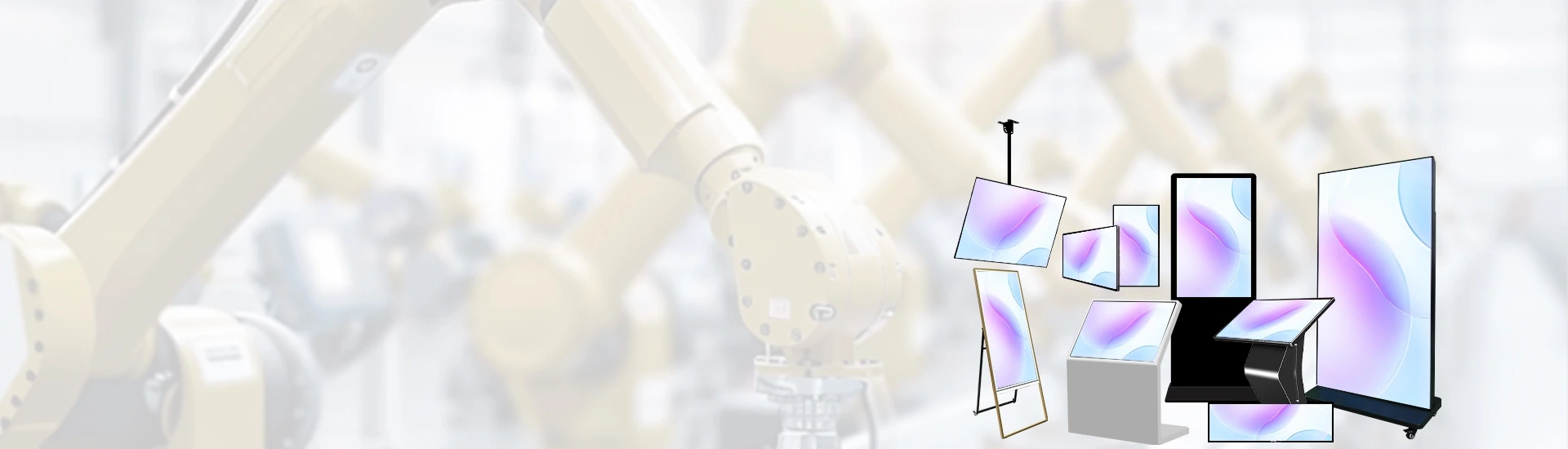
A procurement-focused guide for chain restaurants, system integrators, distributors, and OEM brands evaluating commercial display suppliers. This guide helps you select the right digital menu boards company by covering certifications, OEM/ODM capability, CMS integration, TCO, RFQ templates, after-sales support, and real deployment case studies from the UK, Ireland, USA, and Sweden.
Before requesting quotes from any digital menu board supplier, confirm what type of organization you are dealing with. The supplier model determines pricing structure, customization capability, minimum order quantity, and after-sales responsiveness. A digital menu boards systems company that develops both hardware and CMS software will deliver a different commercial outcome than a pure hardware factory or a trading intermediary. Choosing the wrong type of digital menu boards company can lead to certification gaps, integration failures, or unsustainable support costs.
Direct production control, competitive unit pricing at scale, full OEM/ODM capability. Best for buyers with defined specifications and volume commitments. Lower MOQ flexibility on custom tooling. A factory-direct digital menu boards company offers the highest customization potential.
Hardware plus CMS, installation, and managed services. Higher per-unit cost but reduced integration risk. Suited to multi-site rollouts requiring centralized content management. This type of digital menu boards company is ideal for turnkey QSR deployments.
Lower MOQ, faster sample turnaround, but limited customization depth. Certification documentation may not cover your specific model configuration. Verify all compliance documents independently when using a trading digital menu boards company.
For buyers sourcing through a pure digital menu screens company, the critical question is whether the hardware is commercial-grade or repurposed consumer display technology. Commercial panels rated for 7×24 operation, higher brightness, and anti-image-retention protection are essential for QSR environments where screens operate continuously. A menu boards & display systems company that manufactures the complete display hardware stack can document panel specifications, thermal management, and expected lifespan with verifiable test data. When evaluating a digital menu boards company, always request the panel brand and model number for independent verification.
Certification gaps are the single most common cause of customs delays and distributor rejection in B2B display procurement. CE marking alone does not guarantee US market access, and FCC certification has no legal standing in the European Economic Area. Your supplier must provide model-specific documentation for each destination market. A professional digital menu boards company will proactively supply these documents during the RFQ stage.
| Market | Required Certifications | Key Documentation to Verify |
|---|---|---|
| USA / Canada | UL or ETL (safety), FCC Part 15 (EMC), CEC energy compliance (state-dependent) | FCC test report with model number; UL/ETL certificate matching product configuration |
| European Union | CE (EMC Directive 2014/30/EU, LVD 2014/35/EU), RoHS, REACH, WEEE, ErP | EU Declaration of Conformity; EMC and safety test reports; RoHS material declaration |
| United Kingdom | UKCA (post-Brexit), CE recognition during transition | UKCA Declaration of Conformity; confirm current acceptance rules with your importer |
| Australia / NZ | RCM (Regulatory Compliance Mark) | RCM supplier declaration; EMC and electrical safety test reports |
| Middle East | SASO (Saudi Arabia), SIRIM (Malaysia), country-specific schemes | Verify destination-country requirements individually; certificate scope must match the exact model |
For OEM orders, any change to the power supply, wireless module, or display component may invalidate existing test reports. Discuss configuration changes with your supplier before assuming an existing certificate covers your modified product. Request the certificate holder name, covered manufacturing site, model numbers, and validity dates for every document provided. A reliable digital menu boards company will maintain a compliance matrix for all product variants.
The following case studies illustrate how procurement decisions translate into operational outcomes across different markets and verticals. Each example demonstrates what to expect from a capable digital menu boards company.
Scale: Digital menu boards deployed across more than 1,000 KFC restaurants in the UK and Ireland, combining in-store displays and Drive-Thru systems within a single integrated program.
Challenge: Replace static printed menus across a large, growing network while supporting frequent promotional and pricing updates, maintaining visual consistency, and scaling reliably — both indoors and at outdoor Drive-Thru order points.
Procurement takeaway: For multi-site QSR deployments exceeding 500 locations, the supplier's ability to provide a standardized hardware configuration with site-specific adaptation — combined with integrated POS connectivity and centralized content management — determines rollout timeline and ongoing operational cost. Selecting a digital menu boards company with proven enterprise-scale logistics is essential. For more insights on international QSR digital signage deployments, see our related industry analysis.
Scale: Full digital experience across eleven high-footfall QSR locations, including content creation, LED installation, and real-time content management.
Challenge: Translate a bold LA street-culture visual identity into a consistent digital environment across eleven locations with different physical formats, while supporting rapid content updates without on-site intervention.
Procurement takeaway: For brand-driven QSR chains, the supplier's content production capability and CMS architecture are as important as hardware specifications. A platform that supports real-time synchronization across geographically dispersed sites reduces ongoing content management overhead. Working with a creative-capable digital menu boards company shortens time-to-market for new store openings.
Scale: Digital signage deployed across 24 campus dining locations and a football stadium, serving approximately 13,000 students. Dining services at Vanderbilt rank in the Princeton Review's top ten for best campus food in the United States.
Challenge: Replace a "haphazard" approach to menu displays involving manual processes, printed menus that may not reflect actual offerings, and inconsistent allergen and dietary labeling. Incorrect allergen information was identified as a significant student safety risk.
Procurement takeaway: University and institutional buyers require CMS integration with existing menu management platforms. A supplier unable to demonstrate API connectivity or documented integration with systems such as CBORD, Nutrislice, or similar platforms introduces significant operational risk for campus dining environments. The right digital menu boards company for higher education must prioritize interoperability and food-safety accuracy.
Scale: Twenty-one Philips Tableaux ePaper signage displays installed across classrooms, study areas, and hallways at a university serving 8,000 students from 80 countries.
Challenge: Replace paper directories and static signage across a 49-acre campus with a solution aligned with the university's sustainability commitments, including its Princeton Review Green Colleges recognition.
Procurement takeaway: E-paper displays represent a distinct procurement category with different specification requirements than LCD menu boards. Buyers evaluating sustainable signage should prioritize manufacturers with documented energy consumption data, recyclable material declarations, and proven campus-scale deployment references. For indoor digital signage requirements, commercial-grade indoor display systems offer brightness and thermal performance specifications that differ significantly from consumer television products. A specialized digital menu boards company can help match display technology to the specific environment.
Scale: Digital menu boards deployed across Circle K convenience and fuel station locations in Sweden, part of a global network operating more than 16,000 stores worldwide.
Challenge: Upgrade in-store display systems to improve food sales communication and customer engagement in high-traffic, fast-paced convenience environments where customers perceive digitally displayed food as fresher and experience shorter perceived wait times at checkout.
Procurement takeaway: Fuel station and convenience store deployments require outdoor-rated displays for ancillary services such as car washes and fuel price boards. Indoor menu board specifications may not translate to outdoor environments where IP ratings, operating temperature ranges, and brightness levels must meet higher thresholds. Typical investment ranges for indoor digital menu boards fall between $400 and $1,000 per screen, while outdoor weatherproof displays range from $2,000 to $10,000+ depending on size and brightness. A competent digital menu boards company will provide clear pricing tiers for both indoor and outdoor configurations.
The most consequential hardware decision in menu board procurement is whether the display uses a commercial-grade panel or repurposed consumer television components. This choice determines lifespan, image retention risk, and total cost of ownership across the deployment period. A responsible digital menu boards company will disclose the panel grade and manufacturer in every quotation.
Indoor menu boards typically operate at 350–700 nits, sufficient for controlled lighting environments in QSR dining rooms and counter areas. Outdoor drive-thru and window-facing displays require significantly higher brightness — commercially available outdoor menu boards range from 2,000 to 3,500 nits to remain sunlight-readable. A 55-inch outdoor display rated at 3,500 nits with IP66 weather resistance, IK10 vandal resistance, and blackening defect-free panel tolerance up to 110°C represents the upper specification tier for drive-thru menu board applications.
Anti-image-retention technology is critical for menu boards displaying static pricing and promotional content for extended periods. Commercial panels incorporate pixel-shifting, screen savers, and panel-level burn-in protection that consumer televisions lack. Operating temperature specifications matter for kitchen-adjacent installations and outdoor enclosures — industrial displays may be rated from -30°C to 50°C operating range, covering the full spectrum of deployment environments. When auditing a digital menu boards company, request the detailed panel specification sheet and independent test reports for burn-in and thermal performance.
The CMS platform and software licensing model directly affect long-term operational cost and integration flexibility. Buyers should evaluate three dimensions: content management capabilities, system integration options, and software licensing structure. A forward-thinking digital menu boards company will offer both cloud and on-premise CMS options.
For QSR operators managing time-based pricing — particularly late-night menus where prices change at specific hours — the CMS must support automated price switching without staff intervention. A Liverpool-based fish and chips QSR implementing digital menu boards with automated time-based pricing integrated with its EPOS system reported improved pricing accuracy and reduced manual errors during overnight trading hours.
Digital menu boards commonly run on Android SoC, Windows, Linux, or custom embedded operating systems. The choice affects CMS compatibility, remote management capabilities, security update cadence, and hardware upgrade paths. Android-based displays with integrated media players reduce external hardware requirements but may have shorter OS support lifecycles than Windows-based systems. For buyers planning 5–7 year deployment cycles, confirm the supplier's firmware and OS update commitment in writing. A digital signage technology overview provides additional context on platform selection criteria. The ideal digital menu boards company will provide a clear OS roadmap and security patch schedule.
| Licensing Model | Typical Structure | Procurement Consideration |
|---|---|---|
| Perpetual License | One-time fee, often per screen or per store | Lower TCO at scale; confirm upgrade and support terms |
| Annual Subscription | Recurring fee per screen or per store per year | Includes updates and support; recurring cost impacts TCO over 5+ years |
| Tiered Enterprise | Volume-based pricing with negotiated terms | Best for 100+ location deployments; request enterprise pricing schedule |
For B2B buyers importing digital menu boards from international suppliers, after-sales infrastructure determines operational continuity. The supplier's support model should be documented in the contract with specific service-level commitments. A reliable digital menu boards company will provide a named account manager and escalation matrix.
| Support Component | Questions to Ask | Minimum Acceptable Standard |
|---|---|---|
| Warranty | Duration, coverage scope, exclusions | 2–3 years on hardware; separate CMS support terms |
| RMA Process | Who pays return shipping? Replacement lead time? | Defined RMA workflow with advance replacement option |
| SLA Response | Guaranteed response time for critical issues | 24-hour response for production-down scenarios |
| Spare Parts | Parts availability and stocking location | 5–7 year parts availability commitment |
| Overseas Support | Multi-language support hours; regional coverage | Support in buyer's business timezone; documented escalation path |
Suppliers with an established track record in multi-region deployments — such as those managing 1,000+ KFC restaurant installations with 24-hour support desks — demonstrate the operational infrastructure required for international B2B relationships. Buyers should request the names of two or three reference customers in the same region and vertical as their own deployment, and verify those references independently. A trustworthy digital menu boards company will welcome reference checks.
The quoted unit price for a digital menu board represents only 40–60% of the total cost of ownership over a five-year deployment period. B2B procurement teams should model the following cost components when comparing supplier quotes from any digital menu boards company.
Display unit, mounting hardware, media player (if external), cables, and enclosure for outdoor installations.
CMS license fees (perpetual or annual), per-screen activation, enterprise tier upgrades.
On-site labor, mounting, electrical work, network cabling, and configuration. Varies significantly by region and mount type.
Ocean or air freight, customs clearance, import duties, and VAT depending on Incoterms (EXW, FOB, CIF, or DDP).
Spare parts reserve, on-site repair labor, RMA shipping costs, and extended warranty if available.
Power draw per display at continuous operation; higher brightness outdoor units consume 2–4× indoor equivalents.
Lowest-quote suppliers often achieve cost reduction through consumer-grade panels with shorter lifespans, absence of certification documentation (reducing upfront testing costs), or limited after-sales infrastructure. Over a 5-year deployment across 50+ locations, a 20% lower hardware price can result in higher total cost when panel replacement rates, CMS licensing gaps, and support delays are factored in. A strategic digital menu boards company will provide a transparent TCO model during the sales process.
Each step should be managed with clear deliverables and timelines. The most successful procurement outcomes occur when the buying organization treats the selected digital menu boards company as a long-term partner rather than a transactional vendor.
OEM buyers require additional contract terms beyond standard procurement. The following customization elements should be documented in the purchase agreement. A capable digital menu boards company will have a standard OEM checklist to guide this process.
| Customization Element | Commercial Impact | Contract Requirement |
|---|---|---|
| Logo and branding (bezels, packaging) | Typically minimal tooling; affects MOQ | Confirm MOQ per branded SKU; logo artwork approval process |
| Custom enclosure / housing | Tooling investment; higher MOQ (typically 500–1,000 units) | Mold ownership clause; amortization terms; exclusivity period |
| UI / boot screen / pre-installed app | Software development cost; per-unit license impact | Source code ownership; update responsibility; testing procedure |
| Certification for custom configuration | Additional EMC/safety testing required | Certification cost allocation; document ownership; model numbering |
| Packaging design | Printing cost; MOQ per packaging SKU | Packaging artwork files; spare parts packaging terms |
Every OEM project should include a mutual NDA covering technical specifications, customer lists, and pricing. For custom enclosures, confirm mold ownership and whether the supplier retains the right to produce the same design for other customers. Certification for modified configurations requires separate testing — an existing FCC or CE report for a standard model does not automatically cover a custom power supply or wireless module change. A professional digital menu boards company will guide you through certification requirements for your specific OEM configuration.
Standard product OEM with logo and packaging customization typically starts at 20–50 units per order. Custom enclosure tooling requires 500–1,000 units minimum. Software or UI customization may have lower hardware MOQ but involves separate development fees. Confirm MOQ per SKU for each customized element with your chosen digital menu boards company.
Standard product lead time: 15–25 days after deposit. Custom OEM production: 30–45 days depending on tooling requirements. Ocean freight to US/Europe: 25–35 days. Air freight: 5–8 days at significantly higher cost. For multi-site rollout timelines, factor in port congestion and customs clearance time at the destination. Ask your digital menu boards company for a detailed production schedule with milestone dates.
US market: UL or ETL safety certification and FCC Part 15 EMC compliance. EU market: CE marking covering EMC Directive 2014/30/EU, Low Voltage Directive 2014/35/EU, and RoHS compliance. Wireless-enabled displays require additional radio equipment testing. Request model-specific test reports and the certificate holder's documentation for your exact product configuration. A compliant digital menu boards company will supply these documents as part of the quotation package.
Commercial digital menu screens are designed for 7×24 continuous operation with anti-image-retention protection, higher brightness panels (700+ nits indoor, 2,000+ nits outdoor), extended operating temperature ranges, and commercial-grade power supplies. Consumer televisions typically operate at 250–350 nits and lack burn-in protection, making them unsuitable for menu board applications where static content displays for extended periods. A specialized digital menu boards company will only recommend commercial-grade panels for QSR environments.
Most commercial display suppliers support third-party CMS platforms through API access or standard protocols. However, compatibility depends on the display's operating system (Android, Windows, Linux) and available interfaces. For POS integration — critical for real-time pricing accuracy — confirm the supplier's documented integration experience with your POS platform before ordering. Some suppliers provide SDK access; others restrict third-party software installation. Discuss your integration requirements with any potential digital menu boards company during the RFQ stage.
Commercial-grade digital menu boards typically carry a 2–3 year hardware warranty. CMS software support is usually separate (annual subscription or support contract). Confirm whether the warranty covers the panel, power supply, and media player independently. For overseas buyers, clarify who bears return shipping costs and whether advance replacement is available. A reputable digital menu boards company will provide written warranty terms before order confirmation.
Indoor QSR environments: 350–700 nits is generally sufficient for controlled lighting. Window-facing indoor displays: 700–1,500 nits to counter daylight glare. Outdoor drive-thru and fully exposed locations: 2,000–3,500 nits minimum. Higher brightness increases power consumption and heat generation — ensure the display enclosure's thermal management is rated for continuous operation at the specified brightness level. Your digital menu boards company should provide a brightness recommendation based on your specific installation environment.
Both models exist. Perpetual licenses (one-time fee per screen or per store) offer lower TCO at scale but may limit software updates. Annual subscriptions include updates and support but create recurring costs that compound over 5+ year deployment periods. Request the full licensing schedule — including per-screen activation, enterprise tier upgrades, and renewal terms — before committing to a hardware order. A transparent digital menu boards company will provide a multi-year cost projection.
Request a quotation with detailed specifications, certification documentation, OEM pricing, and sample availability for your target market.
Request a Quote
 NL
NL
 EN
EN  AR
AR  DAN
DAN  IT
IT  ARM
ARM  FIN
FIN  SWE
SWE  NOR
NOR  MAY
MAY  TH
TH  KOR
KOR  PL
PL  JP
JP  RU
RU  PT
PT  SPA
SPA  FRA
FRA  DE
DE  CHT
CHT 