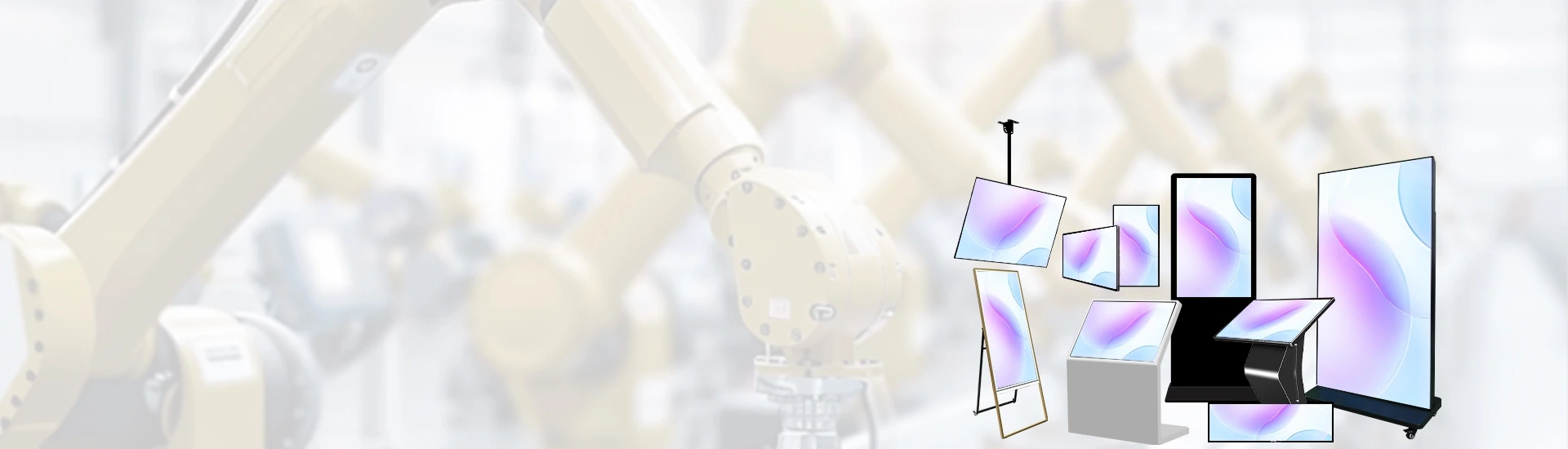
5 proven steps to increase CPM, reduce idle inventory, and attract premium brand advertisers.
エレベーターデジタルサイネージ operators across the U.S., Europe, and Asia-Pacific face a stubborn problem: screens are installed, but ad inventory sits unsold. In the U.S. Midwest, a 12‑story office tower in Columbus, Ohio, deployed a 21.5‑inch portrait elevator advertising screen and sold slots to local gyms and dental clinics at an average CPM of $8.50. That is a healthy baseline — but most operators never reach it. Industry estimates suggest screen idle rate hovers between 50‑70% in residential and mixed‑use buildings across the U.S. and Europe. Why? Because they still sell by screen count, not by audience. The core asset — the エレベーターのデジタル看板 network — is under‑monetised, and the fix starts with how you position each screen.
This playbook flips that model. You will learn how to tag your sites with sellable audience attributes, package screens by buyer vertical, use elevator-door sync to command a premium, and backfill unsold slots via programmatic DOOH — all while staying compliant with GDPR and CCPA. Whether you manage a 50‑screen network in Chicago or a 500‑screen portfolio across London and Berlin, these tactics apply directly to your elevator DOOH operation.
📌 2026 market signal: The acquisition of Place Exchange by Broadsign has consolidated the programmatic DOOH supply chain. For operators, this means easier integration — but also more competition for brand dollars. Early movers who adopt audience‑based selling win. And the foundation of that shift is a smart エレベーターのデジタル看板 CMS that can segment content by building profile.
Most DOOH operator CMS platforms store only building names, addresses, and screen counts. That is a data dead end. To raise CPM, you must tag every elevator advertising screen with a resident profile. Without audience tags, your エレベーターのデジタル看板 inventory is just a list of addresses — brands cannot buy that.
💡 Pro Tip: In your CMS, create a mandatory Audience Tag field for every building. This unlocks everything that follows — packaging, pricing, and programmatic integration. For a deeper dive into CMS ad scheduling and building‑level differentiation, see our content strategy & software guide for office buildings. The same logic applies to residential エレベーターのデジタル看板 networks.
The old way — “200 screens across 50 buildings” — invites buyers to commoditise you. The new way: package screens by audience targeting and sell access to a specific demographic. Your elevator DOOH inventory becomes a precision tool, not a bulk media buy.
| Package Name | Buildings | Est. Weekly Impressions | Target Verticals | CPM (USD) |
|---|---|---|---|---|
| “Luxury Auto” | 25 premium bldgs | 175,000 | Auto, Wealth Mgmt | $18‑22 |
| “Home Essentials” | 40 mass‑market bldgs | 320,000 | FMCG, Home Loan, Grocery | $8‑12 |
| “Health 55+” | 15 senior bldgs | 90,000 | Supplements, Travel, Insurance | $12‑16 |
This is not theoretical. In Columbus, Ohio, a mid‑size office building segmented its エレベーターのデジタル看板 content by time of day — morning commuter alerts, midday cafeteria deals, after‑work security notices — and achieved an average CPM of $8.50. That building used a portrait screen and a CMS that supported time‑segmented playlists. The same principle works for residential elevator DOOH: package by resident profile, not by building count.
In the U.S. and Europe, HOA boards and property managers are gatekeepers. They approve installation, renewal, and — critically — ad content. A single resident complaint can kill a campaign. The most effective pitch is not about money; it is about service. “We are upgrading your elevator experience with a smart elevator advertising screen that displays community announcements for free, and generates passive income for your HOA — with zero upfront cost.”
Common property revenue share models:
Elevator-door sync is often dismissed as a power‑saving gimmick. In reality, it is an attention‑validation feature. The screen stays dark when the elevator is idle; it wakes only when a passenger calls the lift or the door opens. “If no one is waiting, nothing is playing.” This transforms a standard エレベーターのデジタル看板 installation into an attention‑aware media asset.
This is the real differentiator. Most DOOH screens cannot prove that anyone is watching. Door‑sync provides a simple, credible proxy: the エレベーターのデジタル看板 triggers only when a human is physically present. Pitch this to advertisers as attention‑aware DOOH — not looped playback, but real‑time, human‑triggered impressions.
Several operators we have spoken with across the U.S. and Europe report that switching to door‑sync triggers helped them command a 30‑50% CPM premium when pitching to brand buyers who value attention metrics. This is not a guarantee — it is a competitive edge for any serious elevator DOOH operator.
For technical implementation, door‑sync requires hardware that supports trigger inputs and a CMS that can handle wake‑on‑signal. Our indoor digital signage product line includes models with scheduled playback and remote content management, making them compatible with door‑sync workflows. For detailed interface requirements, refer to our hardware specifications.
An elevator ride is short. Follow three principles: big text, high contrast、および one message per loop. Offer a one‑page Creative Guidelines document to advertisers as a value‑add service — it improves campaign performance and increases repurchase rates. Effective creative is the difference between a forgettable elevator advertising screen and one that drives action.
Even with aggressive sales, 40‑60% of ad inventory remains unsold. That is free money left on the table unless you have a backend fill strategy. For エレベーターのデジタル看板 operators, this is where programmatic really shines.
Pros: Full margin control, direct buyer relationships, differentiated positioning.
Cons: Requires a sales team + ad ops tech (typically 6‑12 months and $100k+ investment).
Who it is for: Large‑scale operators with 1,000+ screens.
Pros: Zero sales effort, automatic fill, immediate revenue on otherwise‑idle inventory.
Cons: Lower margin per impression, less creative control.
Who it is for: Most mid‑sized operators should start here. It is the fastest way to monetise your elevator DOOH unsold slots.
| プラットフォーム | What It Is | Why It Matters for Elevator DOOH |
|---|---|---|
| Vistar Media | Leading DOOH DSP | Strong demand from national brands; good programmatic fill rates for エレベーターのデジタル看板 inventory. |
| Broadsign (now owns Place Exchange) | World’s largest DOOH platform (1.8M+ screens) | The 800‑lb gorilla; if you are on Broadsign’s network, your elevator advertising screens are visible to major agency DSPs. |
| Hivestack (now part of Perion) | Programmatic DOOH SSP/DSP hybrid | Strong in Asia‑Pacific and Europe; good for cross‑border campaigns on elevator DOOH networks. |
Recommended hybrid strategy: For small‑to‑mid operators, go AdX‑first. Plug into at least one network to stop bleeding idle inventory. Use your sales team only for premium packaged campaigns. For large operators, run direct sales for premium packages + DSP backfill for everything else. This dual approach maximises yield from every エレベーターのデジタル看板 screen in your portfolio.
GDPR (Europe) and CCPA (California) are not obstacles — they are boundaries that, if respected, build trust. The core principle: target the building, not the individual. Your elevator DOOH operation should never rely on personal identifiers.
| Regulation | Scope | Implication for Elevator DOOH |
|---|---|---|
| GDPR (Europe) | Any data that can identify a natural person | Avoid facial recognition, avoid Wi‑Fi tracking of individual devices; aggregated building‑level data is safer for エレベーターのデジタル看板 targeting. |
| CCPA/CPRA (California) | Consumer opt‑out rights for data sharing | If you sell “resident demographic data” to advertisers, you may need opt‑out mechanisms; if you sell only ad space (not data), it is safer. |
| General best practice | Across all markets | Use building‑level profiling only; no personal identifiers; set data retention to 30 days max; document your data flow. |
Three actionable steps:
Broadsign’s acquisition of Place Exchange (completed 2025) means the programmatic DOOH supply chain is centralising. For operators, this means easier integration but also more competition for the same demand dollars. Early movers who optimise their エレベーターのデジタル看板 inventory will capture the best programmatic rates.
Real‑time triggers (weather, time‑of‑day, local events) are becoming accessible even for mid‑sized networks. Expect more “temperature‑triggered” or “time‑of‑day” creative in elevator DOOH over the next 18 months. This makes your elevator advertising screens more relevant and more valuable.
The concept of “property owner as publisher, operator as ad platform” is exactly how retail media network works. エレベーターデジタルサイネージ operators who frame themselves as “residential media networks” will find it easier to attract brand dollars and command higher CPMs.
Plug into AdX first. Build only after you consistently sell out your premium inventory. Do not build to solve idle inventory — build to scale premium. This is the most capital‑efficient path for most elevator DOOH operators.
Highly market‑dependent. U.S. suburban: $8‑15 CPM for mass‑market; $18‑25 for luxury. EU: slightly lower due to privacy constraints. Use these as benchmarks, not guarantees. Your エレベーターのデジタル看板 network’s actual yield will depend on audience quality and ad relevance.
Give them a streamlined pre‑approval process for standard creatives, but reserve the right to run programmatic fill without per‑spot approval (with content guidelines pre‑agreed). This is a negotiation point that protects your elevator advertising screen revenue.
Not if you are targeting at building‑level with aggregated demographics and not using personal identifiers. If you move to individual‑level targeting (e.g., facial recognition), you enter a different regulatory regime — avoid this path for elevator DOOH unless you have deep legal resources.
You connect to a DSP (demand‑side) to sell your inventory. You connect to an SSP (supply‑side) if you are building your own exchange. For most operators: start with a DSP integration (Vistar, Broadsign). This is the quickest way to monetise your エレベーターのデジタル看板 unsold slots.
The shift from selling screens to selling audiences is not a technology upgrade — it is a go‑to‑market transformation. The good news: you can start today without changing a single elevator advertising screen. Every step in this playbook is designed to increase the yield of your existing エレベーターのデジタル看板 network.
Talk to our team about your deployment
Further reading: Elevator Digital Signage Buying Guide — ROI, Pitfalls & Form Factor Comparison · Content Strategy, Software & ROI for Office Buildings · Indoor Digital Signage Product Line

 JP
JP
 EN
EN  AR
AR  DAN
DAN  IT
IT  ARM
ARM  FIN
FIN  SWE
SWE  NOR
NOR  MAY
MAY  NL
NL  TH
TH  KOR
KOR  PL
PL  RU
RU  PT
PT  SPA
SPA  FRA
FRA  DE
DE  CHT
CHT 