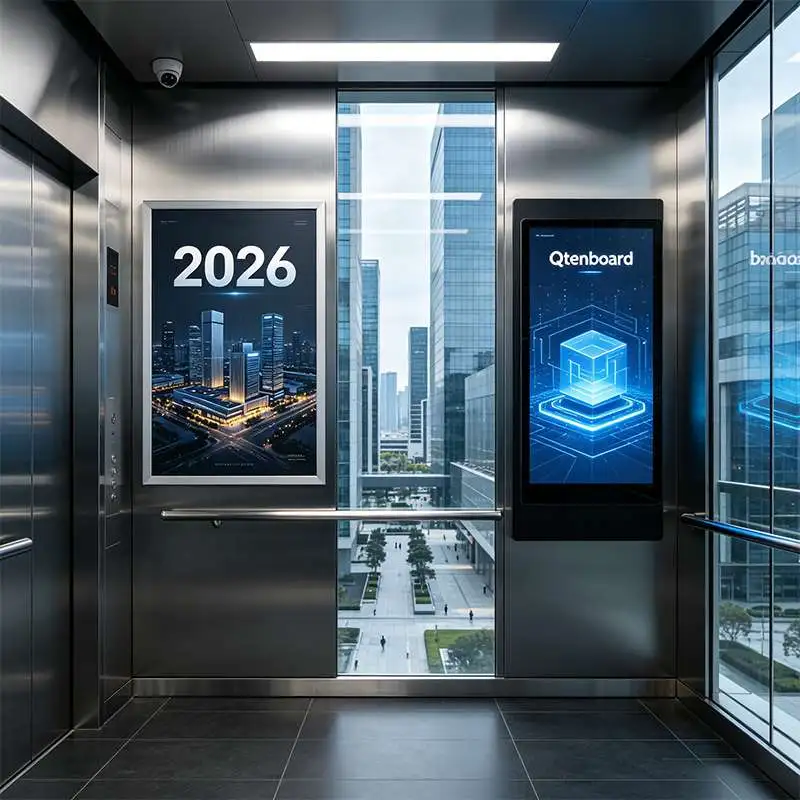
Every day, billions of people step into elevators—a closed, distraction-free waiting space where the 30-second ride becomes a valuable advertising and property management medium. Lift advertising has long relied on static paper posters, yet digital elevator signage has rapidly replaced traditional formats across global commercial real estate markets in recent years.
For property managers, advertising agencies, mall operators and residential developers, the core question remains: why digital elevator displays outperform static poster frames, and how elevator digital signage improves both advertising ROI and passenger riding experience. This article breaks down all angles objectively, covering cost comparison, audience engagement, daily operation, multi-scenario application and user experience.
Industry data collected in 2025–2026 shows 68% of commercial office buildings and shopping malls in Southeast Asia and the Middle East have fully or partially phased out paper lift posters, switching to cloud-connected elevator digital screens for long-term operational benefits.
| Comparison Item | Elevator Digital Display Screen | Static Paper Posters |
|---|---|---|
| Content Update Method | Remote cloud one-click real-time update | Manual on-site replacement, 1–2 week cycle |
| Audience Attention Rate | Dynamic video & high brightness, 75% higher engagement | Static flat image, average attention rate only 12% |
| Long-term Operating Cost | One-time hardware input, 50%–60% cost cut in 3 years | Recurring printing & labor fees, annual high expenditure |
| Data Tracking Ability | Built-in analytics for viewing duration & exposure data | No measurable data, blind advertising investment |
| Passenger Experience Value | Real-time notice, waiting anxiety relief, emergency alert | Single advertising function, no auxiliary property service |
Static paper posters were once the standard for lift advertising, but multiple inherent drawbacks limit their value in modern commercial and residential buildings. Digital elevator signage solves these pain points comprehensively, which explains the widespread industry transition in 2026.
Digital elevator advertising screens eliminate all these limitations, combining advertising revenue creation and daily property operation management into one hardware device, making them a more cost-effective choice for all building types.
We compare the two advertising solutions across four core commercial operation dimensions, with real industry cost and conversion data for objective reference.
Traditional elevator posters rely fully on on-site worker replacement. For a property with 50 elevators, full poster iteration takes 2–3 working days, with printing and labor fees accumulating monthly.
Digital elevator screens support cross-region remote CMS management. Marketing staff or property administrators can upload videos, images and text online, with content synchronized to all elevator terminals within minutes. Flash mall promotions, power outage alerts and building safety reminders can be released instantly without extra labor cost.
Static posters blend into elevator interiors easily; regular riders stop noticing the printed content within 3–5 days, with an average effective attention rate of just 12%.
Industrial elevator digital signage adopts 178° ultra-wide viewing angle and high contrast panels, supporting auto-play video, scrolling text and multi-area split screen playback. Real project data shows dynamic lift screens boost audience interaction by 75% and drive a 32% lift in physical store foot traffic for mall merchants.
For a mid-sized office tower with 100 elevators, annual poster printing, installation and waste disposal costs exceed $20,000. Frequent paper consumption also increases building carbon footprint.
Digital elevator displays require only one-time hardware investment, with ultra-low standby power ≤1W and rated power below 85W. Over a three-year operation cycle, total comprehensive costs drop by 50%–60%, with zero paper waste for sustainable building compliance.
The biggest weakness of traditional lift posters is the lack of exposure data. Operators cannot confirm how many riders view the content or which material performs better, leading to inefficient advertising budget allocation.
Modern elevator digital signage systems record core metrics including average viewing duration, daily exposure volume and content heat performance. Property and advertising teams can adjust promotional strategies based on real user behavior data, turning elevator advertising into trackable, adjustable marketing assets.
Most comparison articles only focus on advertising revenue, ignoring the critical value elevator screens bring to residents, visitors and property teams. Digital lift signage optimizes the full riding experience across commercial, residential, hotel and medical buildings.
Long elevator waiting times create negative user sentiment. Dynamic content, weather updates and building news on digital screens distract riders during waiting periods, significantly improving overall satisfaction scores for residential and hotel properties.
In hospitals, apartments and office buildings, administrators can push emergency evacuation guidelines, maintenance notices, cleaning schedules and community event reminders instantly via cloud CMS, information delivery efficiency far surpasses printed posters that cannot be updated timely.
Custom frame colors and unified display content keep consistent visual branding across all elevator cabins. For high-end hotels, grade-A office towers and luxury residential compounds, digital signage upgrades the overall space grade far more than disorganized paper posters.
Digital lift screens adapt to diversified building demands, covering shopping malls, office buildings, residential apartments, hotels and medical centers, each with targeted functional matching.
Malls rely on impulsive consumption, and elevator rides are ideal touchpoints for store promotions. High-brightness elevator screens (300–500 cd/㎡) display discount videos, store guides and limited-time flash sales, adjustable split screen layout for directional traffic diversion.
A completed project in Bangkok shopping center proved elevator digital displays redirected 28% of elevator passengers to low-traffic floors, with flexible remote content updates during weekend peak shopping hours.
Office tower elevator signage balances corporate brand display and internal management announcements. Industrial 24/7 stable panels run continuously without shutdown, supporting multi-tenant hierarchical CMS access to separate corporate brand content and public building notices.
A Dubai business district office project increased tenant event awareness by 40% after installing elevator digital screens, strengthening brand impression among visiting clients.
Residential and medical buildings prioritize public service over commercial advertising:
Elevator environments feature continuous vibration, fluctuating temperature and long-hour operation requirements, which regular consumer monitors cannot withstand. Professional elevator display hardware includes three irreplaceable core strengths:
The following two overseas large-scale projects integrate complete project background, core customer demands, implementation process, long-term operation data and comprehensive benefit evaluation, providing objective reference for commercial real estate advertisers, property management companies and advertising agencies. Official cooperation certification, on-site installation photos and monthly operation data reports can be provided upon business inquiry.
This shopping mall is located in Dubai’s core business district, covering a construction area of 180,000 square meters, with 6 floors of retail stores, catering brands and luxury boutiques, equipped with a total of 230 passenger elevators and escalator auxiliary lift cabins. Before cooperating with Qtenboard, the mall had used traditional paper elevator poster advertising for more than 4 years, and the advertising business was one of the stable income sources of the mall operation department. There are more than 120 settled merchants in the mall, all of whom need regular elevator advertising promotion during holidays, discount seasons and new product launches.
The mall’s operation department put forward clear transformation demands: realize remote one-click content update, support dynamic video playback, built-in audience data statistics function, reduce comprehensive annual advertising operation cost, and help merchants improve store passenger flow conversion to stabilize advertising revenue.
Stage 1: On-site survey & customized scheme design. Our engineering team went to Dubai for on-site measurement, recorded the internal size, vibration frequency, lighting environment of all 230 elevator cabins, and confirmed that the vertical 32-inch display screen is most suitable for the narrow elevator space; customized white aluminum ultra-narrow frame matching the mall’s high-end light decoration style, and selected 500 cd/㎡ high-brightness panel to adapt to the strong light environment inside the mall elevator.
Stage 2: Equipment production and pre-debugging. Uniformly produce 230 sets of QM-3221FZ elevator dedicated digital signage, pre-install the exclusive cloud CMS management system, preset multi-screen split playback template, merchant independent content submission channel and data statistics module in the factory, and complete 72-hour continuous vibration aging test to ensure adaptability to long-term elevator operation vibration.
Stage 3: Batch installation and staff training. Cooperate with local elevator maintenance contractors to complete staggered installation in 45 days (avoiding mall peak passenger flow); after hardware installation, conduct 2 rounds of systematic operation training for mall administrators and more than 10 key merchant operators, including remote content release, timing playback, data export and emergency full-screen alert operation.
Stage 4: 3-month trial operation & scheme optimization. During the trial period, collect feedback from merchants and property personnel, optimize the picture compression function of the CMS background to solve the slow upload of large 4K promotional videos, and add independent data viewing sub-accounts for each brand merchant to check their own advertising exposure data in real time.
This Grade A office tower is located in Singapore’s central business district, with a total of 32 floors, more than 60 settled enterprise tenants including finance, consulting, technology and foreign trade companies, and 80 passenger elevators serving office employees, enterprise visitors and building management staff. The original building only pasted paper notices and tenant brand posters inside the elevator, with single function, messy pasting layout, and the management team could not synchronously release emergency notices and building unified activity information in a timely manner. At the same time, many medium and large tenants put forward the demand for long-term brand display in the elevator cabin to enhance the impression of visiting customers.
The property management company’s core demand: stable 24-hour uninterrupted operation adapted to office all-day use, realize hierarchical multi-tenant content management, support one-click emergency full-screen alert, simplify daily information release work, and upgrade the overall high-end image of the office building.
Stage 1: Building function demand sorting and scheme matching. Communicate with the property management team to sort out three core usage scenarios: enterprise brand display, building daily notice release, safety emergency alert. Select 32-inch vertical QM-3221FZ elevator display screen, matte black narrow frame matching the minimalist office decoration style, equipped with exclusive multi-level authority CMS system to separate the management background of the property and each settled enterprise.
Stage 2: Equipment customized production and stability test. All 80 sets of equipment are equipped with industrial-grade long-running panels, enhance the built-in anti-vibration structure for elevator long-term shaking environment, pre-set automatic timing switch function (automatically shut down after off-duty hours to save power), and complete continuous 1000-hour aging test before delivery to ensure zero crash operation.
Stage 3: Phased installation and hierarchical training. Install the equipment in batches on weekends to avoid affecting the daily office of tenants; carry out two levels of operation training: property full-function administrator training and tenant independent sub-account training, teach tenants to upload brand pictures and short videos by themselves, and set independent playback time periods without interfering with other enterprises’ content display.
Stage 4: Long-term operation after-sales follow-up. Arrange a special after-sales technical docking person to provide remote technical support all year round, regularly upgrade the CMS background function according to the feedback of the property, and add the building maintenance schedule one-click playback template and fire emergency full-screen quick release function.
The choice between elevator digital signage and traditional paper posters is not merely hardware replacement, but a transformation of building advertising and property operation logic. Static paper posters can no longer meet the dual demands of flexible marketing and refined property management in modern commercial and residential buildings.
Industrial elevator digital screens balance advertising revenue growth, long-term cost control and passenger service experience, covering malls, offices, apartments, hotels and hospitals. For property operators and advertising agencies looking to upgrade lift advertising formats, cloud-connected digital elevator displays deliver comprehensive ROI advantages that static posters cannot match.
If you plan to replace outdated elevator poster frames or deploy new lift advertising equipment, consult our team for customized elevator digital signage solutions matching your building scenarios and budget.
Q1: What are the core differences between elevator digital signage and traditional paper lift posters?
A: Digital elevator screens support remote real-time content updates, dynamic video playback, user exposure data statistics and long-term cost reduction; paper posters are static, require manual replacement regularly, cannot track advertising effect and generate continuous printing waste.
Q2: Why do more property managers choose elevator digital displays over poster frames in 2026?
A: Digital signage reduces 3-year comprehensive operating costs by 50%–60%, improves advertising conversion, supports real-time emergency notices and optimizes passenger waiting experience, bringing dual value for advertising income and property daily management.
Q3: How does elevator digital signage improve passenger experience in residential and hotel buildings?
A: It releases real-time building notifications, distract riders during waiting time with mild visual content, displays safety guidelines and service introductions, reducing negative sentiment caused by long elevator waiting periods.
Q4: Is the cloud CMS system for elevator screens complicated for non-technical staff to operate?
A: The supporting CMS is designed for general property administrators and advertising operators, no coding or professional design skills required. Content creation, scheduling and distribution can be finished via web browser or mobile phone.
Q5: Can elevator digital signage be customized for different building scenarios like malls, offices and hospitals?
A: Yes. We support custom frame color, screen brightness, vertical/horizontal size, system functions and permission settings to match shopping mall promotion, office brand display, residential community service and hospital navigation demands.
Q6: Can elevator digital screens work stably under continuous elevator vibration environment?
A: Professional elevator signage adopts industrial anti-vibration panel structure, wide temperature & humidity adaptation, designed for 24/7 continuous operation inside elevator cabins without frequent failure.
Q7: Will elevator digital signage save total costs compared with long-term paper poster investment?
A: Yes. After one-time hardware investment, there are no recurring printing and labor fees. For buildings with over 30 elevators, the cost gap compared to posters becomes obvious within 12–18 months of operation.
Q8: Do you provide global installation and after-sales service for elevator display projects?
A: We offer end-to-end global service including pre-sales scheme design, installation guidance, remote system maintenance and spare parts support, with mature delivery projects in Southeast Asia, Middle East and European markets.
| Categoria | Specifiche |
|---|---|
| Basic Information | Brand: Qtenboard; Model: QM-3221FZ; Screen Size: 32 inch vertical elevator model |
| Display Parameters | Resolution: 1920*1080 (2K)/3840*2160 (4K optional); Viewing Angle: 178° full angle; Contrast Ratio: 3000:1 / 4500:1; Aspect Ratio: 9:16 vertical; Brightness: 300 / 400 / 500 cd/㎡ optional; Refresh Rate: 60/120Hz |
| Configurazione del sistema | Android 9.0~16.0 optional; Multi-core high-performance processor; RAM 1/2/4/8GB; Storage 8–128GB; WIFI 2.4G+5G, Ethernet, optional 4G module |
| CMS Core Functions | Remote cloud content release, multi-area split screen, timed playback, multi-level admin permission, real-time device status monitoring |
| Hardware Appearance | Aluminum alloy frame, customizable black/white/custom color; 3mm anti-shock tempered front glass; wall-mounted cabin installation design |
| Operating Environment | Indoor elevator cabin; AC110–220V; Standby power ≤1W, rated power ≤85W; Working temperature -0℃~55℃, humidity 10%–90%RH non-condensing |
Note: All hardware parameters can be adjusted according to project demands. Contact our technical team for specifications of other screen sizes.
Browse full product introduction to check more functional parameters and elevator application renderings
View Elevator Digital Signage Product Page
 IT
IT
 EN
EN  AR
AR  DAN
DAN  ARM
ARM  FIN
FIN  SWE
SWE  NOR
NOR  MAY
MAY  NL
NL  TH
TH  KOR
KOR  PL
PL  RU
RU  PT
PT  SPA
SPA  FRA
FRA  DE
DE  CHT
CHT 