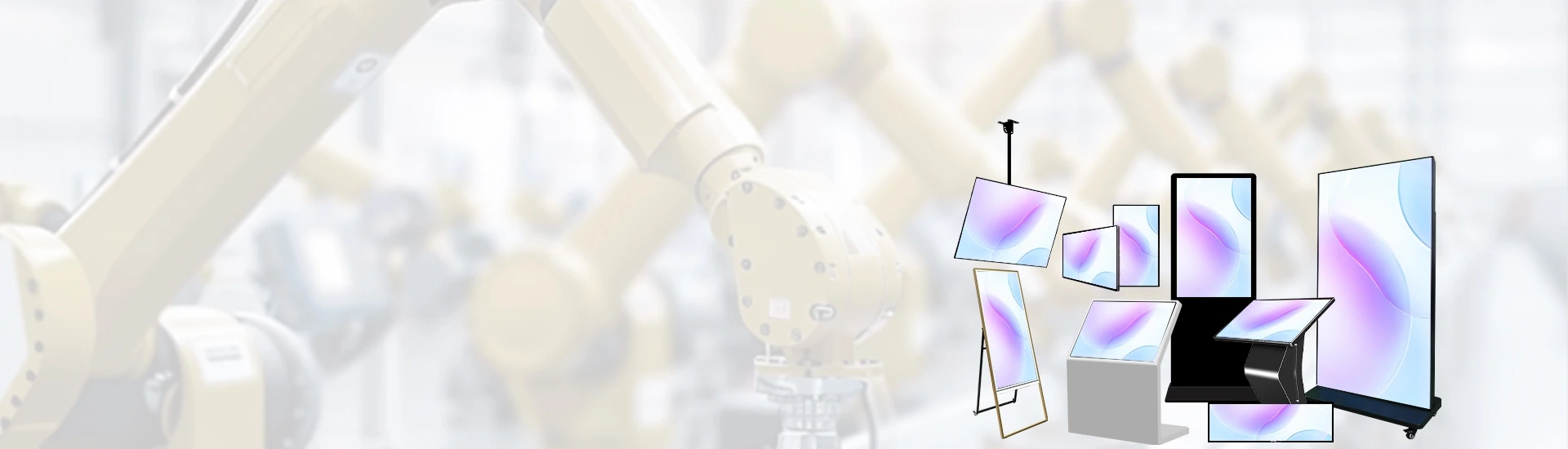
The Complete B2B Buying Guide to Vertical Advertising Machines
This guide is written for procurement managers, facility operators, system integrators, and project contractors who need to specify, source, and deploy vertical advertising machines across multiple locations. Unlike consumer displays, commercial vertical digital signage must survive 7×24 operation, pass regional certification, integrate with content management systems, and be backed by responsive after-sales support. This guide follows a seven-step B2B buying process: requirement confirmation, form factor selection, application matching, specification selection, quotation comparison, manufacturer selection, and deployment operations. Each step includes checklists, comparison tables, and links to relevant cluster pages.
1. What Is a Vertical Advertising Machine?
А vertical advertising machine is a freestanding, floor-standing digital display designed for commercial communication. It is also referred to as vertical digital signage, freestanding digital signage, or floor-standing signage. These terms are largely interchangeable in the B2B market. The core value lies in brand presentation, wayfinding, information publishing, and marketing conversion.
Vertical Digital Signage vs Wall-Mounted, Video Wall, and Tablet Kiosk
| Тип | Лучшее для | Typical Limitation |
|---|
| Vertical digital signage | Floor-level engagement, retail aisles, lobbies | Requires floor space and power routing |
| Wall-mounted display | Menu boards, information walls | Fixed height, harder to reposition |
| Video wall | Large-format brand visuals | High cost, complex installation |
| Tablet kiosk | Compact interactive check-in | Small screen, limited brightness |
Where Vertical Signage Is Not the Right Choice
- Very narrow corridors where floor space is unsafe
- Outdoor locations without IP-rated enclosure and cooling
- High-vibration industrial floors without anti-vibration mounting
B2B vs Consumer Buying
Business buyers prioritize stability, certification, after-sales, batch consistency, and customization. Consumer buyers prioritize price and immediate availability. This guide focuses exclusively on the B2B perspective.
2. The B2B Buying Decision Map: 7 Steps from Requirement to Operation
The seven-step process below is the backbone of this guide. Each step links to deeper cluster pages for scenario-specific or specification-specific details.
- Step 1: Confirm business requirements and deployment scope
- Step 2: Choose the right form factor
- Step 3: Match signage to your application
- Step 4: Select specifications that actually matter
- Step 5: Compare quotes, Incoterms, and total cost of ownership
- Step 6: Select a reliable manufacturer and verify compliance
- Step 7: Deployment, operation, and maintenance
Multi-Role Decision Makers in B2B Signage Procurement
| Role | Primary Concerns |
|---|
| Procurement | Unit price, MOQ, lead time, payment terms, Incoterms |
| ИТ | CMS architecture, API, security, network, GDPR |
| Marketing | Content scheduling, multi-language, brand consistency |
| Facilities | Installation, power, maintenance access, RMA process |
| Finance | TCO, depreciation, energy cost, warranty value |
3. Step 1: Confirm Business Requirements and Deployment Scope
Before selecting any vertical advertising machine, document the following requirements.
- Primary purpose: branding, wayfinding, promotions, check-in, or information
- Deployment scale: single store, multi-site, or cross-border rollout
- Daily operation hours: 8 hours, 16 hours, or 7×24
- Content ownership: central marketing team, local staff, or agency
- Customization needs: logo, color, software interface, hardware modules
- Budget tier: entry, mid-range, or premium-custom
Downloadable resource: Requirement Brief Template. Use it to align internal stakeholders before contacting suppliers.
4. Step 2: Choose the Right Form Factor
Form factor selection depends on interaction, connectivity, environment, and appearance.
By Interaction
- Non-touch: cost-effective for passive advertising
- Touch: capacitive or infrared, for interactive wayfinding and product browsing
By Connectivity
- Standalone: USB/SD card content update, no network dependency
- Networked: Android, Windows, or SoC platform with cloud or local CMS
By Environment
- Indoor: standard brightness 350–700 nits
- Window-facing: high brightness 2,500–4,000 nits with anti-glare
- Outdoor: IP54 or higher, 3,000–5,000 nits, thermal management
By Appearance
- Standard vertical screen
- Ultra-narrow bezel or stretch display
- Double-sided screen
- 4K UHD commercial grade
General-Purpose vs Commercial-Grade Freestanding Digital Signage
| Особенность | General-Purpose | Commercial-Grade |
|---|
| Operating hours | 8–12 hours | 7×24 |
| Panel grade | Consumer | Industrial |
| Яркость | 250–400 nits | 500–5,000 nits |
| Warranty | 1 year | 3 years or more |
Scene-to-form matrix: Use the application section below to reverse-engineer the correct form factor.
5. Step 3: Match Signage to Your Application
Each application below includes recommended configuration, key specifications, and a link to the relevant scenario cluster page.
Retail and Shopping Malls
- Recommended: 43–55 inch freestanding, 700–2,500 nits
- Key specs: anti-glare, tamper-resistant lock, CMS scheduling
- Cluster page: Внутренние цифровые вывески
Restaurants and QSR
- Recommended: 43–55 inch, high brightness for menu boards, 2,000+ nits
- Key specs: 7×24 operation, grease-resistant surface, API to POS
Hotels and Hospitality
- Recommended: 55 inch, custom bezel, multilingual CMS
- Key specs: silent operation, 24/7, RTL language support
Healthcare and Clinics
- Recommended: 43 inch fanless, antimicrobial coating option
- Key specs: under 30 dB noise, RCM/CE certification
Corporate Offices and Education
- Recommended: touch-enabled, 43–55 inch, ADA-compliant height
- Key specs: visitor management integration, bilingual content
Airports, Stations, and Public Venues
- Recommended: 55–65 inch, high brightness, IK10 glass
- Key specs: 7×24, remote monitoring, anti-vandalism
Exhibitions and Automotive Showrooms
- Recommended: 4K UHD, OPS slot, 65 inch
- Key specs: color accuracy, configurator integration
6. Global Case Studies: Vertical Advertising Machines in Real B2B Deployments
The following deployments illustrate how procurement teams across six countries solved operational, compliance, and cost challenges.
United States — Quick-Service Restaurant Chain, 240 Locations
A multi-state QSR operator replaced static menu boards with vertical digital signage running 7×24 under high ambient light.
Вызов
- Daylight-readable brightness above 2,000 nits
- FCC Part 15 and UL 62368-1 certification
- Existing CMS required open API and multi-store permissions
Решение
- Deployed 55-inch indoor digital signage at 2,500 nits with anti-glare glass
- Android 11 SoC, 4GB RAM, 32GB ROM, REST API integration
- Three-phase rollout: 12 pilot, 60 regional, 240 total
- 72-hour burn-in test before shipment
Результаты
- Average order value increased 11.4% in two quarters
- Menu update time reduced from 4 hours to 10 minutes
- Payback in 14 months
- Zero FCC or UL customs holds
United Kingdom — Fashion Retail Group, 85 Stores
A UK retailer required freestanding digital signage for window-facing displays with UKCA marking.
Вызов
- UKCA certification post-Brexit
- 3,500 nits and anti-reflective coating
- Anti-theft locking, under 60mm depth
Решение
- 43-inch ultra-slim units at 3,500 nits, AR-coated glass
- IK10 tempered glass, dual-key security lock
- UKCA, CE, RoHS, WEEE documentation
- Custom matte black finish
Результаты
- Window display conversion improved 19%
- Zero customs delays over 18 months
- Tampering shrinkage reduced to zero
Germany — Automotive Showroom Network, 32 Sites
A German automotive group required 4K vertical advertising machines with GDPR-compliant sensors.
Вызов
- 4K UHD for vehicle rendering
- GDPR-compliant audience measurement
- OPS slot for product configurator
- German-language CMS
Решение
- 65-inch 4K units with OPS running Windows IoT
- On-device anonymization for camera modules
- CE, RoHS, REACH, WEEE certification
- Role-based access control in German
Результаты
- Configurator session duration increased 27%
- Sales consultant time reduced by 15 minutes per customer
- Passed GDPR audit with no findings
Australia — Healthcare Clinic Group, 60 Locations
An Australian provider deployed vertical digital signage for wayfinding and wait-time communication.
Вызов
- RCM certification
- Under 30 dB fan noise
- Hygiene-friendly surface
- Time-based scheduling
Решение
- 43-inch fanless units at 28 dB, passive cooling
- RCM, CE, RoHS certification
- Cloud CMS with multi-clinic grouping
- Antimicrobial-coated screen
Результаты
- Wayfinding complaints reduced 42%
- Front desk wait-time inquiries dropped 35%
- Zero hardware failures over 24 months
United Arab Emirates — Hospitality Group, 18 Properties
A UAE hotel group required freestanding digital signage for lobbies with high ambient temperatures.
Вызов
- 38°C ambient lobby temperature
- Multilingual content: Arabic, English, Russian, Chinese
- Luxury custom bezel
- Centralized management across 3 emirates
Решение
- 55-inch units with industrial thermal management rated to 45°C
- Brushed-gold bezel, marble-effect base
- CMS with RTL Arabic support
- Multi-property dashboard
Результаты
- Guest satisfaction for information access improved 23%
- Concierge workload reduced 20%
- No thermal shutdown incidents over 18 months
Canada — Corporate Campus, 45 Buildings
A Canadian enterprise deployed touch-enabled vertical advertising machines for visitor check-in and wayfinding.
Вызов
- ADA-compliant touch height
- IC and CSA certification
- Visitor management API integration
- Bilingual English and French
Решение
- 43-inch PCAP touch units at ADA height
- IC, CSA, FCC certification
- API integration with visitor platform
- Bilingual CMS per building
Результаты
- Check-in time reduced from 4 minutes to 90 seconds
- Receptionist workload reduced 30%
- Passed accessibility audit across 45 buildings
7. Step 4: Specifications That Actually Matter
This is the most technical section of the guide. Use it to build a specification sheet that matches your application.
Дисплей
- Size: 43, 49, 55, 65 inch are standard
- Resolution: 1080p for menus, 4K for detailed visuals
- Brightness: 350–700 nits indoor, 2,500–4,000 nits window, 3,000–5,000 nits outdoor
- Panel grade: industrial-grade for 7×24
- Anti-glare: required for window-facing
Сенсорный
- Capacitive: multi-touch, high clarity
- Infrared: cost-effective, works with gloves
- Touch points: 10-point typical
Hardware and OS
- SoC: Android 11 or higher, 4GB RAM, 32GB ROM
- OPS: Windows IoT for complex software
- Android vs Windows: Android for simple CMS, Windows for legacy integration
Commercial Reliability
- 7×24 operation rating
- Thermal management: fanless or industrial fan
- IP/IK rating: IP54 outdoor, IK10 glass
- Security: anti-theft lock, tempered glass
Connectivity and CMS
- Cloud vs local CMS
- Remote publishing, split-screen, scheduling
- API for POS, visitor management, or ERP
- Role-based permissions, multi-store grouping
- GDPR-compliant data handling
Принадлежности
- Camera, sensors, NFC, payment modules
Spec red flags: No brightness specification, no operating temperature range, no certification list, no CMS demo, no RMA policy.
8. Step 5: Compare Quotes, Incoterms, and Total Cost of Ownership
Unit price is only one part of the cost. Use the following framework.
Quotation Components
- Hardware cost
- Software or CMS license
- Customization (NRE)
- Logistics and customs clearance
- Warranty and maintenance
Incoterms Impact
| Term | Buyer Responsibility | Seller Responsibility |
|---|
| EXW | All transport, export, import | Goods at factory |
| FOB | Ocean freight, insurance, import | Export clearance, loading |
| CIF | Import clearance, duties, VAT | Ocean freight, insurance |
| DDP | Unloading only | All transport, duties, VAT |
TCO Formula
Purchase price + transport + installation + software subscription + maintenance + energy = total cost of ownership.
MOQ, Lead Time, and Payment
- MOQ: typically 10–50 units for custom, 1 unit for standard
- Lead time: 15–30 days standard, 30–45 days custom
- Payment: 30% deposit, 70% before shipment, or LC at sight
Downloadable resource: Quotation Comparison Sheet.
9. Step 6: Select a Reliable Manufacturer and Verify Compliance
Distinguish a manufacturer from a trading company by asking for factory audit, production line photos, and test reports.
Regional Certification Table
| Region | Required Certifications |
|---|
| European Union | CE, RoHS, REACH, WEEE, RED for wireless, GDPR |
| United Kingdom | UKCA, RoHS, WEEE |
| Соединенные Штаты | FCC, UL/ETL, Prop 65 if applicable |
| Австралия | RCM |
| Canada | IC, CSA |
Quality Assurance
- 72-hour burn-in test
- Outgoing quality control report
- Sample or PoC order before bulk
OEM/ODM
- Custom bezel, logo, packaging
- Custom software interface and CMS branding
After-Sales
- Warranty: 1–3 years
- RMA process and response time
- Spare parts ratio: 1–3% recommended
- Overseas warehouse or local service partner
E-E-A-T Signals
- Factory audit report
- Real test data: brightness, temperature, drop test
- Reference customers in the same industry
- Certification documents available for review
Downloadable resource: Supplier Scorecard.
10. Step 7: Deployment, Operation, and Maintenance
Receiving and Inspection
- Check packaging for transport damage
- Verify customs clearance documents
- Inspect screen for cracks before installation
Installation and Commissioning
- Mounting: floor stand, fixed base, or mobile cart
- Power: voltage, plug type, dedicated circuit
- Network: Ethernet or WiFi, firewall rules
Phased Rollout
- Start with pilot site
- Validate CMS and content workflow
- Train local staff before full rollout
Preventive Maintenance
- Clean screen and vents monthly
- Check thermal performance quarterly
- Update firmware and CMS annually
Lifecycle
- Panel brightness decays 30–50% after 30,000–50,000 hours
- Plan replacement at 5–7 years for 7×24 operation
11. Common B2B Purchasing Mistakes
- Mistake: Comparing unit price only. Consequence: Higher TCO. Решение: Use TCO formula.
- Mistake: Mismatched specifications. Consequence: Overpay or fail in environment. Решение: Use scene-to-form matrix.
- Mistake: Ignoring destination certification. Consequence: Customs hold. Решение: Verify certification table.
- Mistake: Ignoring CMS and integration. Consequence: Manual content updates. Решение: Request CMS demo.
- Mistake: Skipping pilot. Consequence: Bulk order failure. Решение: Run PoC first.
- Mistake: Ignoring local plug and voltage. Consequence: Extra adapters. Решение: Specify destination standard.
12. Explore Vertical Digital Signage Solutions by Scenario, Function, and Service
Use the cluster pages below to dive deeper into your specific requirement.
- By Scenario: retail, QSR, hotel, healthcare, corporate, education, airport, exhibition
- By Function: touch interactive, outdoor waterproof, 4K commercial, high-brightness window, double-sided
- By Service: custom OEM, bulk procurement, after-sales maintenance
13. FAQ
What is the difference between a vertical advertising machine and an ordinary display?
А vertical advertising machine is built for commercial 7×24 operation, with industrial-grade panel, higher brightness, better thermal design, and typically a CMS. Ordinary displays are for consumer use.
How do I choose the right size of freestanding digital signage?
For close viewing in retail aisles, 43–49 inch. For lobby or window, 55–65 inch. Consider viewing distance: screen height should be at least 1/6 of viewing distance.
What brightness do I need for indoor vs window-facing vs outdoor signage?
Indoor: 350–700 nits. Window-facing: 2,500–4,000 nits. Outdoor: 3,000–5,000 nits. Always add anti-glare for window-facing.
Do commercial vertical digital signage units need professional after-sales support?
Yes. Look for 3-year warranty, RMA process, spare parts availability, and local service partner. This reduces downtime and TCO.
Can I manage multiple devices and locations from one CMS?
Yes. Choose a CMS with multi-store grouping, role-based permissions, API, and cloud or local deployment. Test the demo before purchase.
What certifications are required to import vertical digital signage into the EU / US / UK / Australia?
EU: CE, RoHS, REACH, WEEE. US: FCC, UL/ETL. UK: UKCA. Australia: RCM. Confirm with your supplier before shipment.
What is the typical lead time and MOQ for bulk orders?
Standard: MOQ 1–10 units, lead time 15–30 days. Custom: MOQ 10–50 units, lead time 30–45 days. Always confirm Incoterms and payment terms.
Can you customize hardware, software, and branding?
Yes. OEM/ODM options include bezel color, logo, packaging, Android or Windows interface, and CMS branding. Request NRE quotation.
How long does commercial vertical signage typically last?
With 7×24 operation, industrial panels last 30,000–50,000 hours before brightness decays to 50%. Plan replacement at 5–7 years.
What is the total cost of ownership for a vertical advertising machine?
TCO = purchase price + transport + installation + software subscription + maintenance + energy. Use our Quotation Comparison Sheet to calculate.
How do I run a pilot or PoC before bulk deployment?
Order 1–3 sample units, deploy in a real environment for 30 days, test CMS, brightness, and thermal performance. Then scale.
What are the common Incoterms and payment terms for B2B orders?
Common Incoterms: EXW, FOB, CIF, DDP. Payment: 30% deposit, 70% before shipment, or LC at sight. Negotiate based on order volume.
Ready to Plan Your Vertical Advertising Machine Deployment?
Share your deployment scale, target countries, and certification requirements. Our team will return a configuration recommendation and quotation within one business day.

 RU
RU
 EN
EN  AR
AR  DAN
DAN  IT
IT  ARM
ARM  FIN
FIN  SWE
SWE  NOR
NOR  MAY
MAY  NL
NL  TH
TH  KOR
KOR  PL
PL  JP
JP  PT
PT  SPA
SPA  FRA
FRA  DE
DE  CHT
CHT