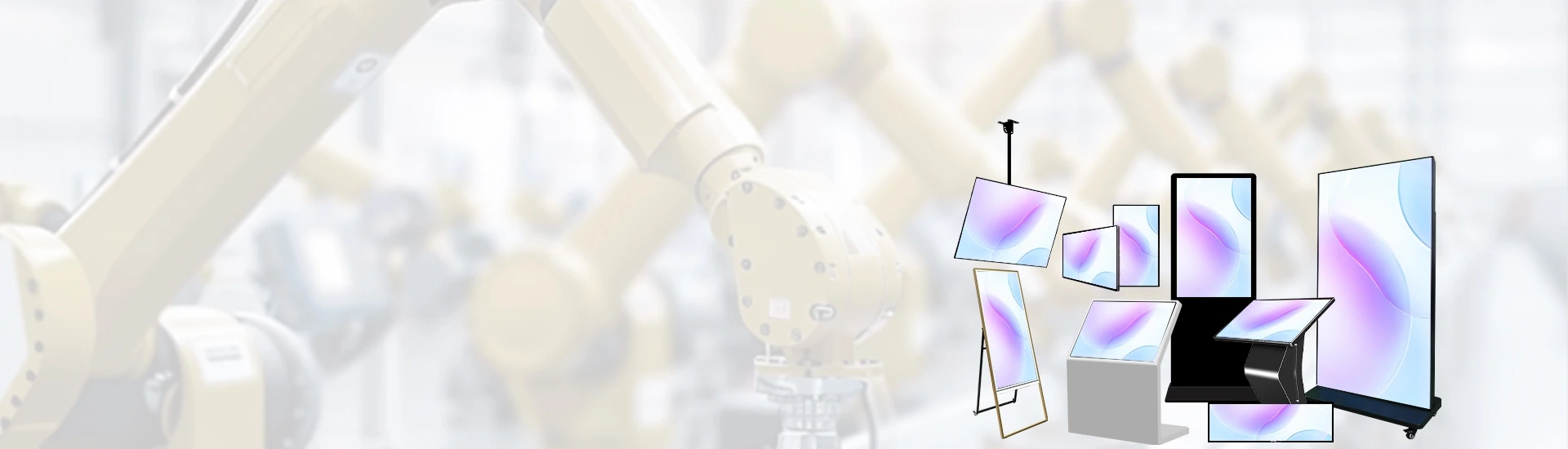
A Qtenboard Self service kiosk combines commercial-grade hardware with intuitive software to deliver a reliable, long-term solution:
In a quick-service restaurant, the self ordering kiosk guides customers through a structured flow: browsing the digital menu → selecting items → customizing ingredients and sides → confirming the order → completing payment. The order is then transmitted directly to the kitchen display system (KDS) or POS, eliminating manual entry errors. A payment kiosk module supports credit cards, mobile wallets, and QR code payments.
In retail environments, Qtenboard self-service kiosks function as self-checkout terminals. Customers scan product barcodes, review their cart on the LCD display, apply loyalty points, and pay—all without staff intervention. This reduces queue times and allows staff to focus on customer service and inventory management.
The global self-service kiosk market continues to expand across multiple sectors. For deeper insights into how digital display technology is reshaping customer engagement across industries, explore our digital signage deployment cases.
Payment options depend on project configuration. Most Qtenboard self-service kiosks are designed to support cashless payments, including credit cards, debit cards, NFC mobile payments (Apple Pay, Google Pay), and QR code scanning.
For businesses catering to diverse customer groups, a hybrid model is recommended: combine Self service kiosker with traditional manual counters for cash payments. This approach ensures Fleksibilitet for alle kunder while retaining the efficiency benefits of automation. Qtenboard's payment kiosk modules can be configured with cash acceptors and coin dispensers for markets where cash remains prevalent.
Customization is a major advantage of Qtenboard kiosks. Our self-service kiosks can be tailored to multiple industries, including restaurants, retail stores, hospitals, and public service areas. Customization options cover:
By collaborating directly with the manufacturer, businesses can create a custom LCD self-service kiosk that matches their brand identity and operational needs.
REWE, one of Germany's largest supermarket chains, upgraded its loyalty program experience with Qtenboard Retail Kiosks. The previous kiosks suffered from slow scanning and frequent hardware failures. After switching to Qtenboard's solution, the chain reported significantly faster loyalty card processing and improved customer throughput at checkout lanes.
Selfridges, one of the UK's most iconic department stores, deployed Qtenboard Information Kiosks to enhance visitor navigation. The project delivered measurable results: visitor inquiries dropped by 30%, while digital advertising revenue through the kiosk network increased. The kiosks integrated seamlessly with the store's existing wayfinding and promotional content systems.
A leading private healthcare provider in the UK selected Qtenboard Healthcare Self-Service Terminals for multiple clinics across London and Manchester. They required secure Windows-based touch kiosks compatible with their existing patient record system. After installation, the group achieved streamlined patient check-in processes and reduced front-desk administrative workload.
For more examples of how self-service technology is transforming customer experiences across sectors, visit our kiosk industry news section.
Yes. Qtenboard kiosks support integration with major POS systems through standard APIs and SDKs. Our technical team works with your existing infrastructure to ensure seamless order transmission and payment reconciliation.
Qtenboard- tilbuder Self service kiosker in multiple screen sizes: 15.6", 21.5", 27", and 32". Resolution options include 1920×1080 (FHD) and 3840×2160 (4K). Larger screens (43"–65") are available for digital signage and wayfinding applications.
Absolutely. The CMS supports multi-language content management. For example, a kiosk deployed in a Portuguese-speaking market can display the interface as a quiosque de autoatendimento, while the same unit can switch to English, Spanish, or other supported languages based on user preference or location settings.
Deployment timelines vary by project scope. For standard configurations, hardware delivery and software setup typically take 4–6 weeks. Custom branding, specialized payment modules, and POS integration may extend the timeline to 8–10 weeks. Qtenboard provides end-to-end project management support throughout the process.
The rise of the Qtenboard Self-service kiosk marks a transformative shift in customer-business interaction. By combining efficiency, automation, and modern LCD display technology, these kiosks redefine the ordering and service experience across industries.
A well-designed Qtenboard LCD self-service kiosk not only Forbedrer kundetilfredsheden Men hjælper også virksomheder Reducere arbejdskraftomkostninger, increase order accuracy, and boost overall revenue. As technology integrates deeper into daily life, self-service kiosks will play an increasingly critical role in driving business growth and competitiveness.
For a deeper look at how self-service technology continues to evolve in the kiosk industry, read our latest kiosk news update.

 DAN
DAN
 EN
EN  AR
AR  IT
IT  ARM
ARM  FIN
FIN  SWE
SWE  NOR
NOR  MAY
MAY  NL
NL  TH
TH  KOR
KOR  PL
PL  JP
JP  RU
RU  PT
PT  SPA
SPA  FRA
FRA  DE
DE  CHT
CHT 